
How Does A Fire Extinguisher Work To Stop A Fire
Ever glance at that bright red cylinder hanging in your kitchen or garage and wonder, "How does that thing actually work?" It's not just a fancy metal can; it's a silent superhero, packed with science, ready to leap into action when fire strikes. Understanding its power isn't just cool party trivia; it's a vital bit of knowledge that could one day save your home, your belongings, or even a life. Let's peel back the layers and uncover the magic behind the fire extinguisher.
The Mighty Fire Triangle: Fire's Secret Sauce
To really get how an extinguisher works, we first need to understand what makes a fire tick. Imagine a tripod. For fire to exist, you need three things, often called the fire triangle: heat, fuel, and oxygen. Remove just one leg of that tripod, and the whole thing collapses. No fire.
- Heat: Think of a spark, a burning match, or a faulty electrical wire. It's the ignition source.
- Fuel: This is anything that can burn – wood, paper, clothes, cooking oil, gasoline.
- Oxygen: The air we breathe is roughly 21% oxygen, and fire loves it.
A fire extinguisher's job is simply to interrupt one or more of these elements. It's a master of disruption!
Must Read
Extinguisher Tactics: Attacking the Triangle
Different extinguishers use different strategies to break the fire triangle. It's like having various tools for specific jobs.
1. Cooling Down the Heat
The most straightforward method is to remove the heat. This is where water extinguishers shine. They douse the flames, dropping the temperature below the ignition point of the fuel. Think of it like pouring a bucket of ice water on a campfire – poof, it's out. These are great for ordinary combustibles like wood, paper, and fabric (Class A fires).

2. Smothering the Oxygen
Another common tactic is to cut off the oxygen supply. If fire can't breathe, it dies. Carbon Dioxide (CO2) extinguishers work wonders here. CO2 is heavier than air, so when sprayed, it creates a blanket over the fire, displacing the oxygen. Fun fact: it also has a cooling effect, hitting two parts of the triangle at once! These are brilliant for flammable liquids and electrical fires (Class B and C).
3. Interrupting the Chemical Reaction (and sometimes starving the fuel)
Many modern extinguishers, particularly the ubiquitous dry chemical extinguishers (often labeled ABC), take a more sophisticated approach. They spray a fine powder that physically separates the fuel from the oxygen. But more importantly, the chemicals in the powder actually interfere with the chemical chain reaction of the fire itself. It's like throwing a wrench into the fire's internal combustion engine, stopping it dead in its tracks. These versatile heroes work on Class A, B, and C fires, making them a popular choice for homes and businesses.

While extinguishers primarily target heat and oxygen, by removing the ability for the fuel to ignite, they indirectly "starve" the fire by making the fuel inaccessible to the flame.
Your Action Plan: The "PASS" Method
Knowing how it works is great, but knowing how to use one is even better. Remember the easy-to-learn acronym: PASS.
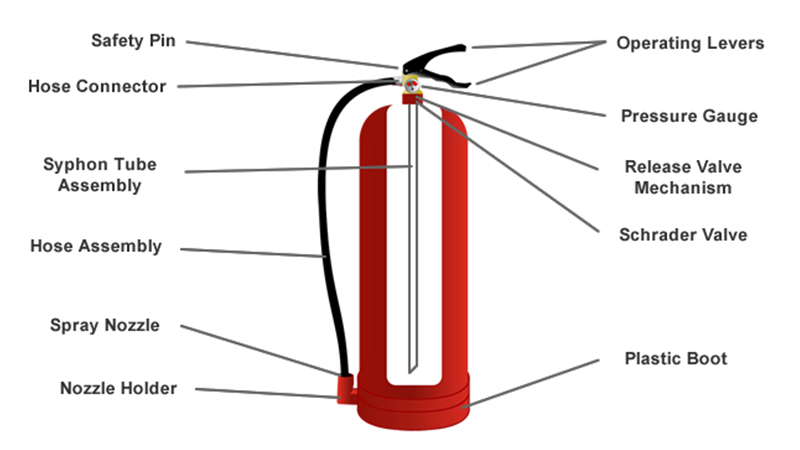
- Pull the pin. This unlocks the operating lever.
- Aim the nozzle low at the base of the fire. That's where the fuel is!
- Squeeze the handle to release the extinguishing agent.
- Sweep the nozzle from side to side, covering the base of the fire until it's out.
Always remember to have an escape route behind you, and if the fire grows or becomes unmanageable, evacuate immediately and call emergency services!
Practical Tips and Peace of Mind
Having a fire extinguisher isn't just a regulatory checkbox; it's a commitment to safety. Keep one near potential fire hazards like the kitchen or garage. Check its pressure gauge regularly to ensure it's still charged and ready. Most importantly, know when to use it and when to get out. A small, contained fire? Go for it. A rapidly spreading blaze? Your life is more important than property.
From the satisfying hiss of a CO2 extinguisher smothering a small grease fire to the powdery blast of an ABC unit halting an electrical spark, understanding these devices empowers us. It transforms that red cylinder from a mysterious object into a trusted tool, giving you a tangible sense of control in potentially chaotic situations. It’s not just about a gadget; it’s about preparedness, knowing you have a fighting chance, and creating a safer haven for yourself and your loved ones.
