
How Do You Unlock A Bedroom Door From The Outside

Ever found yourself staring at a closed bedroom door, a slight knot forming in your stomach? Maybe a little one has inadvertently locked themselves inside, or perhaps the family pet has decided the bedroom is their new fortress. Or, let's be honest, you just left your phone charger on the bed and the door clicked shut behind you. Whatever the reason, there's a certain universal curiosity that kicks in: how do you unlock a bedroom door from the outside?
It's not about being a master thief, not at all! This isn't for breaking into places you shouldn't be. Instead, it's about understanding the clever, often simple, mechanics of everyday objects and appreciating the ingenuity behind them. It's like discovering a secret handshake with your own home.
The Everyday Mystery: The Pinhole Phenomenon
Must Read
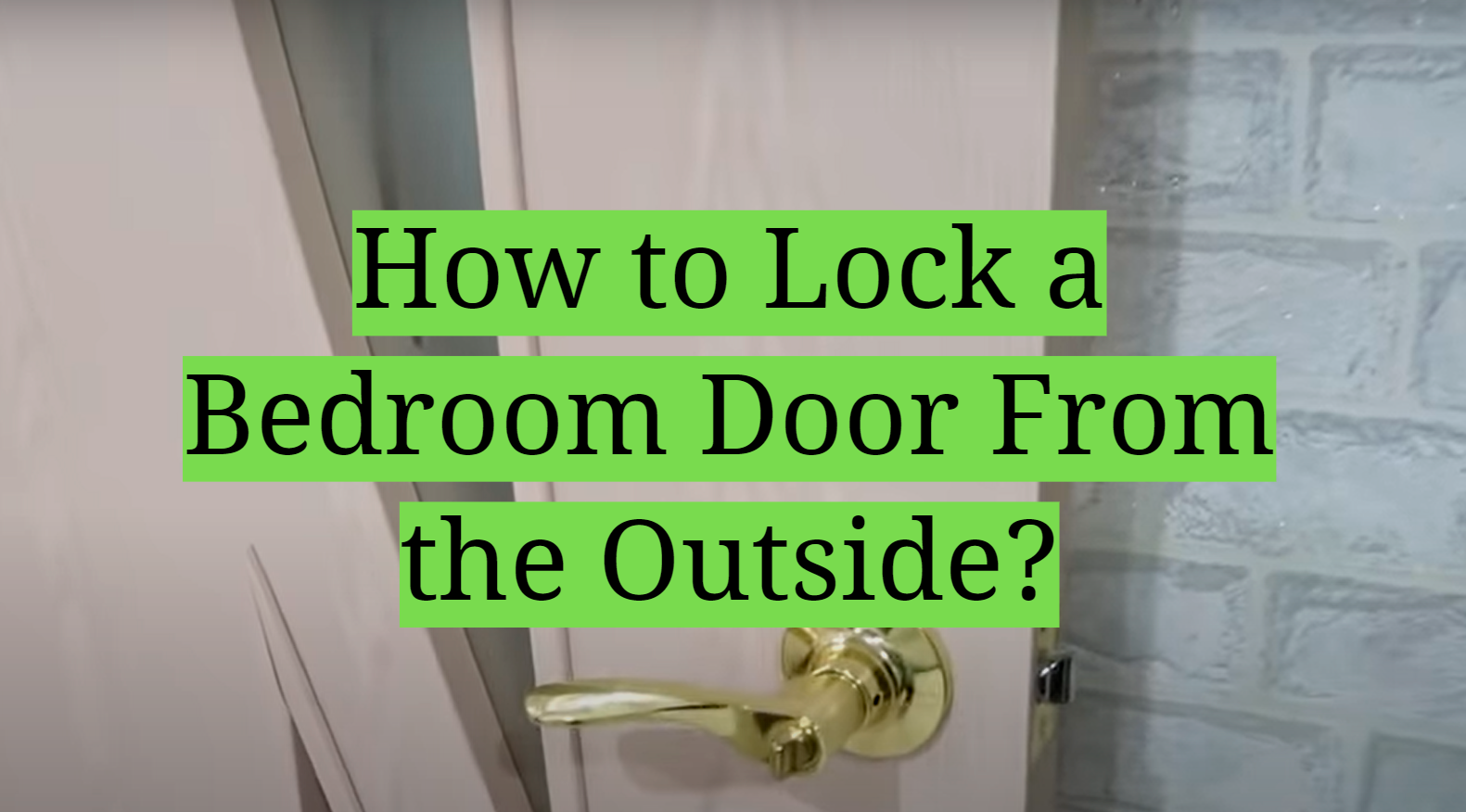
Let's start with the most common scenario, the one that probably comes to mind for many bedroom doors: the privacy lock. You know the kind – it has a little button or a twist-knob on the inside to lock it, but often, on the outside, there’s just a smooth plate with a tiny, almost inconspicuous, pinhole. Have you ever really looked at it? It’s like a secret keyhole, designed not for a traditional key, but for a special kind of... poke.
This little hole isn't just for show. It's a lifesaver, a design feature born out of practicality and a sprinkle of genius. Imagine a curious toddler experimenting with locks, or a gust of wind swinging the door shut with an unexpected thud. This tiny portal is your access point. All you usually need is something long and thin: a straightened paperclip, a small flathead screwdriver, even the blunt end of a butter knife (though be gentle!).
The magic happens when you insert your chosen "tool" into that pinhole and give it a gentle push or twist. You're essentially pressing a hidden internal button or cam that disengages the lock mechanism. It’s wonderfully simple, isn't it? It feels a bit like being a secret agent, disarming a very low-stakes bomb, but instead, you're just getting back to your comfy bed.

The Card Trick: When There's No Pinhole
But what if your bedroom door doesn't have that handy pinhole? Some older doors, or even some newer, simpler ones, might just have a standard knob or lever that engages a simple spring latch without any additional locking mechanism visible from the outside. This is where things get a touch more MacGyver, and dare I say, even cooler.
This method usually works on doors that haven't been deadbolted (which is rare for a typical bedroom door). You’ll need something flexible yet firm, like a credit card, a library card, or even a sturdy piece of plastic packaging. The idea is to slide the card into the gap between the doorframe and the door itself, right where the latch bolt sits.

Then, it’s all about technique. Angle the card slightly towards the doorknob. You're trying to push against the angled edge of the latch bolt, forcing it to retract into the door. It takes a bit of wiggling, a little pressure, and often a gentle push on the door itself. When it works, there's a satisfying click as the door springs open. It’s a moment of pure triumph, like you've just picked a lock, but with something you carry in your wallet every day!
The Disassembly Dilemma: When All Else Fails
Okay, so you've tried the pinhole, you've attempted the card trick, and the door remains stubbornly shut. Don't despair! For most internal doors, there's still a surprisingly straightforward solution that doesn't involve breaking anything (unless you count your patience). This is the disassembly approach, and it mostly involves a trusty screwdriver.

Many interior doorknobs and levers are held in place by visible screws on the plate facing the outside of the door. With a suitable screwdriver (usually Phillips head), you can simply unfasten these screws. Once the screws are out, the doorknob assembly often comes apart easily, allowing you to access and manipulate the latch mechanism directly. It’s like performing minor surgery on your door, but with a happy, open-door outcome.
This method is a bit more involved, but it’s often the most reliable for those stubborn doors. It’s a testament to how even seemingly complex mechanisms are often just a series of interconnected, simpler parts that can be taken apart and put back together. Plus, it’s a great way to understand exactly how your door hardware functions!
Why Is This Even Interesting?
You might be wondering why we're delving into the mechanics of unlocking a bedroom door. Well, for starters, it’s about preparedness. Knowing these tricks can save you a lot of stress, especially if there's a genuine emergency or a worried little face on the other side. But beyond the practical, there's a deeper satisfaction in understanding the world around us.
These simple solutions are elegant examples of design thinking: anticipating problems and building in graceful workarounds. It’s a small peek into the mind of an engineer or designer, creating something that works reliably but also has a built-in "oops" button. It teaches us that even the most secure-looking everyday items often have a clever, understated way of being opened from the outside when needed.
So, the next time you see a simple bedroom door, you might just look at it with a new sense of appreciation. It's not just a barrier; it's a testament to thoughtful design, a little everyday mystery waiting to be understood, and perhaps, a hidden hero for those "oops" moments. Isn't that just a little bit cool?