
How Do You Bend Sheet Metal
Ever tried to get a perfectly straight bend on something that just refuses to cooperate? Maybe it was that flimsy garden fence you were trying to fix, or a piece of cardboard that just wouldn't fold into a neat box. Well, imagine that, but with metal. Yep, bending sheet metal is a whole thing, and it’s surprisingly common in our everyday world, often without us even realizing it!
Why We Even Bother Bending Metal
Think about it: how do you get a flat sheet of metal to become a sturdy computer case, an oven door, or the bracket holding up your bookshelf? You bend it! It’s like folding a really strong piece of origami, but instead of making a paper crane, you're making something that holds up, well, just about everything.
From your fridge to your car’s body panels, bending metal is how engineers and fabricators turn flat, two-dimensional sheets into functional, three-dimensional objects. It’s pure magic, if magic involved a lot of force and some very clever machines.
Must Read
The "Just Push Really Hard" Method (and Why It Fails)
Our first instinct, right? Grab a piece of metal, find a sturdy edge, and just… push. Or hit it with a hammer. Maybe stand on it. You know, the caveman approach. And for very thin, soft metals, or if you don't care about precision, it kinda works! You'll get a bend, sure. But it’ll look less like a crisp, factory-made corner and more like you wrestled an angry squirrel made of aluminum.
For anything requiring a bit of elegance or structural integrity, simply grunting and pushing won't cut it. You’ll end up with wonky angles, warped surfaces, and probably a few bruised thumbs. That’s where the proper tools come in.

Enter the Bending Masters: The Brake Press
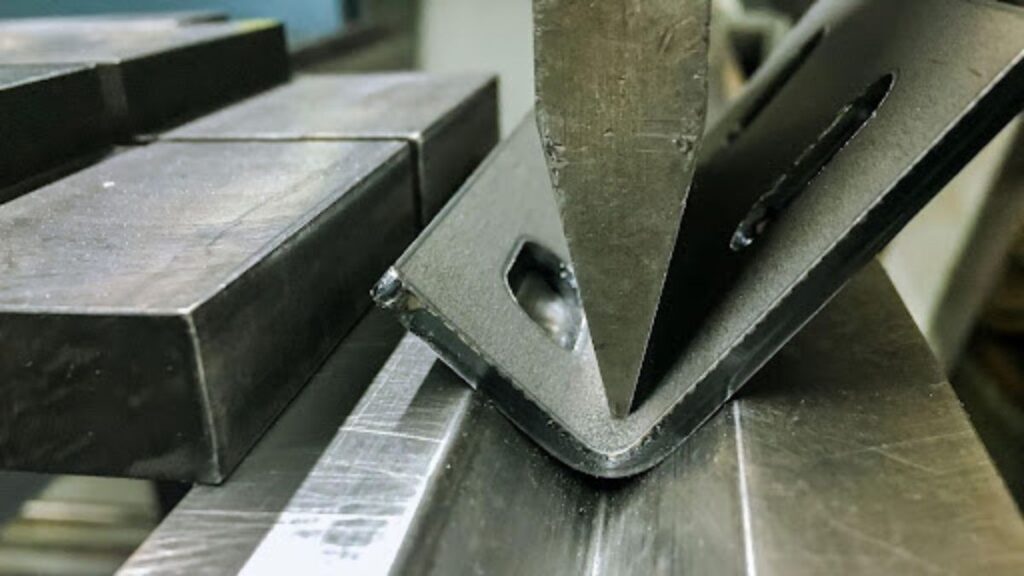
This is where things get serious, but also wonderfully precise. Imagine a giant, industrial-strength mouth that can munch on metal and spit out perfectly angled pieces. That, my friends, is a brake press. It's essentially made of two main parts: a "punch" (the upper jaw) and a "die" (the lower jaw).
You slide your flat piece of sheet metal between them. Then, with an impressive amount of controlled force, the punch comes down into the die, forcing the metal to bend around a specific edge. It’s like a very, very strong person carefully folding a piece of paper over a ruler, but with thousands of pounds of pressure. The result? A beautifully crisp, accurate bend. No squirrel wrestling required.
The Sneaky Trick: Spring Back
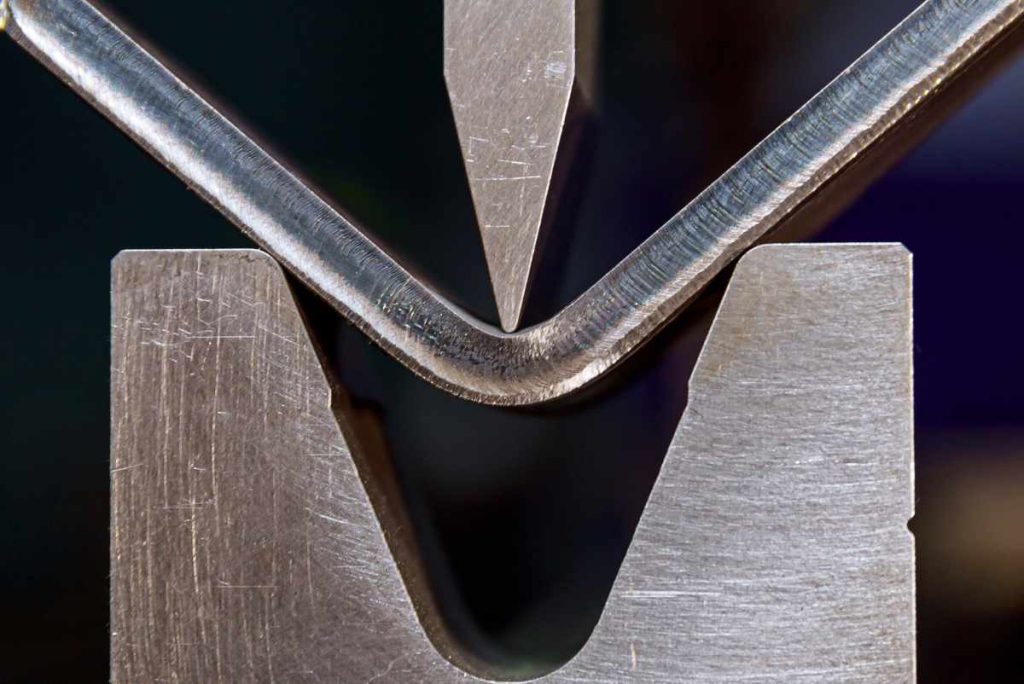
Now, here’s a funny thing about metal: it’s got a bit of a memory. Or maybe it’s just stubborn. When you bend it, it doesn’t always stay exactly where you put it. It wants to "spring back" a little, like a stretched rubber band trying to return to its original shape. This is called, fittingly, spring back.
So, if you want a perfect 90-degree angle, you actually have to bend the metal a little past 90 degrees – maybe to 88 degrees. When the pressure is released, it springs back those couple of degrees to land exactly where you want it. It’s like trying to get a reluctant cat into a carrier; you often have to push a little further than you think, just to account for their wriggle. Fabricators are constantly calculating this spring back, which makes bending more of an art than just pure muscle.

It’s All About the Curves (Even for a Straight Bend)
You might think bending metal means making a super sharp, knife-edge corner. But actually, most bends have a slight curve, or a "bend radius." Think about bending a thick piece of cardboard: if you try to make a super sharp crease, it often tears. Metal is similar; too sharp a bend can weaken the material, even crack it.
So, those brake presses use dies with slightly rounded edges to create a gentle curve rather than a razor-sharp crease. This keeps the metal strong and happy. It's like gently rolling dough instead of just squishing it flat – the subtle curve makes all the difference!
The Satisfaction of a Perfect Bend
There’s something incredibly satisfying about watching a flat sheet of metal transform into a precisely angled component. It’s the magic of engineering, turning raw material into something useful and often beautiful. The next time you open your fridge or admire the sleek lines of a modern car, give a little nod to the humble, yet mighty, act of bending sheet metal. It's happening all around you, making our world a more structured, and slightly less wobbly, place.
