
How Big Is The Philippines Compared To The United States
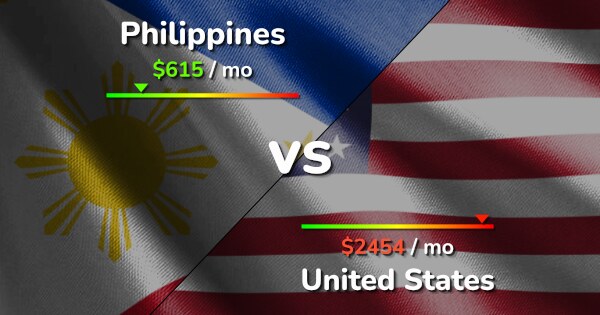
Ever wonder how the world's different countries stack up against each other? It's a surprisingly fun and visually engaging exercise! Comparing the sizes of countries, especially ones as geographically unique as the Philippines and the United States, can reveal a lot about their diverse landscapes, populations, and histories. It's like a global geography lesson wrapped in a cool, easily digestible package. Plus, understanding relative sizes helps us better appreciate global events and understand the context of international relations. This is a simple comparison of Philippines to United States.
The purpose of this article is to provide a clear and accessible comparison of the land area of the Philippines and the United States. The benefit? You'll gain a better understanding of the sheer scale of these two nations and how they differ. This knowledge can be useful for travel planning, understanding geographical data, and impressing your friends with your global trivia prowess!
So, let's dive in! The United States is a behemoth, a continental nation sprawling across North America. Its total land area is approximately 9.8 million square kilometers (or about 3.8 million square miles). That includes Alaska and Hawaii, of course, and encompasses everything from the scorching deserts of the Southwest to the snowy peaks of the Rocky Mountains and the lush forests of the Pacific Northwest. It's a truly vast and varied country.
Must Read
Now, let's look at the Philippines. This island nation, nestled in Southeast Asia, is an archipelago composed of over 7,000 islands. While its cultural influence is significant, and its biodiversity is incredible, the Philippines occupies a considerably smaller land area compared to the U.S. The total land area of the Philippines is about 300,000 square kilometers (or roughly 115,831 square miles).
Let's put that into perspective. The United States is roughly 32 times larger than the Philippines! Imagine fitting the entire Philippines into the United States – you could do it over thirty times! To visualize this better, think of it this way: the Philippines is roughly the size of the state of Arizona. That's right, just one state in the US is about the same size as an entire country in Southeast Asia.
The implications of this size difference are huge. The US has far greater access to natural resources and a larger capacity for agriculture and industry, due to its size. The Philippines, being an archipelago, faces unique challenges related to transportation, communication, and disaster response. However, its island geography also contributes to its stunning biodiversity and unique cultural identity.
In conclusion, while the Philippines is a vibrant and culturally rich nation, it's significantly smaller than the United States. Hopefully, this comparison helps you better understand the geographical context of these two fascinating countries and provides you with some fun facts to share. Next time you're planning a trip or studying global affairs, remember this comparison and appreciate the diverse scales of our world!

![Cost of Living in the Philippines [US Citizen] 2024 – Filipino Wealth](https://filipinowealth.com/wp-content/uploads/2022/10/UnitedStates_Manila_expenses.png)
