How Are You Doing Today In Spanish

Learning a new language can feel daunting, but some phrases are like little doorways – easy to open and instantly rewarding. Asking "How are you doing today?" in Spanish is one of those phrases! It's not just about memorizing words; it's about connecting with people, showing you care, and opening up a whole new world of conversation. Plus, who doesn't love the sound of Spanish? It's inherently cheerful and expressive, making even a simple greeting feel vibrant and welcoming.
The primary purpose of learning how to say "How are you doing?" in Spanish is, quite simply, to greet someone. It's a fundamental part of social interaction and a sign of respect. But the benefits go beyond basic politeness. Knowing this simple phrase allows you to:
- Break the ice: Starting a conversation in someone's native language immediately creates a connection and makes them feel more comfortable.
- Show respect: It demonstrates that you've taken the time and effort to learn about their culture.
- Improve your language skills: Even a small victory like mastering a simple greeting can boost your confidence and motivate you to learn more.
- Experience cultural immersion: Using the language in real-world situations brings you closer to understanding the culture and customs.
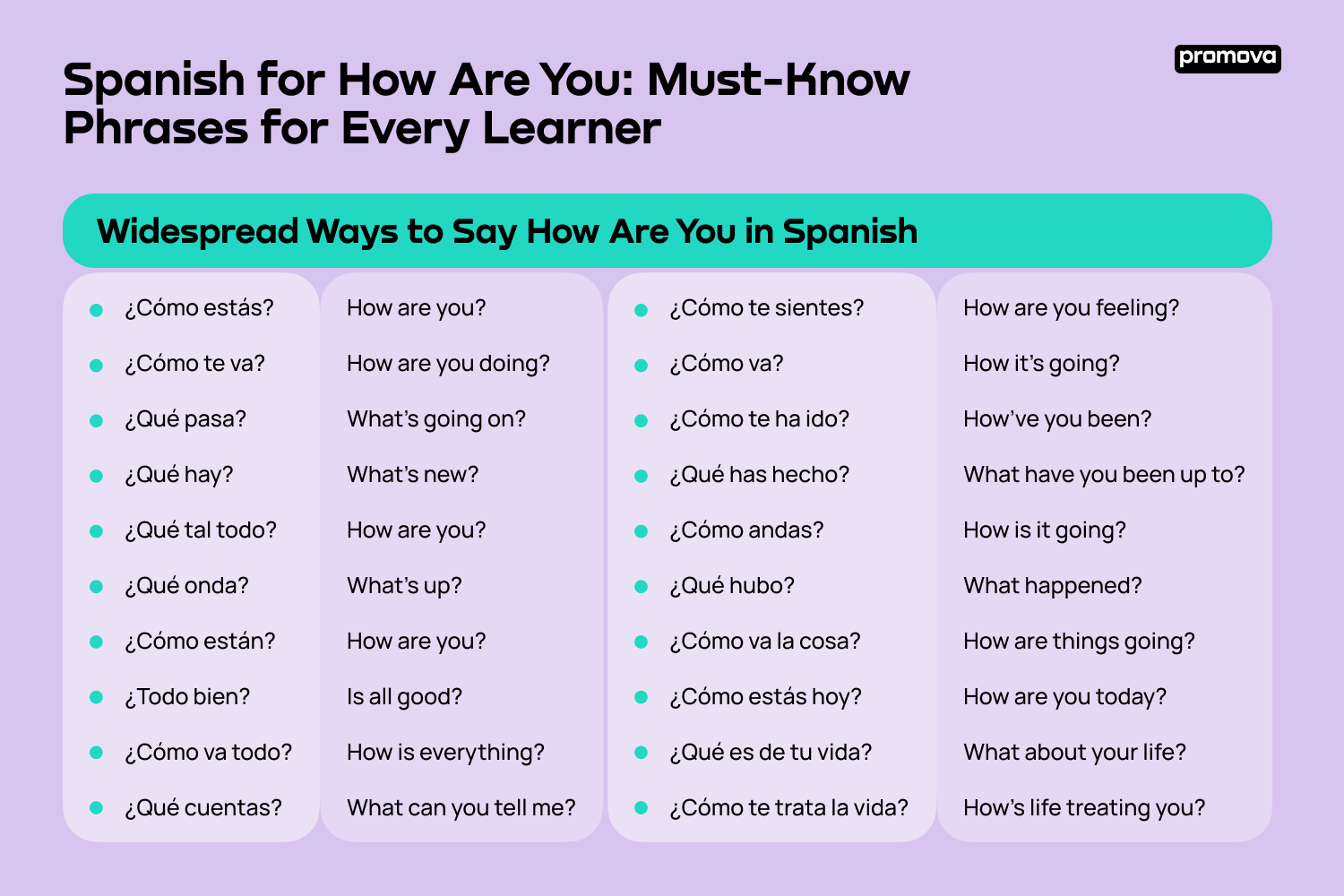
So, how do you say "How are you doing today?" in Spanish? The most common and versatile way is: ¿Cómo estás? (pronounced KOH-moh ehs-TAHS). This is an informal greeting, perfect for friends, family, and acquaintances you know well. Think of it like saying "How's it going?" or "What's up?" in English.
Must Read
For more formal situations, like meeting someone for the first time, speaking with someone older, or addressing someone in a position of authority, you'd use: ¿Cómo está usted? (pronounced KOH-moh ehs-TAH oos-TED). The "usted" makes it formal, similar to saying "How are you?" with a more respectful tone in English. Don't worry too much about getting this wrong at first; people will generally appreciate the effort regardless!
But what if you want to be even more specific? Here are a couple of other options:
- ¿Qué tal? (pronounced keh TAHL): This is a very casual and common greeting, similar to "What's up?" or "How's it going?".
- ¿Qué pasa? (pronounced keh PAH-sah): This translates to "What's happening?" and is very informal, used among close friends. Be mindful of the context; it can also imply that something is wrong.
Learning to say "How are you doing?" in Spanish is a small step that can lead to big rewards. It’s a simple way to connect with people, show your interest in their culture, and open doors to new experiences. So, go ahead and give it a try! Practice saying ¿Cómo estás? or ¿Cómo está usted?. Don't be afraid to make mistakes – that's part of the learning process. Embrace the fun, and watch how this little phrase can enrich your interactions and broaden your horizons. ¡Buena suerte! (Good luck!)