How Are Nonrenewable And Renewable Resources Alike

Okay, let's talk about energy! Specifically, where it comes from. Now, before your eyes glaze over, trust me – this is actually pretty interesting, and understanding the difference (and similarities!) between renewable and nonrenewable resources is super important for, you know, the whole future of the planet. Plus, it's way simpler than you think. Think of it like choosing between a never-ending pizza (renewable!) and a really, really delicious, but finite, box of chocolates (nonrenewable!). Intrigued? Let's dive in.
So, what's the big deal with understanding these resources? Well, it's all about sustainability. We need energy to power our lives – from charging our phones to heating our homes. But some ways of getting that energy are, well, a bit like overindulging in those chocolates. Eventually, they run out. Other ways, like tapping into the sun's power, are more like that pizza – they keep on coming! Knowing the difference helps us make informed choices about how we use energy and support a more sustainable future. It's about ensuring there's enough pizza (and everything else!) for everyone, forever!
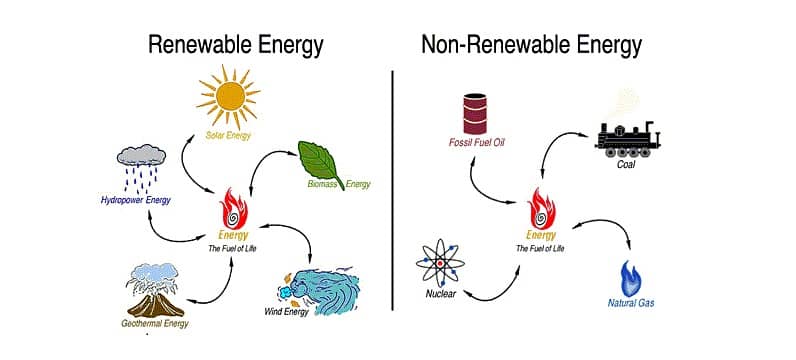
Now, let's get to the heart of the matter: what do these two types of resources have in common? The most fundamental similarity is that both renewable and nonrenewable resources are used to produce energy. Whether it’s burning coal (nonrenewable) to heat water and generate electricity, or harnessing the wind (renewable) to turn a turbine and generate electricity, the end goal is the same: to get that sweet, sweet energy to power our world.
Must Read
Another key similarity is that both resource types require infrastructure to be harnessed and utilized. Think about it. Oil (nonrenewable) needs to be extracted, refined, and transported through pipelines. Solar energy (renewable) requires solar panels, inverters, and transmission lines. Wind energy (renewable) needs turbines, substations, and power grids. No matter the source, getting the energy from its origin to your home involves some serious engineering and investment.
Finally, and perhaps surprisingly, both renewable and nonrenewable resources can have environmental impacts, though the nature and scale of those impacts often differ significantly. Mining for coal (nonrenewable) can devastate landscapes and pollute waterways. Building large hydroelectric dams (renewable) can disrupt river ecosystems. Even solar farms (renewable) require land and can affect local habitats. The trick is to carefully weigh the benefits and drawbacks of each option and strive to minimize the negative consequences.
So, while the differences between renewable and nonrenewable resources are crucial (one runs out, the other (mostly) doesn’t!), remembering these key similarities helps us understand the bigger picture. It's all about understanding where our energy comes from, how we get it, and what the consequences are. And hopefully, with that knowledge, we can all make smarter choices and build a brighter, more sustainable future!