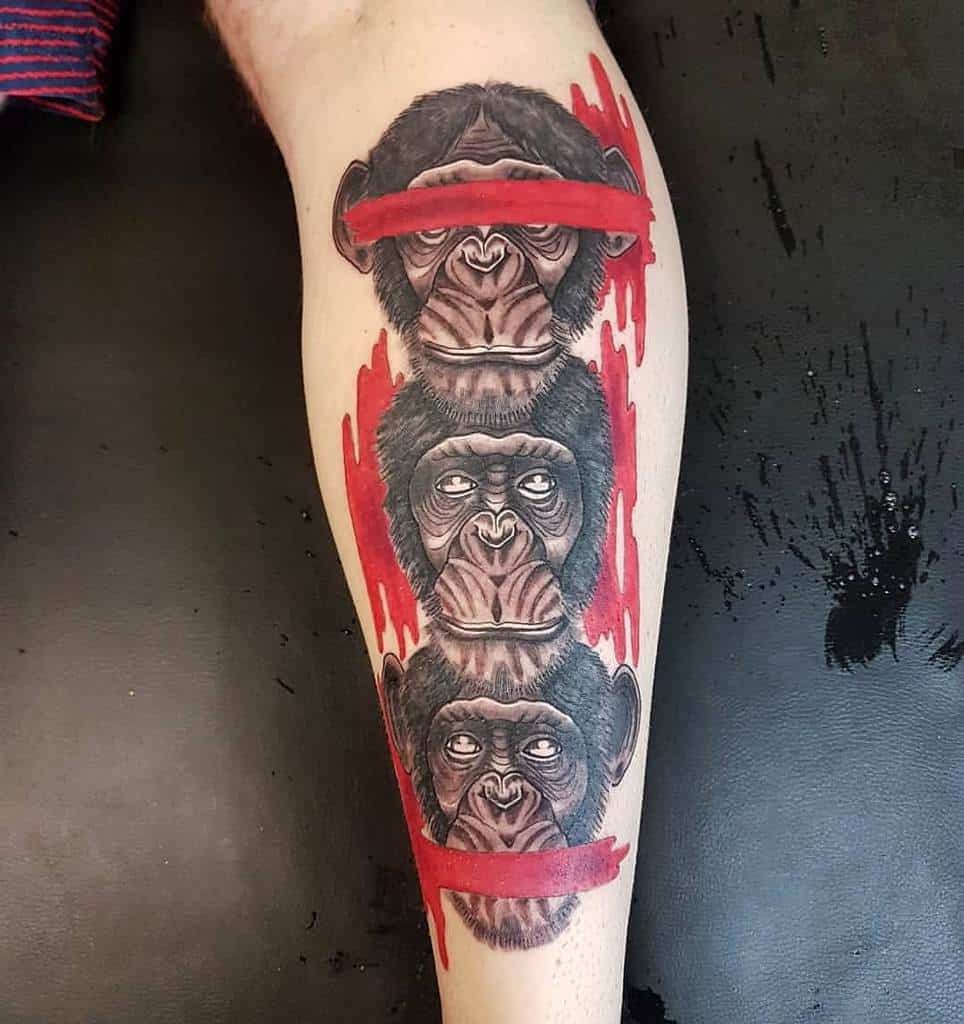
Hear No Evil Speak No Evil See No Evil Tattoos
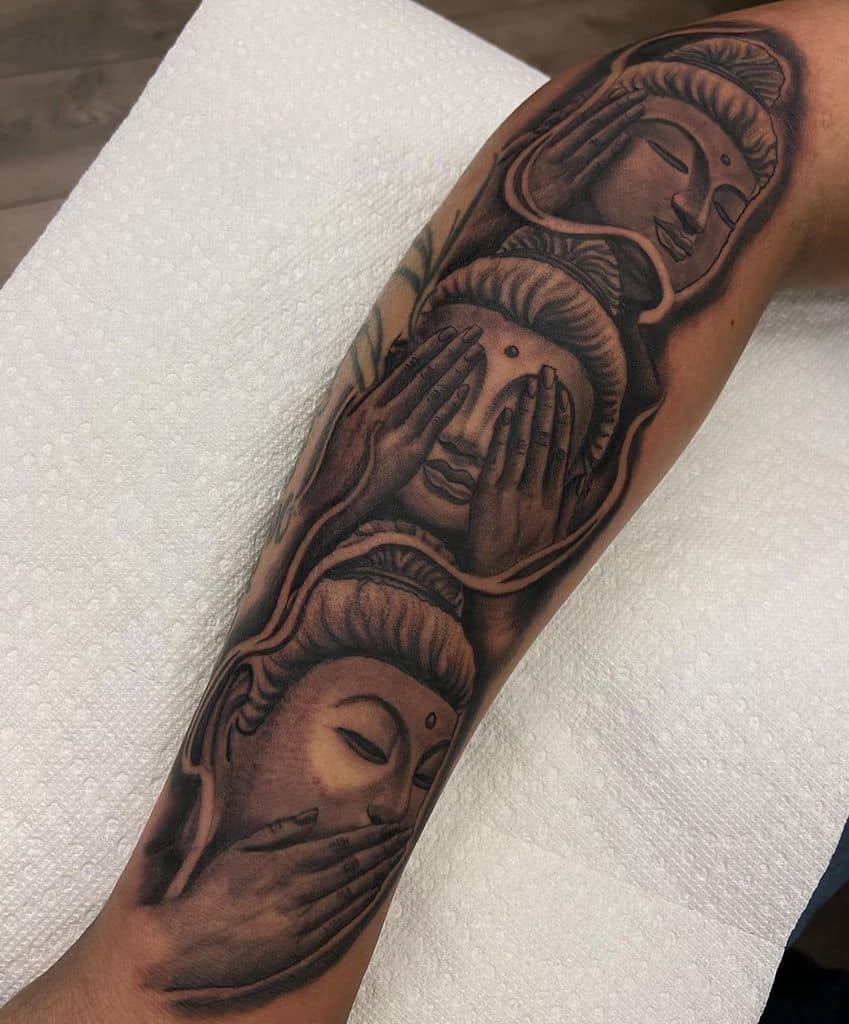
Have you ever scrolled through social media and spotted a tattoo of three monkeys covering their eyes, ears, and mouth? Or maybe seen it as a quirky emoji? It's the classic "Hear No Evil, Speak No Evil, See No Evil" trio, and while it might seem like a simple visual, it’s actually packed with history and layers of meaning. So, why is this ancient proverb still relevant today, and what can we learn from these wise little primates?
The core purpose of "Hear No Evil, Speak No Evil, See No Evil" is often interpreted as a call to avoid exposure to negativity. It suggests that by shielding ourselves from immoral or harmful sights, sounds, and words, we can protect our own integrity and moral compass. Think of it as a personal filter, helping us navigate the often-chaotic world around us. But the interpretation isn't always straightforward. Some see it as a form of willful ignorance, a way to avoid confronting uncomfortable truths. This duality is part of what makes it so compelling!
The benefits of reflecting on this proverb are numerous. On a personal level, it can encourage us to be more mindful of the information we consume. In a world saturated with news, opinions, and gossip, consciously choosing what we listen to, speak about, and observe can be incredibly empowering. It's about taking control of our mental and emotional well-being. Furthermore, in a society increasingly polarized and riddled with misinformation, reflecting on "Hear No Evil, Speak No Evil, See No Evil" pushes us to question our own biases and consider the potential consequences of passively accepting everything we encounter.
Must Read
You might be surprised to know that this concept pops up in education quite frequently. It's a fantastic starting point for discussions about ethics, responsibility, and critical thinking. Imagine a classroom debate: Is it better to be informed, even about unpleasant things, or to selectively ignore negativity for the sake of peace of mind? There's no single right answer, and that's the beauty of it!

In daily life, we can apply the principles of "Hear No Evil, Speak No Evil, See No Evil" in subtle ways. Consider the conversations you engage in. Are they uplifting and productive, or do they often devolve into negativity and gossip? Similarly, are you mindlessly scrolling through social media, absorbing potentially harmful content, or are you being selective about the information you consume? Choosing to focus on positive and constructive interactions can have a profound impact on your overall well-being. You can even use the visual of the three monkeys as a simple reminder throughout your day to be more mindful of your thoughts, words, and actions.
Want to explore this idea further? Try keeping a journal for a week, noting instances where you felt influenced by negativity. How did it affect your mood or behavior? Then, experiment with consciously filtering your exposure to negative information. Limit your time on social media, choose to engage in positive conversations, and focus on uplifting content. See if you notice a difference in your overall sense of well-being. The "Hear No Evil, Speak No Evil, See No Evil" concept is more than just a tattoo or an emoji; it’s an invitation to cultivate a more mindful and intentional approach to life, fostering a healthier and more balanced inner world.