Imagine a family reunion, but for elements! Not all families are the same, but today we're peeking into one of the most exciting, useful, and sometimes downright sparkly families on the periodic table: Group 2. These are the alkaline earth metals, a bunch of reactive, silvery-white elements that are secretly running a huge part of your world, often in surprising and delightful ways. They might not get the same superstar attention as gold or carbon, but trust me, your life would be a lot less interesting (and a lot weaker!) without them. Get ready to meet some unsung heroes.
Beryllium: The Jewel Maker
Let's kick off with Beryllium. This little fellow is like the high-achiever of the family, known for making things incredibly strong yet surprisingly light. Ever heard of emeralds or aquamarines? Yep, that dazzling green or serene blue sparkle comes courtesy of beryllium impurities! So, next time you admire a beautiful gemstone, you're essentially looking at beryllium's fancy artwork. Beyond bling, it's the secret ingredient in aerospace, making planes lighter and faster. It's tough, it's pretty, and it's always ready for an adventure – though best admired from a distance, as it's a bit shy (and can be tricky if not handled right!).
Magnesium: The Flashy Performer
Next up is the vibrant show-off, Magnesium. If you've ever seen a firework light up the night sky with a blindingly brilliant white flash, you've witnessed magnesium in action. It's the ultimate party starter! But magnesium isn't just about the dazzle. It's also a serious health superstar. Remember munching on spinach or bananas? You're giving your body a lovely dose of magnesium, essential for over 300 biochemical reactions in your body, from healthy muscles to a happy heart. Feeling a bit sluggish? Magnesium might be the unsung hero you need. It’s even in your antacid, calming your tummy after too much fun. From fireworks to fitness, magnesium truly lights up our lives in more ways than one.
Now, meet the ultimate strongman, Calcium. This is the bedrock of so much of what we hold dear, literally. Your bones? Your teeth? Thank calcium! It's the mineral that gives them their incredible strength. Think beyond your skeleton too. Seashells, coral reefs, even the chalk you might have used on a blackboard – all owe their robust existence to calcium. It’s what makes concrete strong enough to build skyscrapers and bridges. Without calcium, our world would be a wobbly mess! It's the quiet, dependable giant of Group 2, always there, always building, always strengthening. So, the next time you sip a glass of milk or admire a sturdy building, give a nod to calcium, the unsung architect of our physical world.
Strontium & Barium: The Colorful Cousins
Let's introduce the colourful cousins, Strontium and Barium. If magnesium gives us bright white fireworks, strontium brings the fiery red! It’s the vibrant artist of the family, painting the night sky with dramatic crimson hues. But strontium isn't just about the pyrotechnics; it also gives us those cool glow-in-the-dark paints and was even a crucial ingredient in the glass of old colour TV screens, making sure your cartoons looked just right. Then there's Barium, the green firework wizard! It delivers those stunning emerald flashes. Perhaps its most surprising role, however, is in medicine. Ever heard of a "barium swallow"? It's a special drink doctors use to light up your insides on an X-ray, allowing them to see what’s going on. It’s a bit like having an internal light show to help you get better. From dazzling displays to diagnostic brilliance, these two elements are full of surprises!
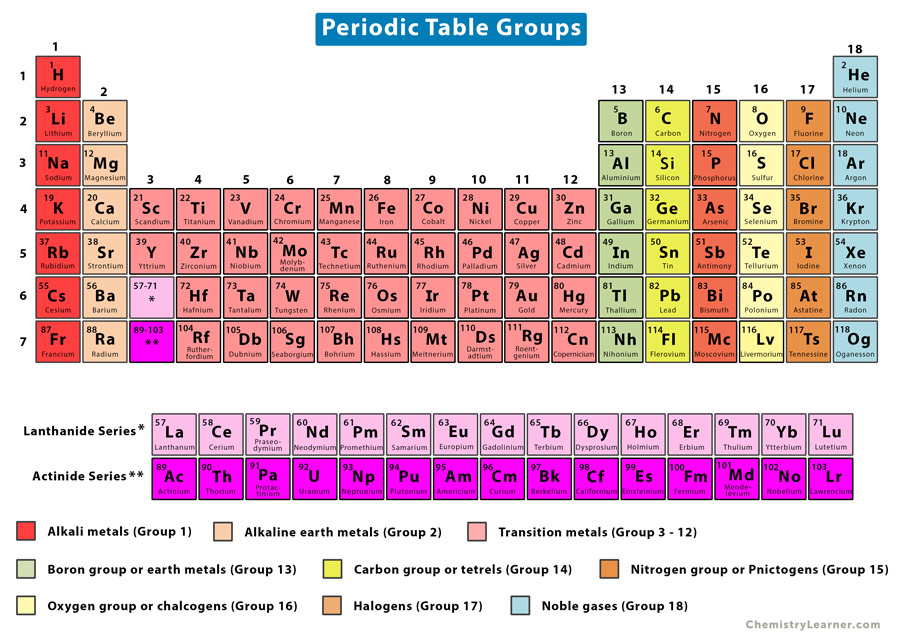
Periodic Table Of Elements With Group Numbers
Radium: The Trailblazer's Legacy
Finally, we arrive at Radium, the fascinating and somewhat poignant member of the family. Radium was discovered by the incredible Marie Curie, a true pioneer of science. It glows, literally, with its own ethereal light, a property that once captivated the world and led to its use in everything from watch dials to health elixirs – sadly, before its true dangers were understood. Radium’s story is a powerful reminder of both scientific wonder and the vital importance of caution and discovery. Today, it’s mostly confined to specific medical treatments, its glowing days largely a poignant chapter in scientific history, a beacon of human curiosity and its consequences.
“Nothing in life is to be feared, it is only to be understood. Now is the time to understand more, so that we may fear less.”
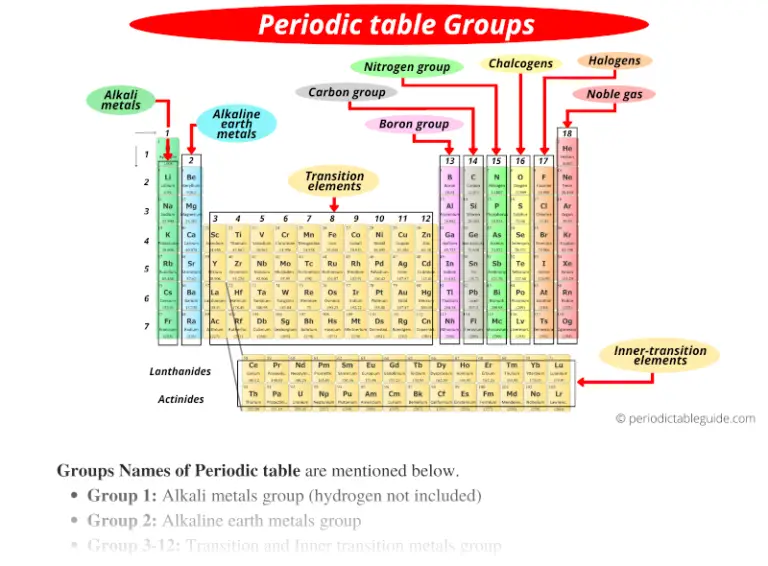
Periodic Table Groups Explained! (With Labeled Group Names)
– Marie Curie, a true inspiration and discoverer of Radium.
So there you have it: Group 2! From the structural integrity of your bones to the dazzling spectacle of fireworks, from precious gemstones to life-saving medical imaging, these elements are quietly (and sometimes not so quietly) making your world a more interesting, stronger, and often much brighter place. They might be reactive, but they’re also ridiculously useful and endlessly fascinating. Next time you see a brilliant flash, feel sturdy, or simply appreciate something beautiful, remember these amazing unsung heroes. They truly are the unsung stars of the periodic table, full of surprising charm and heartwarming utility.