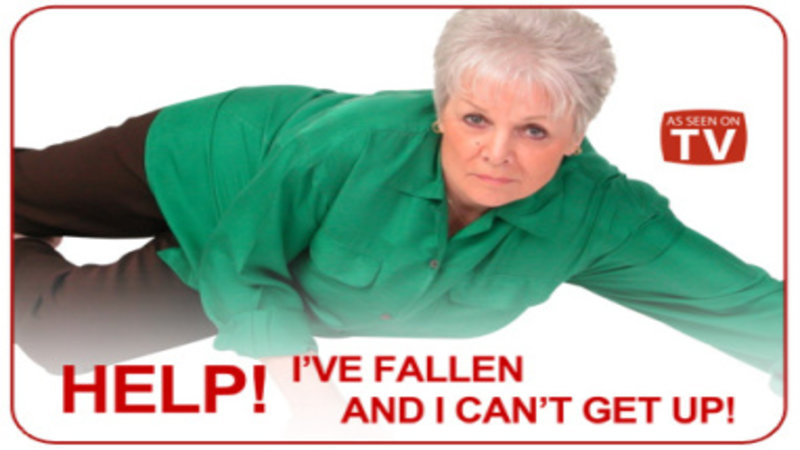
Fallen And I Can't Get Up Commercial

Ah, the immortal words! You know the ones. The phrase that instantly brings to mind a very specific, slightly dramatic scenario. We're talking, of course, about the legendary commercial featuring a startled, elderly woman, and her unforgettable cry: "I've fallen, and I can't get up!"
For many of us, these words aren't just a memory; they're practically woven into the fabric of our pop culture. It wasn't just an advertisement for a medical alert system; it was an event. A moment in television history that, for better or worse, etched itself into our collective consciousness, sometimes even inspiring a giggle when perhaps it shouldn't have.
The Drama, The Delivery, The Legend
Let's paint the picture. A serene setting, perhaps a cozy living room. Suddenly, a thud. Our dear protagonist is on the floor. Her face shows a mix of surprise and worry. Then, with a voice that truly sells the predicament, comes that iconic line. It's not just what she says, but how she says it. The slight tremor, the genuine urgency. You can almost feel the carpet she's on.
Must Read
This commercial, spearheaded by companies like Life Alert, wasn't just selling a product. It was selling peace of mind. But it did so with a level of theatricality that few ads ever achieve. It became a masterclass in memorable advertising, albeit perhaps not always in the way its creators originally intended.
Why It Stuck (And Still Sticks!)
Why did this particular ad, of all the millions ever aired, become such a phenomenon? It's simple, really. It was direct. It was relatable (even if you hadn't fallen, you could imagine it). And it had a catchphrase that was just too good, and too easy, to resist repeating. You say it, your friends say it. Someone slips on ice, and what's the first thing that comes to mind? You guessed it.

The phrase transcended its commercial origins. It became a punchline, a meme before memes were even a thing. It found its way into stand-up comedy routines, sitcoms, and countless everyday conversations. It’s the kind of cultural shorthand that instantly signals a certain type of exaggerated helplessness, often delivered with a playful wink.
My (Possibly Unpopular) Opinion
Here's where my "unpopular" opinion comes in. While the commercial addresses a serious topic – the safety of vulnerable individuals – I believe its sheer dramatic brilliance is why it endured. It wasn't subtle, and that was its superpower. It leaned into the drama so hard that it looped back around to become almost universally amusing, even as it delivered its important message. It’s like the commercial accidentally achieved comedy gold without even trying.

Think about it. We often mock it, but we also secretly admire its effectiveness. It's impossible to hear or say
"I've fallen, and I can't get up!"without a smile playing on your lips, or perhaps even launching into a full-on dramatic re-enactment. It’s a line that demands to be performed, not just spoken. And isn't that a sign of true artistic impact, however unintentional?
Beyond The Laughter: A Lasting Legacy
Despite all the playful jabs and imitations, there's an undeniable truth behind the commercial's initial purpose. It highlighted a real need. It raised awareness about the importance of safety for seniors and those living alone. So, while we might poke fun at its theatrical flair, the underlying message was, and remains, incredibly important.
The "I've fallen, and I can't get up!" commercial is more than just an old advertisement. It's a cultural touchstone. A testament to the power of a simple, direct, and yes, wonderfully dramatic message. It reminds us that sometimes, the most serious things can become ingrained in our minds through unexpected routes, even if those routes involve a little bit of playful exaggeration. So, the next time you hear those words, perhaps offer a little nod of respect. It really did, quite spectacularly, get up and keep going.