
Electrical Conductivity Of 304 Stainless Steel

Stainless steel! It's everywhere. From your kitchen sink to shiny skyscrapers. But what about its electrical superpowers? Does it conduct electricity like a superhero in a metal suit?
Not Quite a Lightning Bolt, But…
The truth? 304 stainless steel isn't the Usain Bolt of electrical conductors. It's more like a steady marathon runner. Reliable, but not breaking any speed records. Think of it as having a mild-mannered alter ego rather than flashy powers.
Why is it so interesting? Because it walks a fascinating line between conductor and insulator. It's not a super-conductor like copper, but it's also not a total electrical dud like rubber.
Must Read
So, How Conductive Are We Talking?
Okay, let’s talk numbers. But don’t worry, no complicated equations here! 304 stainless steel has an electrical conductivity of around 2-3% that of pure copper.
Imagine copper is a super-fast race car. Then 304 stainless steel is a dependable family sedan. It'll get you there, but not with the same lightning speed. It's not setting a course record, but it gets the job done!
That percentage might seem low, but it's important to understand why it's not meant to be a super-conductor in the first place. It's designed for other things. Like resisting rust and staying strong.
The Secret to Its… Unique… Conductivity
What's the deal with this "meh" conductivity? It all comes down to what 304 stainless steel is made of.
It's an alloy. That means it's a mix of metals. Primarily iron, chromium, and nickel. These ingredients are like the characters in a quirky movie. Each contributes their own flavor (or in this case, resistance) to the electrical flow.

That chromium is especially important. It forms a protective layer on the surface. This layer fights corrosion. However, it also hinders electrical flow.
Corrosion Resistance vs. Conductivity: A Balancing Act
Here’s the thing: 304 stainless steel is famous for resisting rust. This is why it's in so many applications. But that corrosion resistance comes at a cost. It’s a trade-off.
The elements that protect it from corrosion also make it a less-than-stellar electrical conductor. The protective layer gets in the way of the electrons doing their electric slide. It’s like trying to dance in a suit of armor.
So, it's a compromise. Strength and resistance versus electrical performance. And in many situations, that trade-off is totally worth it.
Why It Matters: Real-World Applications
Okay, so it's not a super-conductor. Who cares, right? Actually, you probably do! Because this conductivity (or lack thereof) affects tons of stuff in your life.
Think about cooking equipment. Stainless steel pots and pans are awesome for heat distribution. But they aren't exactly designed to be electric heating elements themselves.
It's also used in structural applications, where strength is more important than zippy electrical flow. 304 stainless steel is a workhorse! It just has a particular set of skills.
Spot Welding and Resistance Heating
Interestingly, that moderate resistance can actually be useful! Ever heard of spot welding? It uses electrical resistance to generate heat and fuse metal together. 304 stainless steel is often used in this process.
The resistance in 304 creates heat when electricity passes through. This allows spot welding to join two pieces together.
It's also used in some industrial heating applications. Where a controlled amount of heat is needed, its properties can be beneficial. It's a subtle power, but a useful one.
![Electrical and thermal properties of SUS304 [26]. | Download Scientific](https://www.researchgate.net/publication/367079878/figure/tbl1/AS:11431281112835201@1673570216075/Electrical-and-thermal-properties-of-SUS304-26.png)
Fun Facts and Quirky Comparisons
Let's get a little more playful. Imagine trying to power your entire house with 304 stainless steel wires. It would probably lead to a very dim and disappointing experience.
Compared to other materials, it's definitely a middle-of-the-road conductor. Aluminum is a better conductor, but not as strong. Copper is way better, but more expensive and susceptible to corrosion. It's like choosing between different tools in a toolbox. Each has its own strengths and weaknesses.
It's kind of like that friend who's good at a lot of things. But not the best at any one thing. Still valuable to have around though!
The Temperature Factor
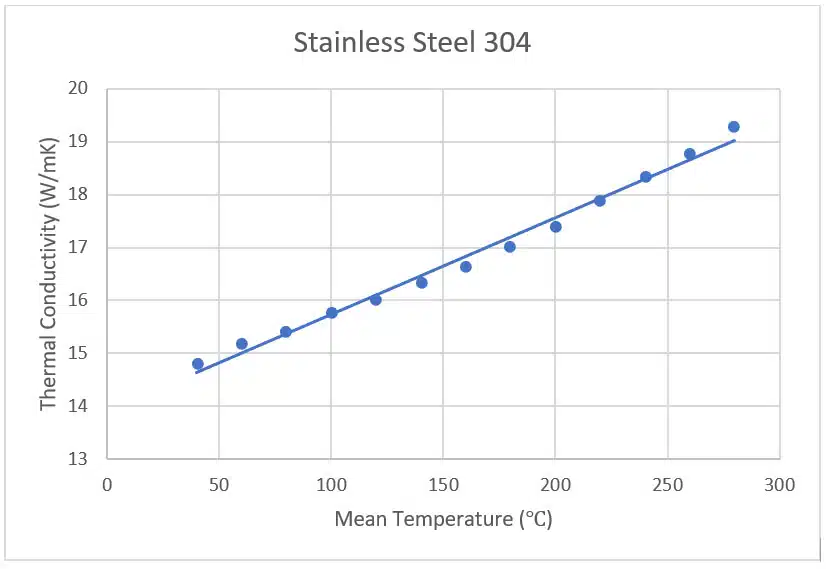
Here's another twist! Temperature can affect conductivity. As 304 stainless steel gets hotter, its resistance to electrical flow increases. This means it becomes less conductive.
Imagine trying to run a marathon in the blazing sun. You're going to be slower than usual, right? Same principle applies to electrons in hot stainless steel. They get sluggish.

This temperature dependence is important in certain applications. Especially where heat is a factor in electrical performance.
So, Should You Be Impressed?
Maybe not in a "wow, look at that speed demon!" kind of way. But definitely in a "that's a surprisingly versatile and resilient material!" kind of way.
304 stainless steel's electrical conductivity isn't its defining feature. But it's a piece of the puzzle that makes it so darn useful. It’s the quiet strength that makes it shine.
Next time you see something made of stainless steel, take a moment to appreciate its subtle electrical characteristics. You might just discover a new appreciation for this everyday wonder. It is what makes 304 Stainless Steel special!
The key is to understand that conductivity is only one piece of the 304 Stainless Steel puzzle.
It’s a material with a fascinating blend of properties. It is used across a wide range of applications. It's far more than just a shiny surface. And maybe, just maybe, that's the most electrifying thing about it.
So go forth! Explore the world of materials science. You might be surprised what electrifies you!