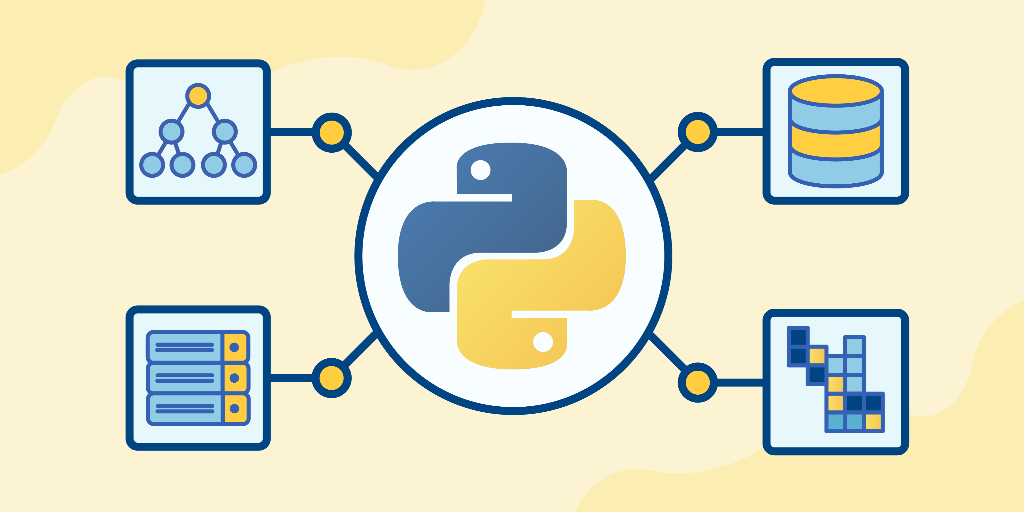
Educative Io Data Structures

Okay, picture this: me, fueled by lukewarm coffee and the sheer desperation of a deadline, staring blankly at a screen filled with… well, nothing useful. I was trying to wrangle a mountain of customer data into something resembling an insights report. Let's just say my usual "wing it and hope for the best" strategy was failing spectacularly. I needed help, and fast. Sound familiar? 😉
That's when the phrase "Data Structures" started echoing in my brain. Not in a creepy, haunted-house kind of way, but more like a… promising whisper. It turns out, knowing your way around data structures is like having a super-organized toolbox for your data. No more rummaging through a chaotic mess – just grab the right tool and bam – problem solved!
What’s the Big Deal with Data Structures Anyway?
So, what are data structures? Simply put, they're just ways of organizing and storing data. Think of them as containers, each designed for a specific purpose. Some are good for storing lists, others for relationships, and some are just plain speedy when you need to find something specific. The right choice can make your code significantly faster and more efficient. Seriously, we're talking the difference between a leisurely stroll and a rocket launch.
Must Read
And where does Educative.io fit into all this? Well, they offer a fantastic course (or rather, a whole learning path!) dedicated to mastering data structures and algorithms. It’s not just theory, it’s practical stuff you can actually use. No fluff, just pure, unadulterated data wrangling goodness. (Okay, maybe a little bit of fluff, but the good kind, like whipped cream on your code).
The Star Players: A Quick Rundown
Let's meet some of the headliners in the data structure world:
- Arrays: The OG. Simple, ordered lists. Great for storing a collection of the same type of data. Think of it like numbered parking spaces, each holding a car (your data!).
- Linked Lists: Dynamic lists that can grow or shrink as needed. Each item points to the next. Perfect for when you don't know how much data you'll have in advance. Kinda like a treasure hunt, each clue leads to the next.
- Stacks: Last-In, First-Out (LIFO). Like a stack of pancakes. The last pancake you put on is the first one you eat. Useful for things like function calls and undo operations.
- Queues: First-In, First-Out (FIFO). Like waiting in line at the grocery store. The first person in line is the first one served. Good for handling tasks in the order they arrive.
- Trees: Hierarchical structures. Like a family tree or a file system. Great for representing relationships between data.
- Hash Tables: Super-fast key-value lookups. Like a dictionary. You look up a word (the key) and find its definition (the value). Incredibly useful for searching and caching.
These are just a few of the data structures out there. Each has its strengths and weaknesses, and knowing when to use which one is key. That’s where Educative.io comes in handy – they walk you through the pros and cons of each, with plenty of examples and exercises.
Why Bother Learning This Stuff?
Look, I get it. Learning data structures can seem daunting. It’s another layer of complexity on top of everything else you're already juggling. But trust me, it's worth the effort. Here’s why:
- Better Code: You’ll write cleaner, more efficient code. Less spaghetti, more lasagna (the good kind!).
- Faster Performance: Your programs will run faster. Nobody wants to wait forever for your app to load.
- Improved Problem-Solving: You’ll be better equipped to tackle complex problems. Think of it as leveling up your coding superpowers.
- Job Security: Knowing data structures is a valuable skill in the tech industry. Recruiters drool over this stuff. (Okay, maybe not drool, but they definitely take notice).
Educative.io: Your Data Structure Dojo
So, where do you start? Well, if you're serious about leveling up your data structure game, I highly recommend checking out Educative.io's Data Structures and Algorithms course. They break down the concepts in a clear, easy-to-understand way, with plenty of interactive exercises and coding challenges. Plus, their "learn-by-doing" approach is way more engaging than just reading textbooks. (Let’s be honest, who actually reads textbooks these days? 😉)
It helped me turn that mountain of customer data into something actually useful. And if it can help a caffeine-fueled coder like me, it can definitely help you. So go forth, conquer your data, and become a data structure Jedi Master! May the algorithms be ever in your favor.