
Ebitda To Levered Free Cash Flow

Okay, financial ratios! I know, I know, your eyes might be glazing over already. But trust me, understanding the journey from EBITDA to Levered Free Cash Flow (LFCF) is like unlocking a secret level in the game of investing. It might sound intimidating, but we're going to make it fun (I promise!).
Why should you care? Because LFCF is a major key to understanding a company's true financial health. It tells you how much cash a company actually has available to pay down debt, invest in growth, or even (drumroll please)... return money to shareholders like you! Think of it as the financial fuel powering the company's engine.
EBITDA: The Starting Line
First, let's talk about EBITDA. It stands for Earnings Before Interest, Taxes, Depreciation, and Amortization. Sounds complicated, but it's really just a measure of a company's operating profitability. It basically strips away a bunch of accounting stuff that can sometimes obscure the core performance.
Must Read
Think of it this way: If you’re running a lemonade stand, EBITDA is roughly how much money you made selling lemonade before you paid taxes, paid off your loan for the fancy lemon squeezer, or accounted for the fact that your stand is slowly falling apart (depreciation). It's a good, initial snapshot of your stand's earning power. It gives you a good starting point for understanding the business.
But… and this is a big but… EBITDA isn't the whole story. (Is it ever?). It doesn't account for those crucial expenses like interest payments on debt or capital expenditures (buying a new, super-shiny lemon squeezer!). That’s where Levered Free Cash Flow comes in!

The LFCF Adventure: Taking the Scenic Route (But It's Worth It!)
Levered Free Cash Flow (LFCF) is like EBITDA's cooler, more practical cousin. It takes EBITDA and then factors in all the real-world stuff that actually impacts a company's cash flow.
So, how do we get there? Buckle up! It's not as scary as it looks.

- Start with EBITDA. This is our jumping-off point, remember?
- Subtract Taxes. You can't escape 'em! We need to account for the actual taxes the company paid (or will pay).
- Subtract Capital Expenditures (CapEx). This is the money the company spends on things like new equipment, buildings, or technology. Basically, anything that keeps the business running and growing. Investing in the future.
- Adjust for Changes in Working Capital. This is where things get a little…nuanced. Working capital is the difference between a company's current assets (like cash and accounts receivable) and its current liabilities (like accounts payable). Changes in working capital can impact cash flow. For example, if a company suddenly has to wait longer to get paid by its customers, that’s going to affect its cash flow.
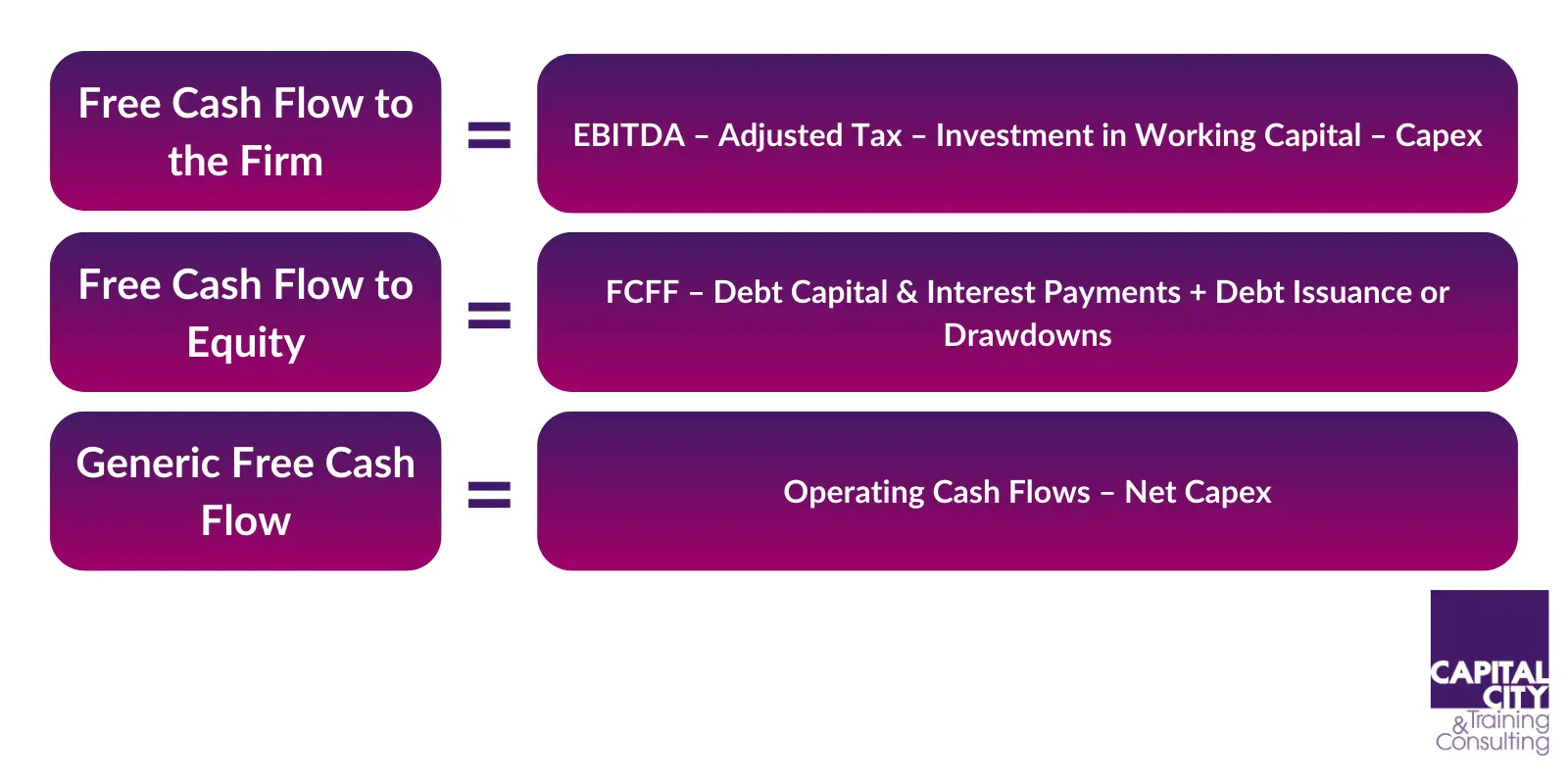
- Subtract Mandatory Debt Repayments. The final step. You can't forget that businesses need to pay down their debt. This shows what is left over for other uses.
LFCF = EBITDA - Taxes - CapEx - Changes in Working Capital - Mandatory Debt Repayments
Voila! What you're left with is the real amount of cash the company has available after paying for everything it needs to operate and grow. This is the money that can be used to pay down debt, invest in new projects, or reward shareholders with dividends or share buybacks.
Why LFCF Matters (And Makes Investing More Fun!)
Think about it: a company could have amazing EBITDA numbers, but if it's spending all its cash on new equipment and paying down massive debts, it might not be as financially healthy as it appears. LFCF gives you a much clearer picture.
Imagine two lemonade stands. Stand A has high EBITDA, but they also took out a huge loan for a robot lemon-squeezer, and they’re struggling to pay it off. Stand B has slightly lower EBITDA, but they're debt-free and generating tons of free cash flow. Which stand would you rather invest in? (Hint: probably Stand B!).
By understanding LFCF, you can make more informed investment decisions, avoid potential pitfalls, and ultimately, have more fun (yes, fun!) with your finances.

Learning about LFCF can help you determine the financial strength of a company.
The Takeaway: Embrace the Numbers!
Don't be intimidated by financial ratios! Understanding the journey from EBITDA to Levered Free Cash Flow is a powerful tool that can help you become a smarter, more confident investor. And who knows, maybe you'll even impress your friends at the next cocktail party (or at least have something interesting to talk about!).
So, go forth and explore! There are tons of resources online to help you learn more about LFCF and other financial metrics. The more you understand, the more empowered you'll feel to take control of your financial future. You've got this!