Does Thermal Conductivity Change With Temperature
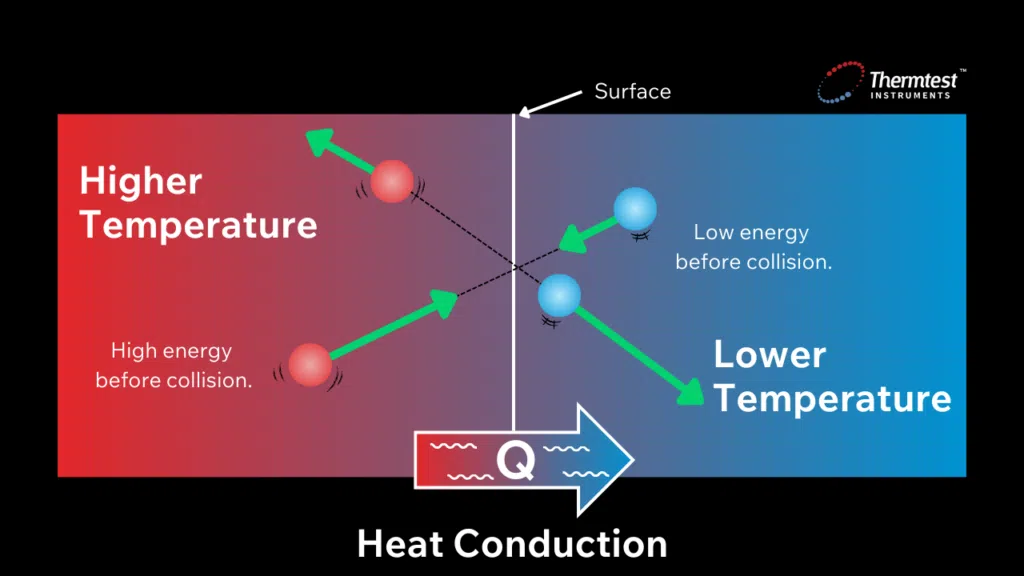
Ever wondered why your metal spoon gets hot way faster than your wooden spatula when stirring a simmering pot of soup? Or why a thin blanket seems to do little to keep you warm on a freezing night, while a thick down comforter is like being wrapped in a cozy cloud? The answer lies in thermal conductivity, a material's ability to conduct heat. But here's a fascinating question: does this ability stay constant, or does it change as the temperature rises or falls? It's a question that delves into the heart of how heat interacts with matter, and understanding it can give you a new appreciation for the world around you.
So, why bother learning about the temperature dependence of thermal conductivity? Well, for starters, it's fundamental to understanding how things work – from the engine in your car to the insulation in your home. Engineers rely on accurate thermal conductivity data at various temperatures to design everything from microchips that don't overheat to spacecraft that can withstand the extreme temperatures of space. In essence, it's about predicting and controlling heat flow. Understanding this concept allows us to build more efficient and safer technologies.
Think about it: the thermal conductivity of the metal in a car engine needs to be carefully considered so that heat can be efficiently dissipated, preventing the engine from melting down. Similarly, the thermal conductivity of the materials used in the heat shield of a spacecraft needs to be known at extremely high temperatures to ensure that the spacecraft can survive re-entry into the Earth's atmosphere. In everyday life, knowing how thermal conductivity changes with temperature helps us choose the right cookware for different cooking methods or select the most effective insulation for our homes to save energy. Even something as simple as selecting the best clothing for a cold day involves considering the thermal conductivity of the fabric at low temperatures.
Must Read
Does thermal conductivity change with temperature? The short answer is: generally, yes, but the extent of the change depends on the material. For many metals, thermal conductivity tends to decrease with increasing temperature. This is because the increased atomic vibrations at higher temperatures interfere with the flow of electrons, which are the primary carriers of heat in metals. However, for some other materials, particularly semiconductors and insulators, the relationship can be more complex and sometimes even increase with temperature over certain ranges.

Here's a simple way to explore this concept: Try placing a metal spoon and a wooden spoon in a cup of hot (but not scalding) water. Observe how quickly the handles heat up. While this won't directly show the temperature dependence, it will highlight the difference in thermal conductivity between the two materials. To further explore, you could try finding data online about the thermal conductivity of different metals at varying temperatures. Many engineering and physics resources provide this information.
While accurately measuring the temperature dependence of thermal conductivity requires sophisticated equipment, simply being aware of the concept can give you a deeper understanding of how the world around you works. It's a reminder that even seemingly simple properties like thermal conductivity can be surprisingly complex and play a crucial role in many aspects of our lives.