
Does Fan Use More Electricity Than Air Conditioner

Okay, let's talk electricity. You, me, and the appliances. Specifically, the fan and the air conditioner. Who's the bigger energy hog? This is a question that keeps me up at night. Okay, maybe not. But it’s totally a fun debate.
Think about it: summer heat. Ugh. You're sweaty. Miserable. You need relief. Do you reach for the fan or crank up the AC? Your wallet is silently screaming. But which one makes it scream LOUDER?
The Fan: Humble Hero?
The fan. It's reliable. It's often cheap to buy. And it just... blows. Literally. But is that simple act of air movement costing you a fortune?
Must Read
Here's the deal: fans are generally sips of electricity compared to the AC's gulps. We’re talking a massive difference. Think of it like this: a fan is a hamster nibbling on a lettuce leaf. An AC? A ravenous bear devouring a whole salmon.
Most fans, even those big, powerful ones, use a surprisingly small amount of energy. We're talking somewhere in the ballpark of 30 to 100 watts, give or take. That's less than some light bulbs! Mind. Blown.
Quirky Fact: Some old-school ceiling fans use more power than newer models. So, if you've got a vintage fan, it might be time for an upgrade. Think of it as a stylish, energy-saving makeover for your living room.
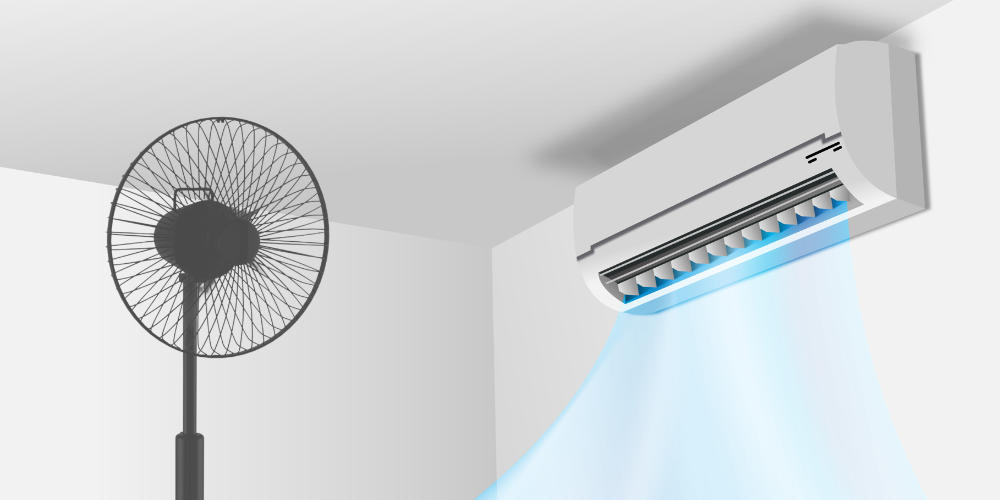
Another thing: fans don't actually cool the air. They just circulate it. They create a wind chill effect. That means you feel cooler because the moving air evaporates sweat from your skin. Clever, right?
The Air Conditioner: Cooling Conqueror (and Energy Eater)
Now, let’s talk about the AC. The undisputed champion of cooling. Also, the undisputed champion of energy consumption. We’re talking serious power here.
Air conditioners work by, well, actually cooling the air. They use refrigerants and compressors and all sorts of complicated science to remove heat and humidity. It's basically magic... but expensive magic.

An average window AC unit can suck up anywhere from 500 to 1500 watts. Central AC systems? Forget about it. We’re talking thousands of watts. That's like running a small oven all day long. Ouch!
Funny Detail: Ever notice how the lights sometimes dim when your AC kicks on? That’s your AC flexing its energy muscles. It's basically saying, "Gimme all the power!"
The size and efficiency of your AC play a huge role in how much energy it uses. A bigger AC will obviously use more power. And an older, less efficient AC will be even worse. Look for those Energy Star ratings! They're your friend.
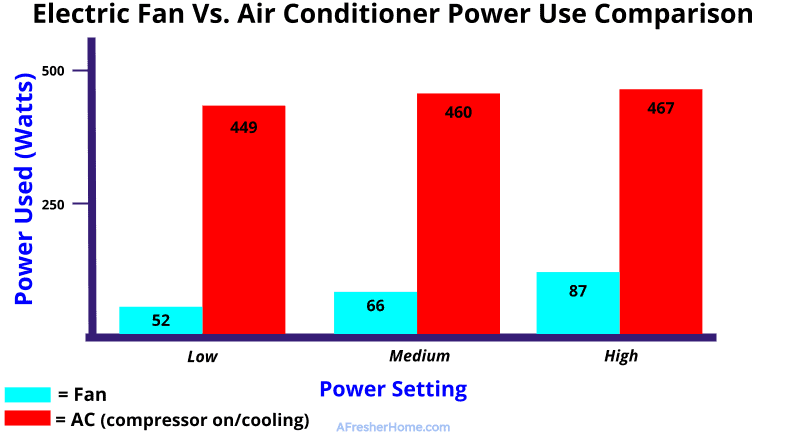
The Verdict: It's Not Even Close
Okay, so let's recap. Fans use a tiny amount of electricity. Air conditioners use a LOT. It's not even a fair fight. The AC is the clear winner... or loser, depending on how you look at it.
The bottom line: If you're looking to save energy (and money), use fans whenever possible. They're a great way to stay cool without breaking the bank. Think of it as a mini-vacation for your wallet.
But let's be real. Sometimes, you just need that icy blast of cold air from the AC. Especially during those heat waves that make you feel like you're living inside a pizza oven. Just be mindful of how much you're using it.
Smart Strategies for Summer Sanity
Here are some quick tips to keep cool without going broke:
- Use fans in conjunction with your AC. Run the fan to circulate the cool air more effectively.
- Close curtains and blinds during the hottest part of the day. This will help block out the sun's heat.
- Consider a programmable thermostat. Set it to automatically raise the temperature when you're not home.
- Make sure your AC unit is properly maintained. Clean filters and regular tune-ups can improve efficiency.
So, there you have it. The great fan vs. AC showdown. Hopefully, this has shed some light (or maybe just circulated some air) on the subject. Stay cool, my friends! And remember, knowledge is power... especially when it comes to saving electricity.
Final Thought: Maybe we should invent a super-efficient AC powered by hamsters. That would be the ultimate energy solution! Patent pending, of course.