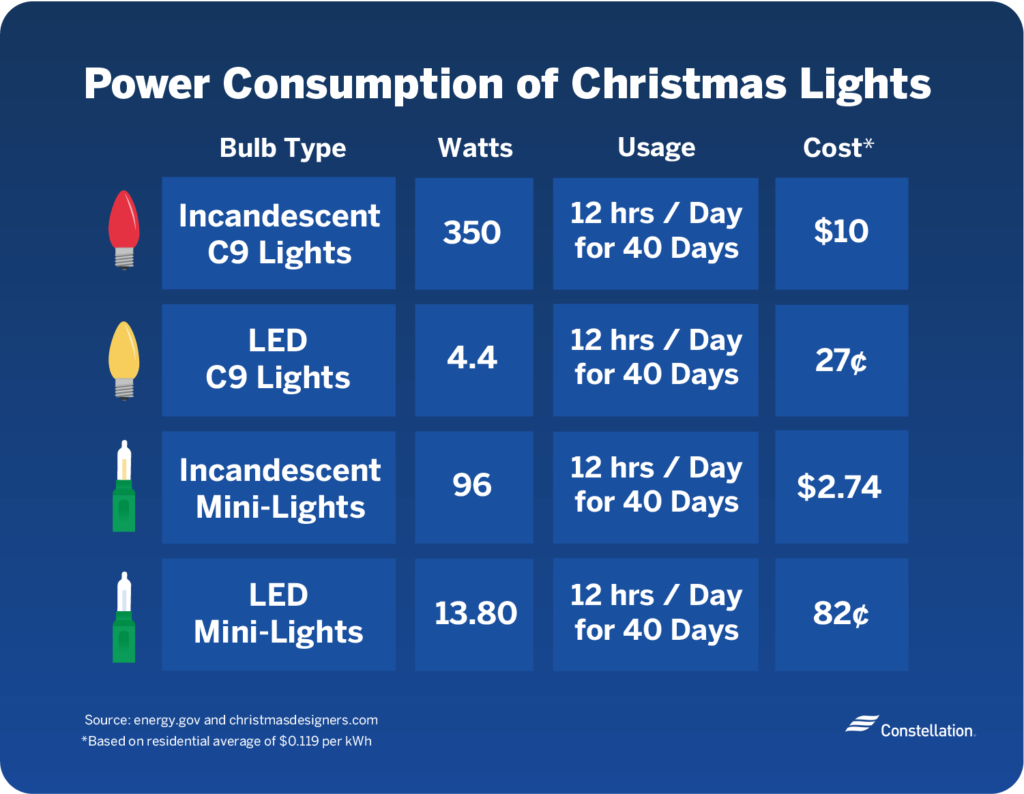
Do Christmas Lights Take A Lot Of Electricity

Ah, Christmas lights! Those twinkling beacons of joy that transform our homes into winter wonderlands. From the minimalist elegance of a single strand outlining a window to the dazzling extravagance of a Griswoldian display, Christmas lights are undeniably a beloved part of the holiday season. But a question often lurks amidst the festive cheer: do these shimmering spectacles really take a lot of electricity?
For artists and hobbyists, understanding the energy consumption of Christmas lights opens up a world of creative possibilities. Knowing the power draw allows for more informed decisions when designing large-scale installations, ensuring breathtaking visuals without breaking the bank. Think about it: a light artist planning an outdoor illumination event needs to balance brightness and spectacle with energy efficiency. This knowledge empowers them to choose the right types of lights, power sources, and control systems.
Even for the casual learner, grasping the basics of Christmas light electricity is fascinating. It allows you to compare different lighting technologies – incandescent versus LED, for example. You'll discover how much more efficient LEDs are, allowing you to create equally stunning displays with significantly less power. Consider the following examples:
Must Read
- Classic incandescent C7 bulbs: These vintage-style bulbs offer a warm, nostalgic glow but consume a considerable amount of energy. Perfect for smaller, focused displays where atmosphere is paramount.
- Modern LED string lights: These energy-sipping wonders come in a rainbow of colors and shapes. Ideal for larger-scale decorations and long-lasting brilliance without a hefty electric bill.
- Projection lights: These innovative devices project dazzling patterns onto your house, offering a quick and easy way to decorate without hanging a single strand.
Want to experiment with Christmas lights at home without feeling guilty about your carbon footprint? Here are a few simple tips:
- Switch to LEDs: This is the single most impactful change you can make. LEDs use up to 75% less energy than incandescent bulbs.
- Use a timer: Set your lights to turn on only when you're likely to see them, such as from dusk until bedtime.
- Consider solar-powered lights: These are perfect for outdoor decorations and require no external power source.
- Unplug when away: If you're going out of town, don't leave your lights burning!
Ultimately, the joy of Christmas lights extends beyond their aesthetic appeal. It's about creating a warm and inviting atmosphere, spreading holiday cheer, and adding a touch of magic to the winter season. By understanding the energy impact of these twinkling treasures and making informed choices, we can continue to enjoy the beauty of Christmas lights while being mindful of our environment. So go ahead, embrace the sparkle and shine, knowing that with a little planning, you can light up the holidays responsibly and with maximum enjoyment!