
Difference Between Welding Brazing And Soldering
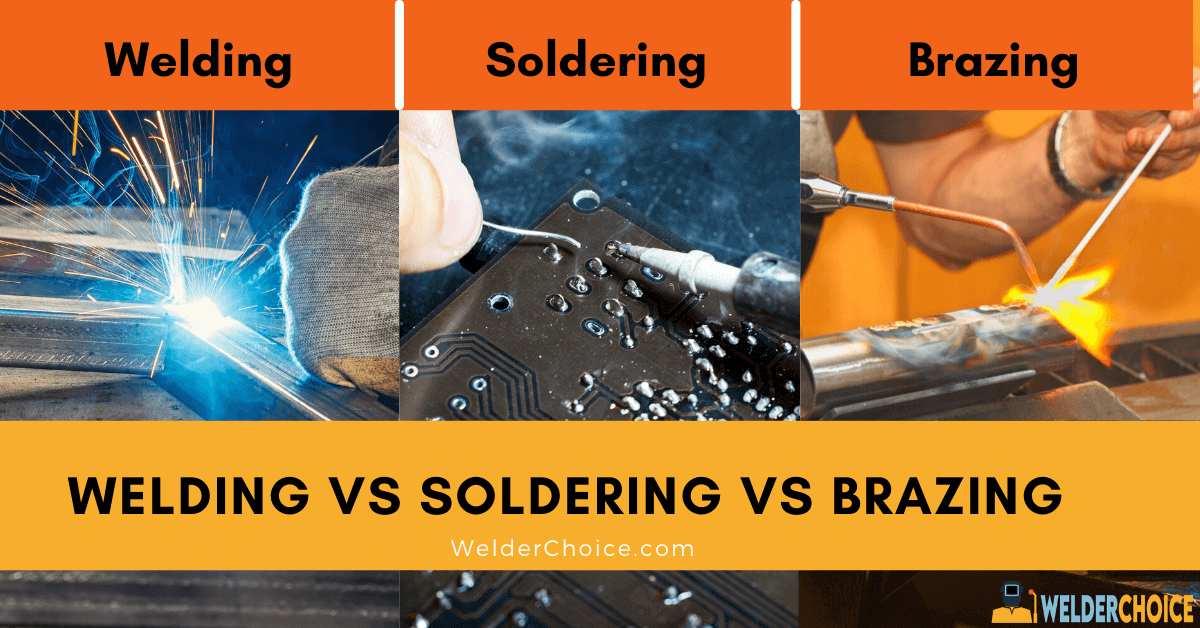
Ever looked at a shiny bike frame, a fancy copper pipe joint, or even the tiny wires inside your phone and wondered how they're all stuck together? Well, you've stumbled upon the fascinating world of joining metals! It's like metal matchmaking, and we're going to explore three of the most popular dating services: welding, brazing, and soldering.
Think of them as levels of commitment. Welding is like eloping, brazing is a big engagement party, and soldering is a casual date. Let's dive in and see what makes each one unique!
Welding: The "Til Death Do Us Part" of Metal Joining
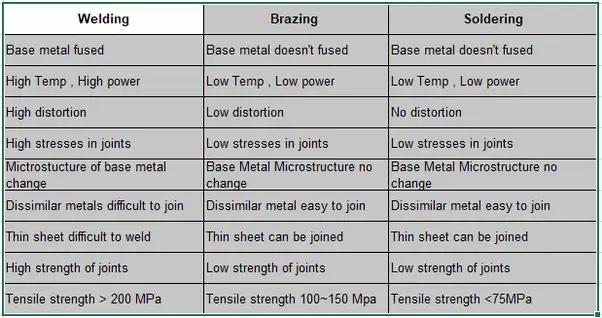
Welding is the heavy metal rockstar of the group. It's all about fusing the base metals together, creating a super strong, almost seamless bond.
Must Read
Imagine melting the edges of two LEGO bricks and sticking them together. That's kind of what welding does, but with metal and much, much higher temperatures!
How it Works: Molten Mayhem
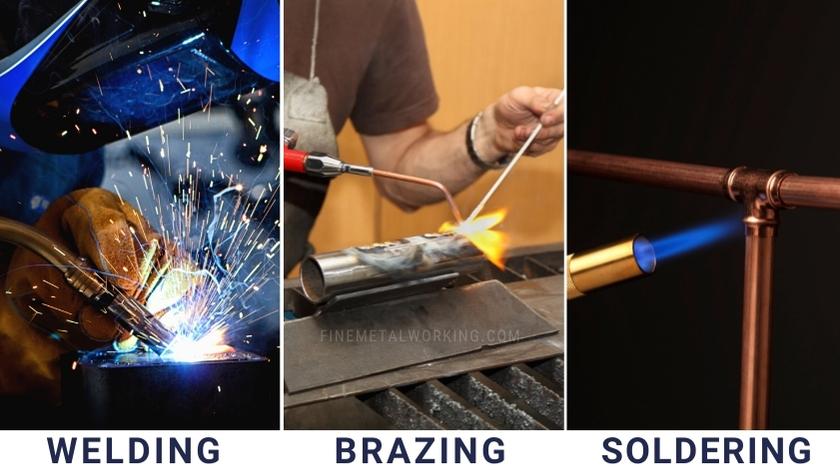
Welding uses intense heat – think arcs of electricity or focused flames – to melt the edges of the metals you want to join. Sometimes, a filler metal is added to the molten pool to strengthen the weld.
Once it cools, you've got a single, solid piece of metal. It's a permanent connection, like a tattoo for your metal.
Think about building a skyscraper or a car chassis. These need joints that can withstand enormous stress, so welding is the go-to method.
Pros and Cons: High Strength, High Skill
Pros: Super strong joints, can join thick materials, and creates a permanent bond. It's like the Hulk of metal joining!
Cons: Requires a skilled operator (welding isn't exactly beginner-friendly), can distort the metal due to the high heat, and often requires post-weld finishing.
It can be expensive to get all the equipment and training to do it right.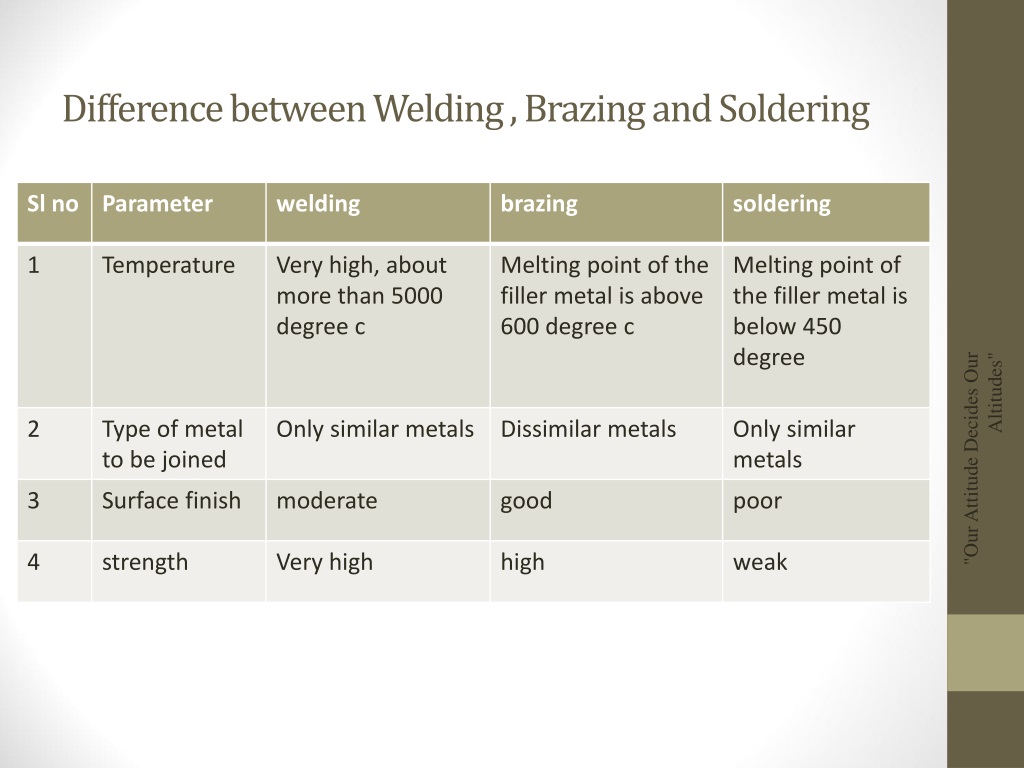
Brazing: The "Let's Get Serious" Metal Connection
Brazing is like the sophisticated older sibling of soldering. It uses a filler metal with a lower melting point than the base metals, but still significantly higher than soldering.
Think of it like using super-strong glue that melts when heated. The glue flows into the joint and creates a solid bond.
How it Works: Melting Filler, Not Base
Instead of melting the base metals themselves, brazing heats them up enough to melt a filler metal – usually a copper or silver alloy.
This molten filler metal then flows into the joint by capillary action, filling the gaps and creating a strong bond when it cools.
Think of joining copper pipes for plumbing. Brazing creates a strong, leak-proof seal without melting the pipes themselves. It is a very useful process.
Pros and Cons: Stronger than Solder, Lower Heat than Welding
Pros: Stronger joints than soldering, less distortion than welding, can join dissimilar metals (like copper to steel), and requires less skill than welding.
Cons: Not as strong as welding, the joint may be visible, and requires careful cleaning of the surfaces before brazing.
Brazing does require more gear than soldering but less than welding. It also requires an open flame torch and a lot of patience.
Soldering: The "Casual Friday" of Metal Joining
Soldering is the easy-going, everyday option. It uses a filler metal with a low melting point – usually a tin-lead alloy – to create a bond. It is also a great option for beginners.
Think of it like using a hot glue gun on metal. The glue melts and creates a connection, but it's not going to hold up to heavy stress.
How it Works: Low-Temperature Bonding
Soldering involves heating the joint with a soldering iron or torch, then applying the solder. The solder melts and flows into the joint, creating a conductive and relatively weak bond.
It is the perfect choice for electronics because it creates a great electrical connection that is less susceptible to corrosion.
Think of connecting wires in a circuit board. Soldering provides a good electrical connection and a bit of mechanical strength.
Pros and Cons: Easy to Use, Low Strength
Pros: Easy to learn, requires inexpensive equipment, low temperature minimizes damage to components, and good for electrical connections.
Cons: Weakest of the three methods, not suitable for high-stress applications, and lead-based solder is toxic (use lead-free solder for safety!).
Soldering is a great skill to have. It is not hard to learn and can open many doors to different projects and crafts.
The Big Showdown: Welding vs. Brazing vs. Soldering
So, how do you choose the right metal-joining technique for your project? Here's a quick guide:
Strength Matters
Need the strongest possible joint? Go for welding. Building a bridge? Welding is your answer.
Need a strong joint, but not quite as strong as a weld? Brazing is a solid choice. Fixing a bike frame? Consider brazing.
Just need to hold some small components together and create an electrical connection? Soldering is your friend. Fixing a broken wire? Solder away!
Heat Sensitivity
Working with heat-sensitive components? Soldering is the way to go. Don't want to melt your precious electronics?
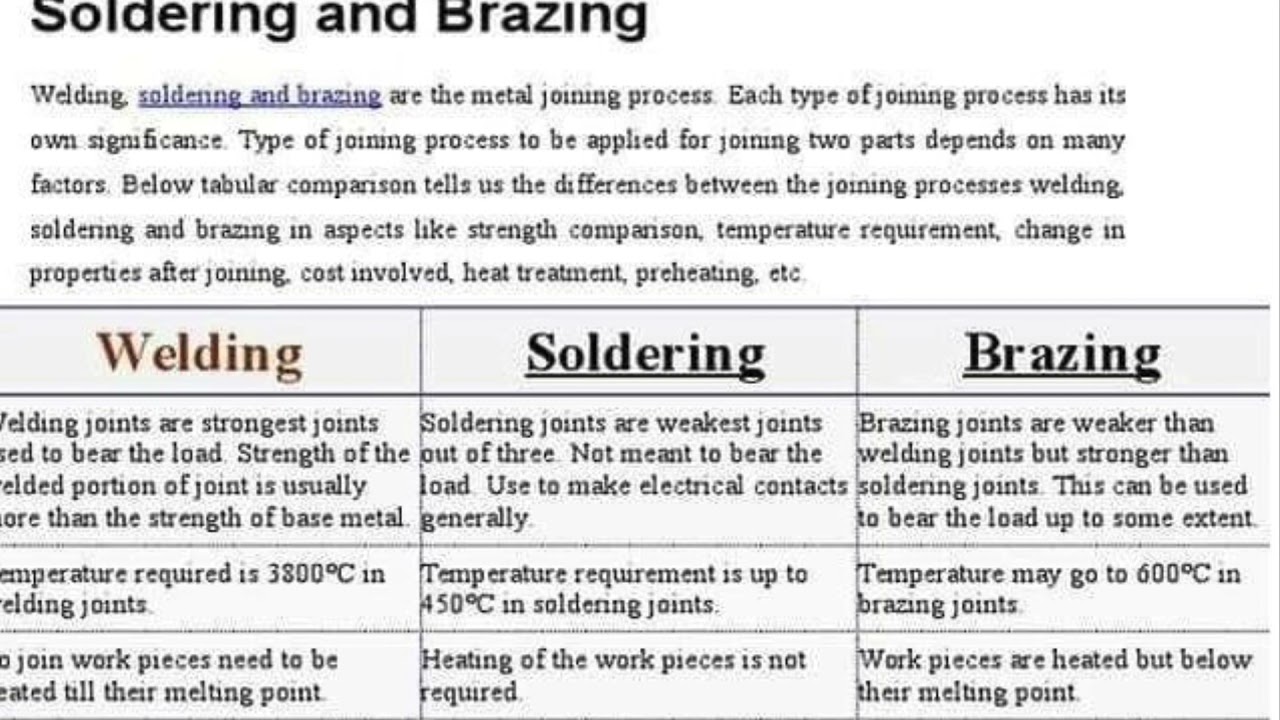
Need to avoid distortion? Brazing is a good compromise between strength and heat input.
If heat isn't an issue, and you need the strongest joint possible, welding will do the trick.
Skill Level and Equipment
New to metal joining? Start with soldering. It's the easiest to learn and requires the least expensive equipment.
Ready for a challenge? Try brazing. It requires more skill and equipment than soldering, but the results are worth it.
Want to become a metal-joining master? Learn welding. It's the most challenging, but also the most versatile.
Conclusion: Join the Metal-Joining Fun!
Whether you're a DIY enthusiast, a hobbyist, or a professional, understanding the differences between welding, brazing, and soldering is essential for creating strong, reliable metal joints. So, grab your tools, fire up your torch (safely, of course!), and start joining the metal-joining fun!
Remember to always prioritize safety and follow proper procedures when working with heat and metal. Happy joining!