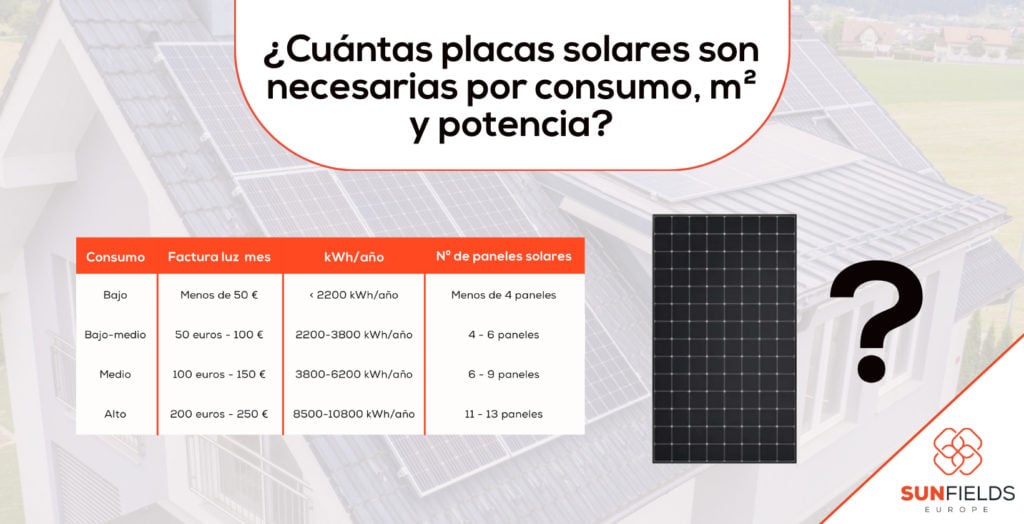
Cuantos Paneles Solares Necesito Para Una Casa
Let's face it, who doesn't love the idea of free energy and reducing their carbon footprint? Solar panels have become incredibly popular, and for good reason! They offer a fantastic way to harness the sun's power, turning it into electricity for our homes and reducing our reliance on traditional energy sources. But before you jump in and cover your roof with panels, a crucial question arises: Cuantos paneles solares necesito para una casa? (How many solar panels do I need for my house?).
The benefits of solar panels are numerous. First and foremost, they help you save money on your electricity bill. Imagine the satisfaction of watching that bill shrink month after month! Secondly, they're environmentally friendly. By using solar energy, you're reducing your carbon footprint and contributing to a cleaner, more sustainable future. Think of it as giving the planet a little hug. Finally, solar panels can increase your home's value. They're a desirable feature for potential buyers, demonstrating a commitment to sustainability and lower operating costs.
Solar panels are used in a wide range of applications. Obviously, powering homes is a big one. From running your lights and appliances to charging your electric vehicle, solar panels can handle a significant portion, if not all, of your energy needs. But they're also used in commercial buildings, powering businesses and reducing their energy expenses. You'll even see them in smaller applications, like powering streetlights or charging portable devices. The versatility of solar energy is truly remarkable.
Must Read
So, how do you figure out the magic number of panels you need? It's not quite as simple as just guessing! Here are a few practical tips to help you determine the right size solar panel system for your home:
First, analyze your energy consumption. Look at your past electricity bills to determine your average monthly kilowatt-hour (kWh) usage. This is your baseline. The higher your consumption, the more panels you'll likely need.

Second, consider your location and sunlight. The amount of sunlight your roof receives varies depending on where you live. A sunny location will require fewer panels than a cloudier one. Use online tools or consult with a solar installer to estimate your solar resource.
Third, factor in your roof's orientation and angle. South-facing roofs generally receive the most sunlight, but east- and west-facing roofs can also be viable options. The angle of your roof also affects sunlight absorption. An ideal angle optimizes sunlight capture throughout the year.
Fourth, choose the right type of solar panels. Panel efficiency varies. Higher-efficiency panels produce more electricity per square foot, meaning you'll need fewer of them. Consider your budget and available roof space when making your selection.
Fifth, and perhaps most importantly, consult with a qualified solar installer. A professional can assess your specific needs and recommend the optimal solar panel system for your home. They can also handle the installation process, ensuring everything is done safely and correctly. Don't be afraid to get multiple quotes to compare pricing and services.
Going solar is a significant investment, but it's an investment that can pay off handsomely in the long run. By carefully considering your energy needs, location, and roof characteristics, and by working with a reputable installer, you can determine the perfect number of solar panels for your home and start enjoying the benefits of clean, renewable energy. So, go forth and harness the power of the sun!