
Connecting Portable Generator To Home

Alright, picture this: it’s the dead of night, maybe a little stormy, and suddenly – poof! – your lights go out. That familiar, sinking feeling washes over you. The fridge starts making that sad, quiet hum, the Wi-Fi dies, and suddenly, everyone in the house remembers how to talk to each other (which, let's be real, can be its own kind of terror). Your coffee machine sits there, a silent, mocking testament to your suddenly lukewarm existence.
Sound familiar? We've all been there. And that's where your trusty portable generator comes in. It's like having a superhero sidekick, ready to leap into action when the grid decides to take an unscheduled nap. But here's the kicker: connecting that humming hero to your home isn't as simple as just "plugging it in." Oh no, my friend. There's a right way, and then there's the "please don't become a cautionary tale" way.
The "Uh-Oh" Way: Backfeeding (Just Say No!)
Let's tackle the tempting, but ultimately terrifying, method first. You know the one: you run a giant extension cord from your generator, through a window, into your house, and then plug it into a regular wall outlet. Maybe even another extension cord from there. Suddenly, your house looks like a spaghetti monster threw up on your porch.
Must Read
This is called backfeeding, and it’s a big, fat, dangerous NO. Think of it like this: your house's electrical system is designed to receive power from the grid, not send it back out. Plugging your generator into an outlet is like trying to pour water uphill into a waterfall. Not only is it incredibly inefficient and unlikely to power much, but more importantly, it can send electricity out onto the power lines.
Why is that bad? Because those lines might have linemen working on them, thinking they're safely de-energized. Your little surge of generator power could turn into a deadly surprise for them. Plus, it can fry your own appliances and even cause fires in your home. So, let’s agree: no backfeeding, ever. Your life, and the lives of utility workers, are worth more than a quick fix.

The Hero We Deserve: The Transfer Switch
Now for the good news! There's a perfectly safe, efficient, and surprisingly elegant solution: the transfer switch. Imagine it as the super-smart bouncer at the exclusive club that is your home's electrical system. It has one job: to make sure only one power source (either the grid or your generator) is allowed on the dance floor at any given time.
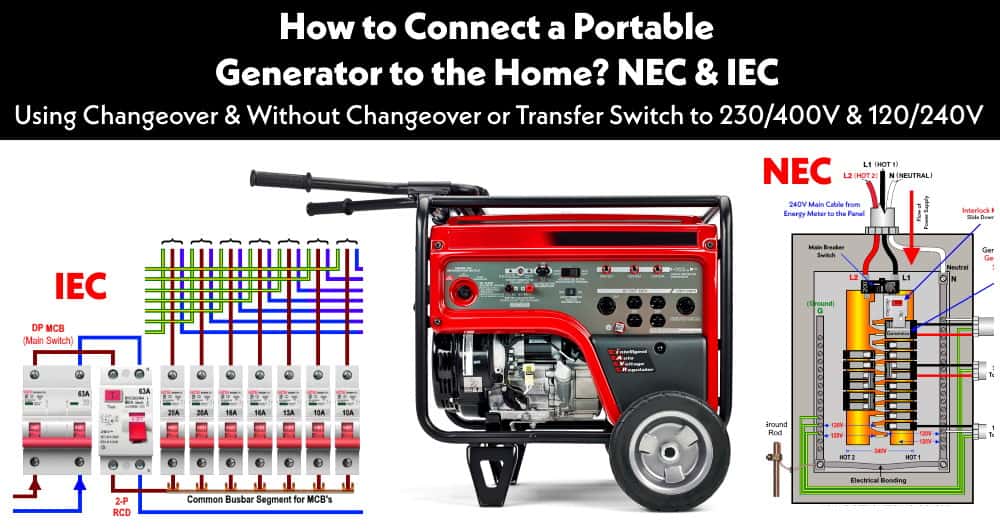
A transfer switch is a permanent installation, usually next to your main electrical panel. It has a special inlet on the outside of your house – think of it as a VIP entrance for your generator’s power. You plug your generator into this inlet, and inside, the transfer switch lets you manually select which circuits in your home get power from the generator.

Connecting Your Power Pal: How It Works
Once installed by a qualified electrician (seriously, this isn't a DIY weekend project unless you are a qualified electrician), using it is a breeze. When the power goes out:
- First, you’ll turn off all the circuit breakers on your transfer switch, and usually, the main breaker in your house. Safety first!
- You roll your generator outside (remember, NEVER run it indoors! More on that later).
- Plug one end of a heavy-duty generator cord into your generator and the other end into the special inlet on your house.
- Start your generator. Let it warm up a bit.
- Inside, you'll flip the main switch on your transfer switch from "Line" (grid power) to "Generator."
- Then, you selectively turn on the individual circuits you want to power – usually the fridge, a few lights, the furnace fan, maybe the Wi-Fi router (because sanity is an essential utility, too!).
And voilà! You've got power. You'll hear that satisfying hum, and suddenly, the coffee machine lives again, the fridge stops silently judging your rapidly melting ice cream, and the kids can get back to their screens (or at least, pretend to be doing homework online).
What Can You Power? Managing Expectations
Now, let's manage expectations. A portable generator isn't going to run your entire McMansion like it's business as usual. It's more about powering the essentials. Think survival and comfort, not a full-blown rave.
- Fridge/Freezer: Your food's best friend.
- Furnace fan: Keeps you warm (or cool, if it's an AC fan).
- Some lights: No more stubbing toes in the dark!
- Well pump: If you're on well water, this is huge.
- Charging phones/laptops: Keep those lifelines open.
- Wi-Fi router: The ultimate peacekeeper.
You'll likely be rotating what you use. Running the microwave? Turn off the lights temporarily. It’s a delicate dance, but one that keeps life much more pleasant during an outage.

The Golden Rule: Safety, Safety, Safety!
I mentioned it before, but it bears repeating: generators must always be run outdoors! This isn't just a suggestion; it's a non-negotiable rule. Your generator produces carbon monoxide, a silent, odorless, invisible killer. It's like a ninja assassin you can't see or smell. Make sure your generator is placed far away from windows, doors, and vents, ideally at least 15-20 feet away from your house.
Also, have working carbon monoxide detectors in your home – preferably on every level. And when it comes to refueling, always turn off and let the generator cool down before adding more gas. Nobody wants to deal with a hot engine and flammable liquids in the dark.
The Takeaway: Peace of Mind
Connecting a portable generator to your home properly is about more than just keeping the lights on. It’s about peace of mind. It’s knowing that when the grid inevitably hiccups, you're ready. You won't be scrambling, cursing the darkness, or watching your frozen pizzas weep. Instead, you'll be the neighborhood hero, sipping your hot coffee, maybe even offering to charge a neighbor's phone. Because being prepared isn't paranoid; it's just smart. And having a warm house and a charged phone when everyone else is shivering in the dark? That, my friend, is truly priceless.