
Compressive Strength Test Of Concrete Cylinder

Hey, so you wanna know about concrete cylinder crushing, huh? Okay, picture this: you're building a skyscraper (or maybe just a really awesome birdhouse), and you need to know if your concrete is, well, up to the job. Enter the compressive strength test! It's basically a concrete stress test, but less yoga-pants-and-green-smoothie and more… hydraulic press. Dramatic, right?
The main goal? Figuring out just how much oomph that concrete can handle before it goes kaboom. Think of it as a concrete gladiator match. Will it survive? Only the press knows!
So, here's the super-simplified version of how it all goes down:
Must Read
Cylinder Prep: The Concrete Spa Day (Sort Of)
First, we're not talking about just any concrete. We’re talking about specially made concrete cylinders. They're usually about 6 inches in diameter and 12 inches tall. Why those dimensions? Because, science! Seriously, there's a reason. Something about standardizing things for accurate comparison, but let’s not get bogged down in the deets, okay?
These cylinders are lovingly (or maybe not-so-lovingly, depending on who's doing the pouring) molded and then carefully cured. Curing is key! It's like letting the concrete get its beauty sleep. We’re talking about keeping it moist and at the right temperature for a certain amount of time – usually 7, 28, or even 56 days. The longer the cure, the stronger (usually) it gets. It's like aging a fine wine… or a really sturdy brick.
The Crushing Ceremony: Let the Games Begin!
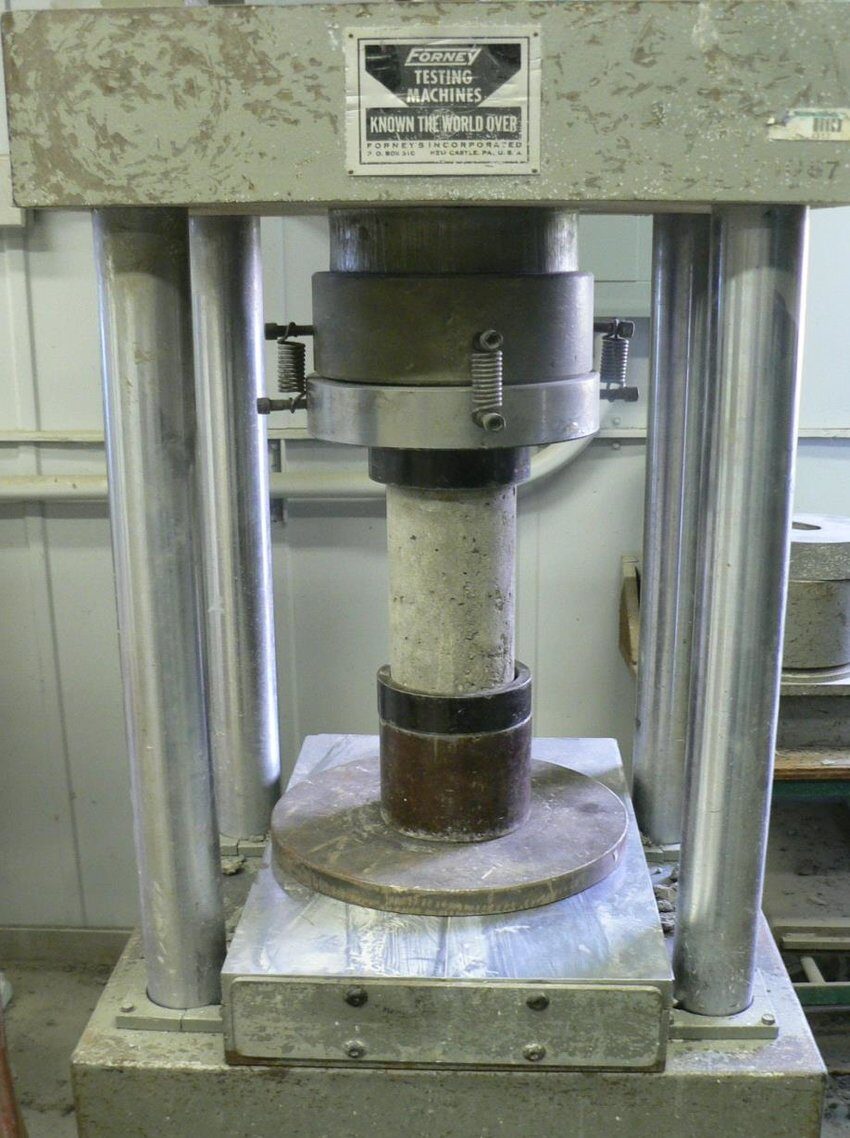
Next comes the fun part! We take our cured cylinder and place it in a massive machine called a compression testing machine. This thing is basically a giant hydraulic press. We're talking serious force here.
Before we go all smashy-smashy, we carefully center the cylinder between the machine's platens (those big, flat metal plates). Why center it? Because we want the force to be evenly distributed. Otherwise, it’s like trying to break a stick by bending it in the middle vs. snapping it over your knee – big difference in the amount of force needed, right?
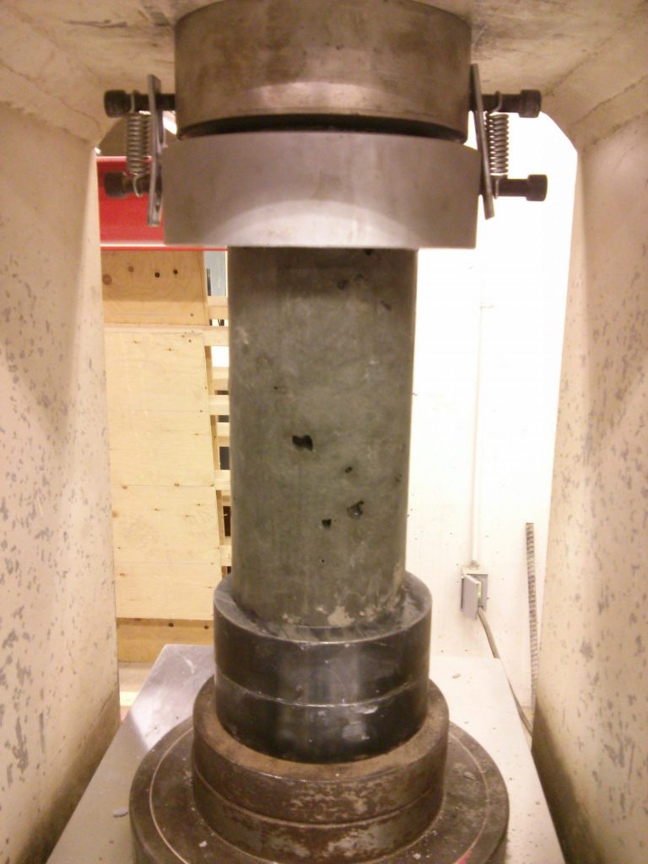
Then, the machine slowly but surely applies pressure. We’re gradually increasing the load, like turning up the volume on your favorite heavy metal song. Except instead of eardrums, we're blasting concrete!
The machine keeps cranking up the pressure until… CRACK! The cylinder yields. The concrete fractures, crumbles (sometimes spectacularly!), and basically gives up the ghost. Dramatic, I know.
Numbers, Numbers Everywhere! Decoding the Concrete's Fate
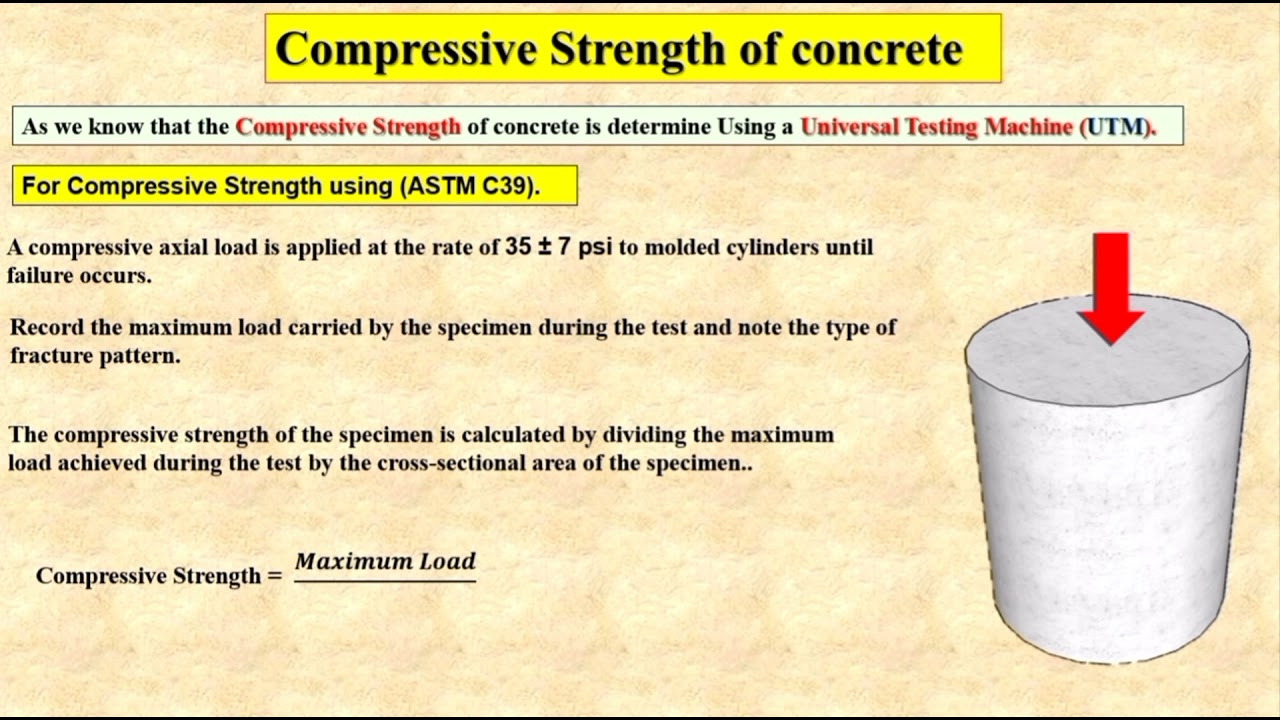
But what does all this crushing tell us? Well, the machine records the maximum force that the cylinder withstood before it failed. We then use this force (measured in pounds or kilonewtons, depending on your preference) and the cylinder's cross-sectional area (remember that 6-inch diameter?) to calculate the compressive strength.

The formula? It’s pretty straightforward: Compressive Strength = Force / Area. Ta-da! Math! Don’t worry, you don’t need to be Einstein to figure it out (unless you are Einstein, in which case, hi!).
The result is usually expressed in pounds per square inch (psi) or megapascals (MPa). This number tells us how much pressure the concrete can withstand before it gives way. A higher number means stronger concrete, which is what we want, right? After all, nobody wants a wobbly skyscraper (or birdhouse, for that matter!).
So, What’s the Point of All This Crushing?
Okay, okay, so we smash a cylinder. Big deal, right? Well, actually, it is a big deal! The compressive strength test is crucial for ensuring the safety and durability of structures. This test validates the concrete mix design, makes sure it meets the required specifications, and confirms that the concrete is strong enough to handle the loads it will be subjected to in real life. Think of it as a concrete quality control check.
Plus, it’s a legal requirement! Building codes mandate compressive strength testing to ensure structures meet safety standards. So, next time you see a construction site, remember those little cylinders being crushed. They're the unsung heroes making sure everything stays standing. Aren’t they something?
So, there you have it! The compressive strength test of concrete cylinders, explained in a way that hopefully didn't put you to sleep. Now you can impress your friends at your next cocktail party with your newfound concrete crushing knowledge. You're welcome!