Como Saber Si La Piel De Mantarraya Es Original

Alright, settle in folks, because we’re diving deep… really deep… into the murky waters of… stingray leather identification! Yep, you heard me right. Forget treasure maps and pirate booty; we’re hunting for authentic ray skin. Why? Because apparently, sporting a genuine ray-skin wallet is the new flexing move. Who knew?
So, you’ve just bought a swanky new ray-skin belt buckle, and you’re ready to strut your stuff like you just walked off the set of "Pirates of the Caribbean: High Fashion Edition." But a nagging thought creeps into your brain: Is this thing the real deal, or did I just get swindled by a street vendor with a suspicious twinkle in his eye? Fear not, my friend! I’m here to guide you through the labyrinth of ray skin authenticity. Consider me your personal ray-dar (get it? Ray-dar!).
The Starry Night Test (and Why It’s Probably Useless)
Legend has it (by which I mean, I just made this up) that genuine ray skin has a shimmer reminiscent of a Vincent van Gogh painting. Supposedly, you’re supposed to hold it up to the moonlight and whisper ancient sea shanties. If the constellations align and you hear the faint sound of a mermaid singing opera, then congratulations! You have authentic ray skin.
Must Read
Okay, I’m kidding. Please don't serenade your belt buckle under the moonlight. You'll just look weird.
The Real Deal: Identifying Genuine Ray Skin
Alright, enough tomfoolery. Let’s get serious (ish). Here’s how to tell if your ray skin is the real McCoy:

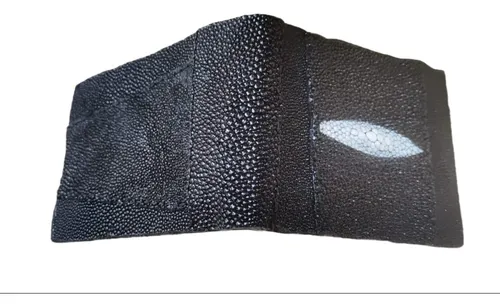
- The Texture Tells a Tale: Real ray skin has a very distinctive texture. It's bumpy, almost like sandpaper, thanks to the calcified cartilage granules – think tiny, embedded pebbles. If it's smooth as a baby’s bottom, it’s probably fake. Unless, of course, it is a baby's bottom – which, let’s hope it isn’t.
Speaking of babies, did you know that baby rays are called pups? I just thought you should know. Back to the bumpy stuff.
- The Center of Attention: Look for the characteristic "star" or "eye" pattern in the center of the hide. This is where the dorsal fin used to be (poor little guy). This area is usually raised and feels different from the rest of the skin. A fake will often have a poorly defined or completely absent star. It's like trying to find the North Star in a cloudy sky – impossible!
Now, I'm not saying the ray gave up its fin willingly, but hey, at least its sacrifice contributed to a pretty cool belt buckle, right? (Don’t @ me, PETA! I’m just trying to be funny… and informative.)

- The Fire Test (DO NOT TRY THIS AT HOME...OR ANYWHERE): In the olden days (and by "olden days," I mean, like, five minutes ago when I was brainstorming), some folks would (allegedly!) hold a lighter to a small, inconspicuous area of the skin. Real ray skin is fire-resistant due to its mineralized structure. Fake ray skin (usually plastic or embossed leather) will melt, smell terrible, and generally make you look like an arsonist with questionable fashion sense.
Seriously, don’t set your wallet on fire. Just trust me on this one. It's a terrible idea, no matter how desperate you are to prove its authenticity.
- The Bend and Flex: Genuine ray skin is relatively inflexible. It won't bend and flex like regular leather. This is due to those lovely calcified granules we talked about earlier. Try bending a small, discreet section of the skin. If it folds easily, it's likely a fake. Imagine trying to fold a brick – yeah, not gonna happen. Ray skin is basically the brick of the leather world.
Just a little bend, though. Don't Hulk-smash your potential wallet into oblivion.

- The Price is Right (or Wrong): Let's be honest: real ray skin ain't cheap. If you found a "ray skin" wallet for the price of a cup of coffee, alarms should be blaring in your head louder than a seagull convention. Genuine ray skin products require skilled craftsmanship and are made from a relatively rare material. If the price seems too good to be true, it probably is.
Think of it this way: you get what you pay for. Unless, of course, you're buying lottery tickets. Then, all bets are off.
Final Thoughts: Trust Your Gut (and Your Ray-dar!)
Ultimately, identifying genuine ray skin requires a combination of observation, common sense, and maybe a little bit of luck. If you're still unsure, consult with a leather expert or a reputable dealer. Don't be afraid to ask questions and do your research. And remember, if something seems fishy (pun intended!), it probably is. Now go forth and conquer the world of ray-skin fashion… responsibly! And please, don’t set anything on fire.