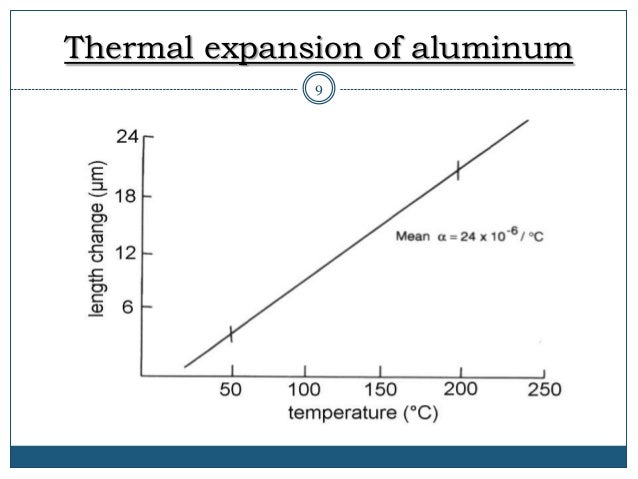
Coefficient Of Thermal Expansion Of Aluminum 6061

Ever noticed how a metal lid on a glass jar seems absolutely stuck tight until you run it under hot water? That, my friend, is the Coefficient of Thermal Expansion (CTE) in action. And when we talk about aluminum, especially the popular 6061 alloy, this CTE is something worth knowing.
Think of CTE as a material's willingness to do the limbo – how much it’ll stretch or shrink when the temperature changes. Imagine a tiny metal dude inside the aluminum, doing push-ups. Heat him up, he does more push-ups, expanding outward. Cool him down, fewer push-ups, he shrinks back. Simple, right?
Aluminum 6061: The Common Joe
Aluminum 6061 is like the friendly neighbor of the metal world. It's everywhere! From airplane parts to bicycle frames to that fancy heat sink in your computer, 6061 is a workhorse. Because it’s so versatile, understanding how it reacts to temperature changes is a big deal.
Must Read
So, what’s 6061's CTE? It's roughly around 23.6 x 10⁻⁶ /°C (or 13.1 x 10⁻⁶ /°F). Now, that looks like a bunch of scientific mumbo jumbo, doesn't it?
Let's break it down. What it really means is: for every degree Celsius (or Fahrenheit) you raise the temperature, a piece of 6061 aluminum will expand by a tiny, tiny fraction of its original length. We're talking really small changes. Imagine a meter-long (about 3 feet) piece of 6061. If you heat it up by 1 degree Celsius, it’ll only grow by about 0.0236 millimeters. Barely noticeable!

The Lid-on-a-Jar Analogy
Remember the jar lid? It’s usually metal. The glass jar also expands with heat, but at a different rate (glass has a much lower CTE than aluminum). The metal lid expands more than the glass. This slight difference in expansion breaks the seal, and voila! The jar opens. You're basically using CTE to outsmart a stubborn jar. Who's the genius now?
Now, consider if the jar and lid expanded at exactly the same rate. It would be like two synchronized swimmers perfectly in step. No way you’re getting that lid off easily!
Why Does It Matter?
Okay, so a tiny expansion… big deal, right? Actually, it is. In engineering, those tiny fractions add up. Imagine designing a bridge. Steel also has a CTE, and big bridges get really hot in the summer and freezing cold in the winter. If you don't account for the expansion and contraction of the steel, the bridge could buckle or even collapse! Talk about a bad day.

Similarly, think about designing an engine. The pistons are often made of aluminum alloys like 6061. They have to fit perfectly inside the cylinders. If the engine gets too hot and the pistons expand too much, they could seize up! No more vroom vroom.
Even something as simple as mounting electronic components on a circuit board involves considering CTE. The board material and the components expand at different rates. If the difference is too great, the solder joints can crack and your gadget stops working. That’s why those super-smart engineers get paid the big bucks – they have to think about all this stuff!
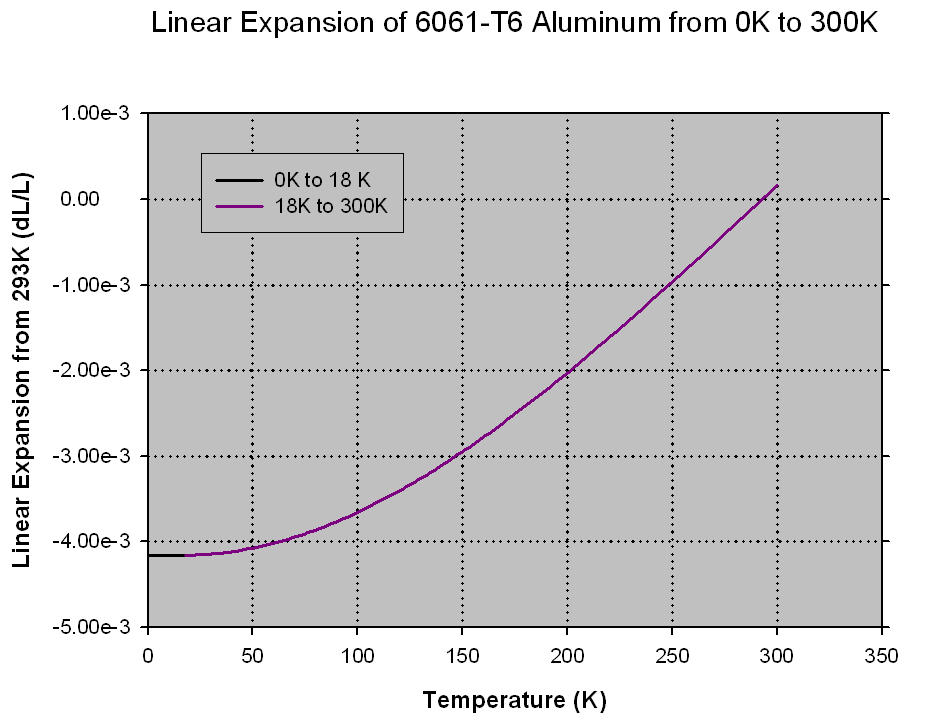
Dealing with the Expansion
So, what do engineers do to cope with this expansion? They use expansion joints in bridges, design engines with carefully controlled tolerances, and choose materials with compatible CTEs for electronics. They’re basically playing a high-stakes game of material Tetris, making sure everything fits together nicely, no matter the temperature.
Next time you're struggling to open a jar, or admiring a sleek aluminum bicycle frame, remember the Coefficient of Thermal Expansion. It’s the invisible force that shapes our world, one tiny expansion at a time. And it's why a little hot water can be your best friend when facing a stubbornly sealed jar.
And remember: Always account for the limbo. Especially if you're building a bridge.