
Changed Batteries In Smoke Detector But Still Beeping

Alright, so picture this: You’re snuggled up on the couch, maybe with a cup of tea – or, let’s be honest, probably chips – just minding your own business. Suddenly, from the celestial heights of your ceiling, comes that familiar, infernal, soul-crushing BEEP.
You know the one. That single, ear-splitting chirp that sounds like a dying robot seagull performing an avant-garde opera. It’s your smoke detector, informing you, with all the subtlety of a foghorn, that its battery is on its last legs. “No problem,” you think, a seasoned pro, “I got this.”
You find the stepladder, bravely scale the heights, pop open the detector, and triumphantly replace the 9-volt. The old, weak battery is cast aside, the new one is nestled in its place. You snap it shut, descend your stepladder throne, and brace yourself for the sweet, sweet sound of silence.
Must Read
But then… BEEP!
Your jaw probably drops a little. Your eyebrows probably reach your hairline. You might even mutter a few choice words that we won't print here. You just changed the battery! You did everything right! Why, oh why, is it still beeping?
Welcome, my friend, to one of life’s most infuriating, yet utterly common, household mysteries. And trust me, you’re not alone in thinking your smoke detector has a personal vendetta against you.

The Obvious Culprit You Probably Ignored (Because Who Looks Up There?): Dust!
Before you even consider calling an exorcist, let’s talk about the simplest solution. That little chirper on your ceiling? It’s basically a tiny vacuum cleaner, sucking in air to detect smoke. And what else is floating around in that air? You guessed it: dust bunnies the size of actual bunnies.
Over time, these little lint monsters can accumulate inside the smoke detector’s sensor chamber, making it think there’s a problem when there isn't. It’s like trying to listen to a whisper through a pillow – the detector gets confused and decides the best course of action is to chirp its little heart out.
So, next time you're up there, after you’ve swapped the battery, take a moment. Gently vacuum around the vents or give it a blast of compressed air. You might be surprised how often this simple act brings glorious silence.
The Ghost in the Machine: That Pesky Capacitor
Okay, so you’ve de-dusted, you’ve double-checked the battery, and still… BEEP! This is where things get a little more technical, but don't worry, it's nothing a normal human can't handle.
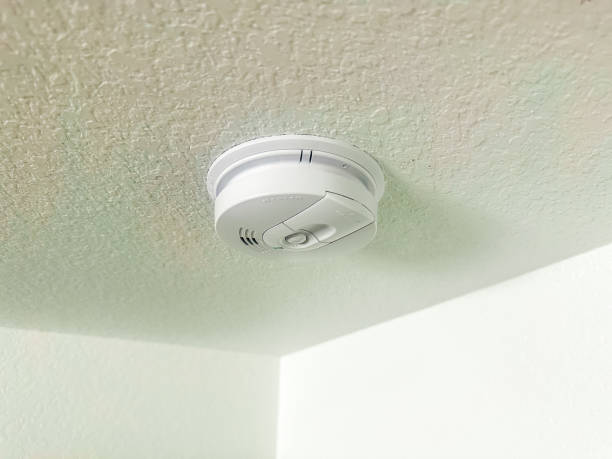
Most smoke detectors have a small internal capacitor. Think of it as a tiny, stubborn memory chip that can hold a residual electrical charge. Even after you pull the old battery, this capacitor can retain enough juice to keep sending out that low-battery signal, even with a fresh battery installed. It's like your old phone thinking it's still charging after you've unplugged it.
The fix? It’s surprisingly simple but counter-intuitive: Once you’ve removed the old battery, press and hold the test button for about 15-20 seconds. This drains any residual charge from the capacitor. Then, put in your fresh battery. You might hear a quick chirp or two as it resets, but then, hopefully, blissful silence. This little trick is a game-changer!
Are You Sure That Battery Is, Like, Actually Good?
You wouldn’t believe how many times people swap out a dead battery… for another dead battery. Or, perhaps, a not-quite-full battery. Or even, heaven forbid, put it in backwards (we've all been there, don't lie). It sounds silly, but in the heat of the moment, with that incessant BEEP driving you mad, mistakes happen.
Double-check your new battery. Is it truly fresh? Did you grab one out of a drawer that's been rattling around since the dinosaurs roamed? Make sure it's the correct type (usually 9-volt for the standalone ones) and that it’s inserted with the correct polarity. It’s a basic step, but sometimes, the simplest things are the easiest to overlook when you’re annoyed.

The Unsettling Truth: Your Smoke Detector Has an Expiration Date
This is where it gets interesting, and often, quite surprising to people. Did you know your smoke detector doesn't last forever? Nope! It's not like that old, indestructible toaster you still have from the 70s.
Most smoke detectors, whether they're ionization or photoelectric, have a lifespan of about 7-10 years. After that, their internal components degrade, and they become less effective at detecting smoke. To let you know it's time for retirement, many newer models will start emitting a distinctive chirp pattern – often different from the low-battery beep – to signal their end of life.
So, check the back of your detector. There should be a small sticker with a manufacturing date. If it’s over 7-10 years old, no amount of battery changing or dusting will fix it. It's simply waving its little white flag. Time for a replacement!
The Chain Gang: Interconnected Detectors
If you live in a newer home, or one that’s been recently updated, you might have interconnected smoke detectors. This means if one goes off, they all go off – which is great for safety, but confusing for troubleshooting.

Sometimes, a low battery chirp from one unit can trigger others, or a malfunctioning unit can cause a symphony of frustration. If you have interconnected detectors and you're getting mystery beeps, check all of them. The culprit might not be the one directly above your head, but its geriatric friend down the hall.
When All Else Fails: It Might Actually Be Smoke (Or a Malfunction)
Alright, let’s get serious for a second. While we’re having a laugh about these chirping nuisances, their primary job is to keep you safe. If you've tried all these tips and it's still persistently beeping or, worse, going into a full alarm without a clear cause, it's time to consider a couple more options:
- Actual Smoke: Have you checked for any invisible culprits? A forgotten pot on the stove, a dusty heater element, or even a fireplace damper left ajar can create enough residual smoke to trigger an alarm.
- Genuine Malfunction: Sometimes, even a brand-new detector can be faulty. If it's a newer model and you've tried everything, it might just be a lemon.
But for the vast majority of those persistent, post-battery-change chirps, it’s usually one of the first few culprits: dust, a lingering capacitor charge, or just an old detector ready for the great recycling bin in the sky.
So, the next time you hear that dreaded BEEP after you’ve proudly swapped the battery, don't despair. Don't throw your shoe at the ceiling. Just remember these tips, grab your stepladder, and bravely face down that tiny, tyrannical beeper. You’ve got this!