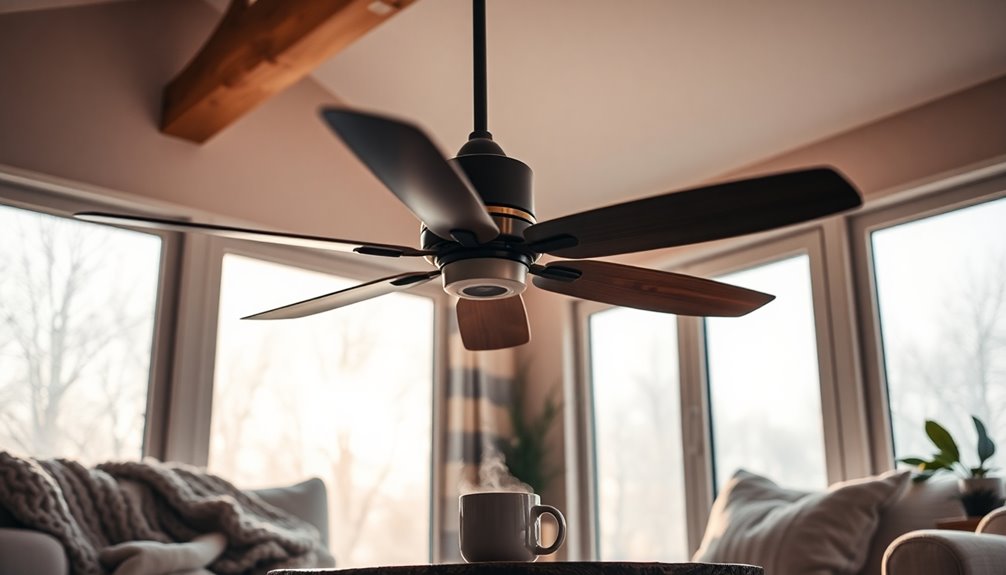
Ceiling Fan In The Winter Time

Ever walked into a room in winter and felt that chilly bite, even with the heat on? Or maybe you've noticed your heating bill creeping higher than you'd like? Well, get ready for a little secret that's surprisingly fun and incredibly useful: using your ceiling fan in the wintertime! Most of us associate ceiling fans with cooling off in summer, but they're actually a fantastic tool for making your home cozier and more energy-efficient when the temperatures drop. It’s a simple trick that often gets overlooked, but once you try it, you’ll wonder why you didn't think of it sooner. It's all about making your home work smarter, not harder, for comfort.
So, who can benefit from this cool winter trick? Pretty much everyone! For beginners, it's an incredibly easy way to feel warmer without constantly adjusting the thermostat, helping you save a few bucks on those ever-rising utility bills. Think of it as a subtle warmth enhancer. For families, it means a more evenly heated home, preventing those dreaded cold spots and hot pockets. Imagine less arguing over the thermostat and more consistent comfort throughout your living spaces. No more bundling up in one room and sweating in another! And even for the home hobbyists or those who love to fine-tune their living environment, understanding how your ceiling fan can help circulate warm air adds another layer to creating an optimally comfortable and energy-efficient household. It's about taking control of your home's microclimate.
The magic behind this winter wizardry is a setting most modern ceiling fans have: the reverse switch. Instead of pushing air down (like in summer), you want your fan to rotate clockwise. This motion gently pulls the cooler air near the floor upwards, pushing the warmer air (which naturally rises and collects near the ceiling) back down into the living space. It doesn't create a draft; instead, it slowly circulates and redistributes the heat that your furnace has already produced. Different fan speeds can be used depending on your room size and desired effect, but generally, a low speed is perfect for this purpose. Some fancier models might even have a dedicated "winter mode" button, making it even simpler!
Must Read
Ready to try it out? Here are some simple, practical tips to get started. First, locate the small slide switch on the body of your ceiling fan, usually on the motor housing. This is your reverse switch. Flip it! Make sure the blades are rotating clockwise when viewed from below. If you're unsure, stand under the fan and feel which way the air is moving – for winter, you shouldn't feel a direct breeze. Second, set your fan to its lowest speed. You want a gentle circulation, not a cooling breeze. Third, give your fan blades a quick wipe down before you start. Dust bunnies reduce efficiency and just look unsightly! Finally, don't be afraid to experiment. Every room is different, so play with the fan speed and notice the difference in comfort. You might find a sweet spot that feels just right.
Embracing your ceiling fan in winter is a simple, effective trick for a cozier, more energy-efficient home. It's a testament to how small adjustments can lead to significant improvements in comfort and savings. So go ahead, flip that switch, and enjoy a warmer, more balanced home this winter. You'll be surprised at the value and enjoyment such a little change can bring!