Okay, let's talk about something truly thrilling: Carbon Monoxide detectors. Specifically, where exactly they should live in your house. It sounds simple, right? Get a detector, plug it in, feel safe. Ah, if only life were that straightforward.
Because then you stumble upon the Code. Not just a friendly suggestion from a neighbor, but a capital-C Code. Suddenly, you're not just placing a detector; you're engaging in a highly scientific, precision-driven endeavor. It’s less about "Does this make sense?" and more about "Is this exactly X feet from the ceiling and Y feet from the floor?"
My unofficial, totally un-expert opinion? Sometimes, the Code feels like it was written by a committee of highly intelligent, well-meaning robots who have never actually tried to live in a house. A house with quirky layouts, random vents, and that one wall that’s just perfect for a picture, but definitely not for a CO detector, according to the rulebook.
You probably know that Carbon Monoxide is silent and invisible. It’s the ninja of gases. So, detectors are super important. No debate there. But then you start reading the instructions, or worse, delving into the actual building codes, and your head begins to spin like a tumble dryer.
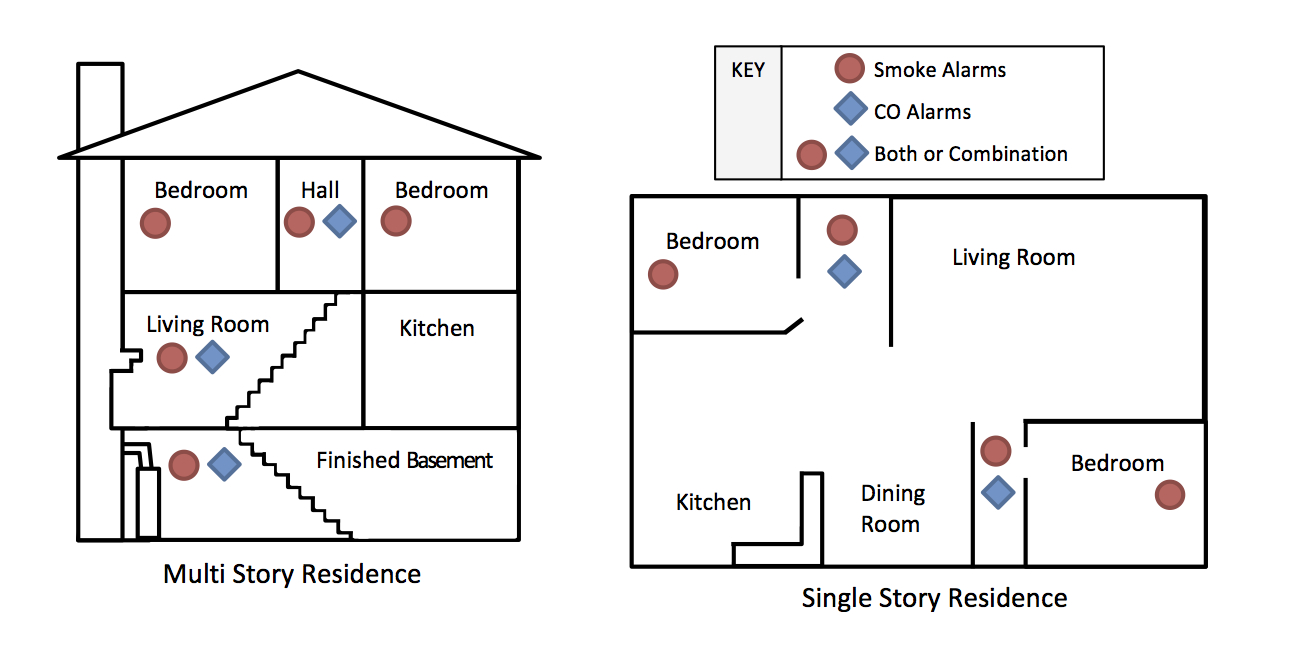
"Place one outside each separate sleeping area."
Carbon Monoxide Detector Placement In Kitchen at Paul Liu blog
Okay, sounds reasonable. But what if your "separate sleeping area" is sometimes the couch in the living room for an impromptu nap? Do we need a detector there too, just in case? What about the guest room that gets used twice a year? Does that lonely room need its own silent guardian, perpetually listening for a threat it might never encounter?
Then there’s the whole height thing. Some codes will tell you to place them on the ceiling. Others say wall-mounted, but not too high, not too low. Like Goldilocks looking for the perfect bowl of porridge, but with potentially life-saving consequences. You’re left wondering if you need a laser level and a tape measure worthy of an architect just to put up a simple safety device.
"Avoid placing near fuel-burning appliances."
Carbon Monoxide Detector Placement Guide - The Tech Edvocate
Makes sense. Don't want false alarms. But also:
"Avoid placing near windows, doors, or vents."
Right. So, basically, find a hermetically sealed, windowless, doorless, vent-free room in your house. Good luck with that! In most modern homes, you're practically tripping over vents every few feet. It feels like the Code is daring you to find a spot that meets all its intricate demands without also requiring you to build a new wall.
Carbon Monoxide Detector Placement: A Helpful Illustrated Guide
And let's not forget the sheer number of detectors some codes imply. Every floor. Every sleeping area. It starts to feel like your house is less a cozy home and more a highly monitored government facility. You might need to take out a second mortgage just to keep your home up to code on detector count!
My Unpopular, Yet Relatable, Take
Here’s my big, bold, perhaps slightly rebellious thought: While the Code is there for a reason – maximum safety, absolutely – sometimes we need a dose of practical reality. The spirit of the law, you might say. The spirit being: Don't get poisoned by Carbon Monoxide.
It's like traffic laws. We need them. Speed limits save lives. But if you’re driving 26 mph in a 25 zone on an empty road, are you truly a menace to society? Probably not. The goal is safe driving, not obsessive adherence to every decimal point.
Carbon Monoxide Detector Requirements In Colorado (CO Detector)
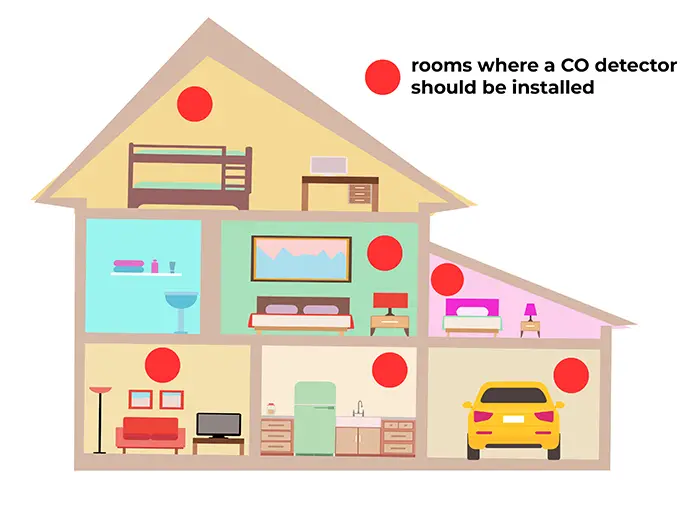
With Carbon Monoxide detectors, the goal is detection. Timely detection. If you have a few detectors strategically placed in your home, near where people sleep, on each level, and away from immediate drafts or obvious appliance fumes, you're probably doing a pretty darn good job.
Are they exactly X inches from the wall, exactly Y feet from the ceiling, and perfectly equidistant from every potential air current? Maybe not. And that's okay, because the most important thing is that they are there. Working. Ready to scream if trouble arises.
So, next time you're wrestling with your CO detector instructions, remember: aiming for perfection is admirable, but aiming for practical safety is paramount. Get those detectors up. Put them where they make sense. And don't lose sleep over whether they're exactly, precisely, scientifically aligned with every single line of the Code. Your peace of mind is also important, and a detector that’s almost perfect is infinitely better than no detector at all.