
Can You Turn On Red In Canada

Ever found yourself at a red light in Canada, twitching with anticipation, wondering if you can just zip around that corner? Your foot might be hovering over the gas pedal, a little voice in your head whispering, "Go on, just do it! No one's looking!" Well, hold your horses, eh! It's a question that has sparked many a friendly debate at Tim Hortons drive-thrus.
Let's dive headfirst into this delightful Canadian traffic mystery. It’s a bit like navigating a snowdrift; you think you know the path, but then a surprise pops up. Mostly, the answer will make your inner rule-follower quite happy.
The Great Canadian Turn on Red Revelation!
So, can you generally turn right on red in Canada? For the most part, yes, you totally can! But hold on to your maple syrup, because there are some super important caveats. It's not a free-for-all, rush-hour sprint, my friends.
Must Read
It’s more like a polite invitation, a gentle nod from the traffic gods. Think of it as Canada’s way of saying, "We trust you to be sensible, buddy." This rule brings a little flow to our bustling streets, keeping things moving with a certain Canadian charm.
The Golden Rules of the Right on Red (Outside of Quebec)
If you're outside the wonderfully unique province of Quebec, the general rule is that you can turn right on a red light. This is a common practice across North America, and Canada mostly aligns with it. But you can't just barrel through like a runaway moose.
First and foremost, you absolutely, positively, must come to a complete and utter stop. We’re talking a full pause, like you’ve just remembered you left the stove on. Your wheels need to be entirely motionless before you even think about turning.

Imagine your grandmother is watching from the passenger seat, ready to give you the stern eye if you "California roll" through it. This stop is non-negotiable, a sacred ritual of the Canadian road. You must treat that red light as if it were a stop sign.
After your perfect, full stop, you need to check for incoming traffic and pedestrians. Are any lovely Canadians crossing the street, perhaps with a dog on a leash? Are there cars zipping in the direction you want to turn? Safety first, always.
When in doubt, don't turn right on red. A moment of patience is always better than an "oopsie" moment with a pedestrian or another vehicle.
Only proceed when the coast is perfectly clear, and it’s safe to do so. This isn't just a suggestion; it’s the law. Turning on red is a privilege, not a right, and it comes with great responsibility.
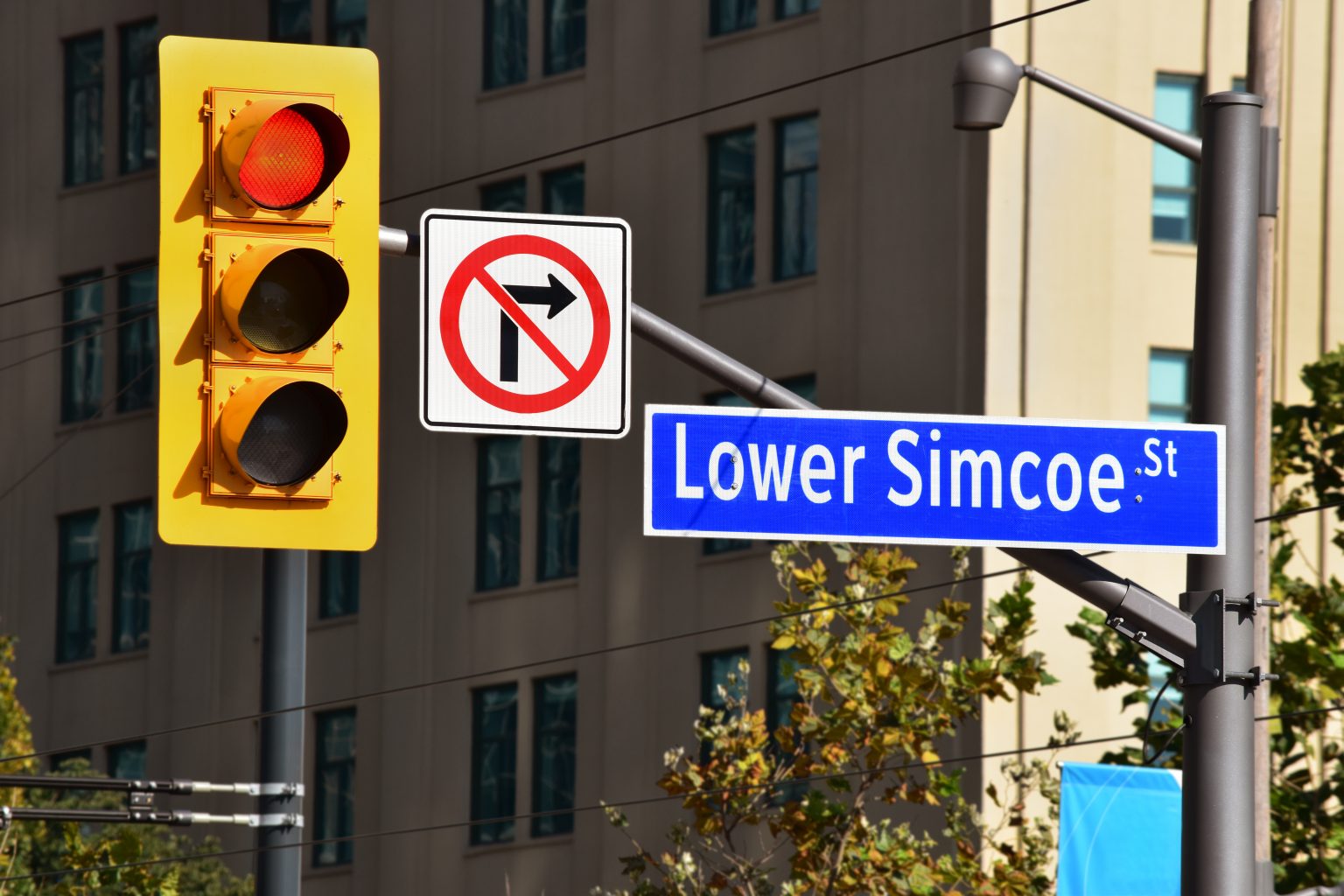
Another crucial thing to watch out for are those cheeky signs. If you see a sign that says "No Turn on Red" or has a picture of a red circle with a right arrow and a slash through it, then you, my friend, are absolutely out of luck. Those signs mean business, and you must obey them without question.
These signs are usually placed at intersections with high pedestrian traffic or unique visibility issues. They're there for a reason, likely to keep everyone safe, especially our younger and more vulnerable road users. So, no protesting, just wait for the green light.
Ah, Quebec, You Beautiful Rebel!
Now, let's talk about Quebec. Oh, Quebec, with its charming European flair and its distinct approach to… well, everything! When it comes to turning on red, Quebec is the charming outlier in Canada. They do things a little differently, and we love them for it.

In most of Quebec, including the bustling streets of Montreal, turning right on a red light is a big, fat, enthusiastic NO. It's simply not allowed, full stop (pun intended!). So, if you’re cruising through Quebec and see a red light, you wait until it turns green. No ifs, ands, or buts about it.
There's one tiny exception in Quebec, and that's on the island of Montreal where it's also not permitted. Wait, no. Let me rephrase for absolute clarity. In the entire province of Quebec, you cannot turn right on a red light, except if you're on a street where there is an explicit sign allowing it. Such signs are rare outside of some specific intersections in rural areas, but the general rule is: no right on red in Quebec City, Montreal, or anywhere else unless specifically indicated. For practical purposes, just assume no.
Imagine a tiny, polite voice whispering in French, "Attendez le vert, s'il vous plaît!" Which means, "Wait for the green, please!" It's a very clear rule designed to enhance pedestrian safety, especially in their busy urban centres. So, when driving in Quebec, patience is your best friend at every red light.
Why the Difference? And What If I Get It Wrong?
The differences often come down to historical traffic patterns, urban planning philosophies, and a strong emphasis on pedestrian safety in dense areas like Quebec's cities. Every province has its own traffic quirks, and this is one of them. It's like how some Canadians say "pop" and others say "soda."
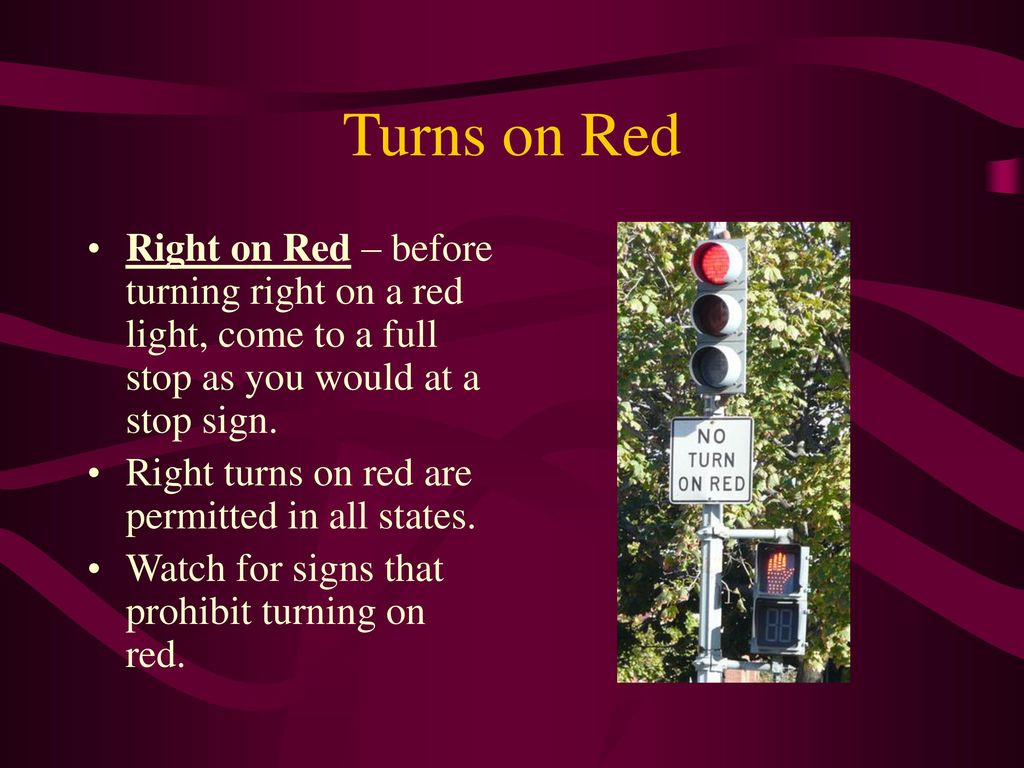
What happens if you accidentally turn right on red where it's not allowed, or you fail to come to a complete stop? Well, you might get a friendly wave from a police officer, followed by a not-so-friendly ticket. It’s a traffic infraction that can come with a fine and demerit points, which no one wants.
More importantly, you could cause an accident. The rules are there to keep everyone safe. Imagining the collective Canadian glare you’d receive if you put someone in danger is probably punishment enough for most of us. Safety and politeness go hand in hand on Canadian roads.
Your Sunny Summary for Smooth Sailing
So, let's wrap this up with a cheerful bow. Mostly, yes, you can turn right on red in Canada, but with the crucial conditions of a full stop and ensuring it’s completely safe. Always, always, always look for those "No Turn on Red" signs; they are your ultimate authority.
And when you find yourself in the beautiful, unique province of Quebec, just assume it’s a big "no-go" for right turns on red. Patience is a virtue there, and a green light is your best friend. Follow these simple guidelines, and you’ll be cruising Canadian roads like a seasoned pro, spreading good vibes and safe driving wherever you go!