
Can U Weld Aluminum To Steel

Alright, let's dive into a question that might sound like a real head-scratcher, especially if you’ve ever dabbled even slightly in the world of sparks and molten metal:
Can You Weld Aluminum to Steel?
It’s a fantastic question, isn't it? And if your first thought was a resounding, "Um, no way, that sounds like a recipe for disaster!" — well, you're not alone. Most folks, even experienced welders, know that aluminum and steel are like two very different personalities. One's light, reactive, and shiny; the other is strong, sturdy, and a bit more... traditional. Mixing them together with a fiery torch? Sounds like you’re asking for trouble, right?
The immediate, straightforward answer often given is a firm, "Not directly, not really, not easily, and definitely not without some serious engineering magic!"
Must Read
Why the hesitation? Because welding aluminum directly to steel, in the same way you’d weld two pieces of steel or two pieces of aluminum together, is super tricky. It's like trying to make oil and water truly, permanently blend. Their fundamental differences create all sorts of headaches:
- Melting Points: Aluminum melts at a much lower temperature than steel. By the time your steel is hot enough to join, your aluminum might already be a puddle on the floor!
- Thermal Expansion: They expand and contract differently when heated and cooled. This can lead to massive stress and cracking as the weld cools.
- Intermetallic Compounds: This is the big bad wolf. When molten aluminum and steel mix, they form extremely brittle intermetallic compounds. Think of them as tiny, glass-like structures in your weld that make it incredibly weak and prone to snapping. Not exactly what you want in a strong joint!
So, if the direct answer is a bit of a downer, why are we even talking about this? Because here's where the human spirit of innovation, creativity, and sheer stubbornness truly shines! Just because you can't do it one way, doesn't mean you can't do it at all.

Enter the Clever Solutions!
Humans, being the amazing problem-solvers we are, looked at this challenge and said, "Hold my beer... or rather, hold my welding torch!" We've developed some incredibly ingenious methods to get aluminum and steel to play nice, often without actually melting them together in the traditional sense.
Here are just a few ways folks are making this "impossible" feat a reality, making life more fun and structures more amazing:
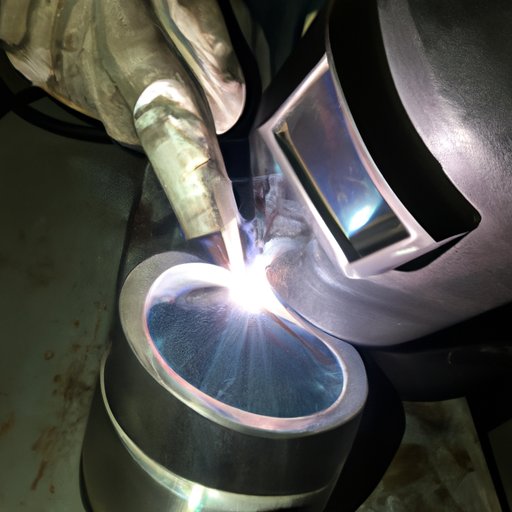
1. Brazing and Soldering: The "Glue" Approach
This is perhaps the most accessible method for many. Instead of melting the parent metals, you introduce a filler metal that has a lower melting point than both the aluminum and the steel. This filler metal acts like a super-strong glue, bonding to both surfaces. Think of it like a sophisticated, high-strength soldering job. It's fantastic for smaller projects and repairs where you need a strong, but not necessarily load-bearing, joint.
2. Explosion Welding: Sounds Wild, Is Wild!
Yes, you read that right – explosion welding! This isn't your grandpa's backyard welding. Imagine using a controlled explosive charge to force the two metals together with such incredible pressure that they bond at an atomic level, without actually melting! It creates an incredibly strong, wavy interface. This method is often used to create "transition joints" or "clad plates" – a bimetallic material where one side is aluminum and the other is steel, ready for conventional welding on either side. It’s like something out of a sci-fi movie, and it’s real!
3. Friction Stir Welding: The "Stirring" Method
This is another incredibly cool technique that's considered a solid-state welding process. A rotating tool is plunged into the joint line between the aluminum and steel. The friction generates heat, softening the metals without melting them. The tool then "stirs" and forges the materials together. No molten metal, no brittle intermetallics! This creates a robust bond and is often used in aerospace and automotive industries for demanding applications.

4. Mechanical Fasteners and Adhesives: The Practical Route
Sometimes, the simplest solution is the best! If welding is too complex, mechanical fasteners (like bolts and rivets) or specialized structural adhesives can create incredibly strong and durable joints between aluminum and steel. This might not be "welding" in the traditional sense, but it achieves the goal of joining these disparate materials effectively.
Why Does This Matter? Why Is It Fun?
Knowing that "impossible" welding challenges can be overcome makes life more fun and opens up a world of possibilities!
Think about it:
- Lighter, Stronger Designs: Suddenly, engineers can design cars, bikes, boats, and even spacecraft that are lighter (using aluminum where weight savings are critical) and stronger (using steel where rigidity and impact resistance are paramount). This means better fuel efficiency, higher performance, and safer structures.
- Creative Projects: For the hobbyist or artist, imagine the custom projects you could tackle! A sculpture combining the raw strength of steel with the gleaming lightness of aluminum. A bespoke bike frame with specific properties in different sections. The only limit is your imagination!
- The Joy of Problem Solving: It’s a testament to human ingenuity. Faced with a complex problem, we don't just give up. We invent, we experiment, we push the boundaries of what's possible. And isn't that just a thrilling thought? Knowing that solutions are out there, waiting to be discovered or applied.
- Empowerment: Understanding that there’s always a way, even if it’s not the obvious way, is incredibly empowering. It teaches us to look beyond the immediate "no" and seek out the creative "how."
So, the next time someone tells you something can't be done, or you face a challenge that seems insurmountable, remember the aluminum and the steel. Remember the clever ways humans found to bring them together, defying conventional wisdom.
The world is full of amazing challenges waiting for ingenious solutions, and perhaps, just perhaps, you have the spark of an idea to tackle the next "impossible" feat! Go ahead, be inspired, learn something new, and see what incredible things you can bring together!