Can I Recharge My Own Car Ac

Ah, the great summer dilemma: you slide into your car, key in the ignition, anticipating that glorious blast of cool air, only to be met with... well, air that's distinctly not glorious. It's warm. Maybe even hot. Your dreams of a chilled commute evaporate faster than a puddle in July. The question then pops into your head: "Can I just recharge my own car AC?"
It's a valid question, and one many of us ponder, especially as the mercury rises. The allure of a DIY fix is strong – saving a trip to the mechanic, dodging the bill, and enjoying that sweet satisfaction of doing it yourself. And the good news is, for many modern cars, the answer is a qualified yes, you can!
But before you start picturing yourself as a seasoned auto technician, let's pump the brakes slightly and chat about what's actually involved. Because while a DIY recharge kit can be a quick fix, it’s also important to understand why your AC might be underperforming in the first place.
Must Read
The Nitty-Gritty: What's Really Going On?
Your car's AC system works by circulating a special refrigerant (for most cars made after 1994, this is R-134a, though newer models might use R-1234yf). This refrigerant changes state from liquid to gas, absorbing heat from your cabin and releasing it outside. It's a closed system, meaning the refrigerant shouldn't just disappear. If your AC is blowing warm, it almost always means you have a leak.
That's right, a leak. Not just a "ran out of gas" situation. Think of it like a tire that's slowly losing air. Pumping it up helps for a bit, but if there's a nail, you're back to square one. Recharging your AC with a can from the auto parts store is often a way to top up the system and get some cool air flowing again. It's a bit like giving your car a cool sip of water on a hot day, but it might not fix the underlying dehydration.
The DIY Path: A Quick How-To (and What You'll Need)
So, you've decided to give it a whirl. Here's a simplified rundown of the process for most cars:
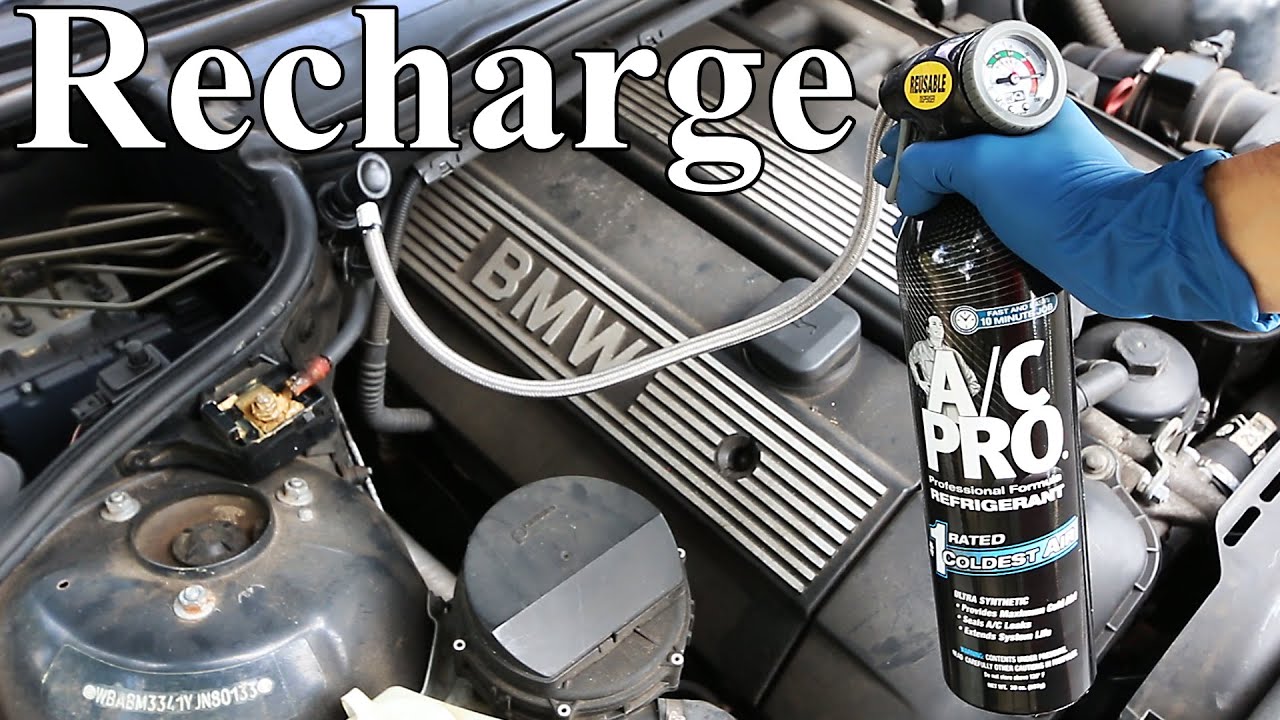
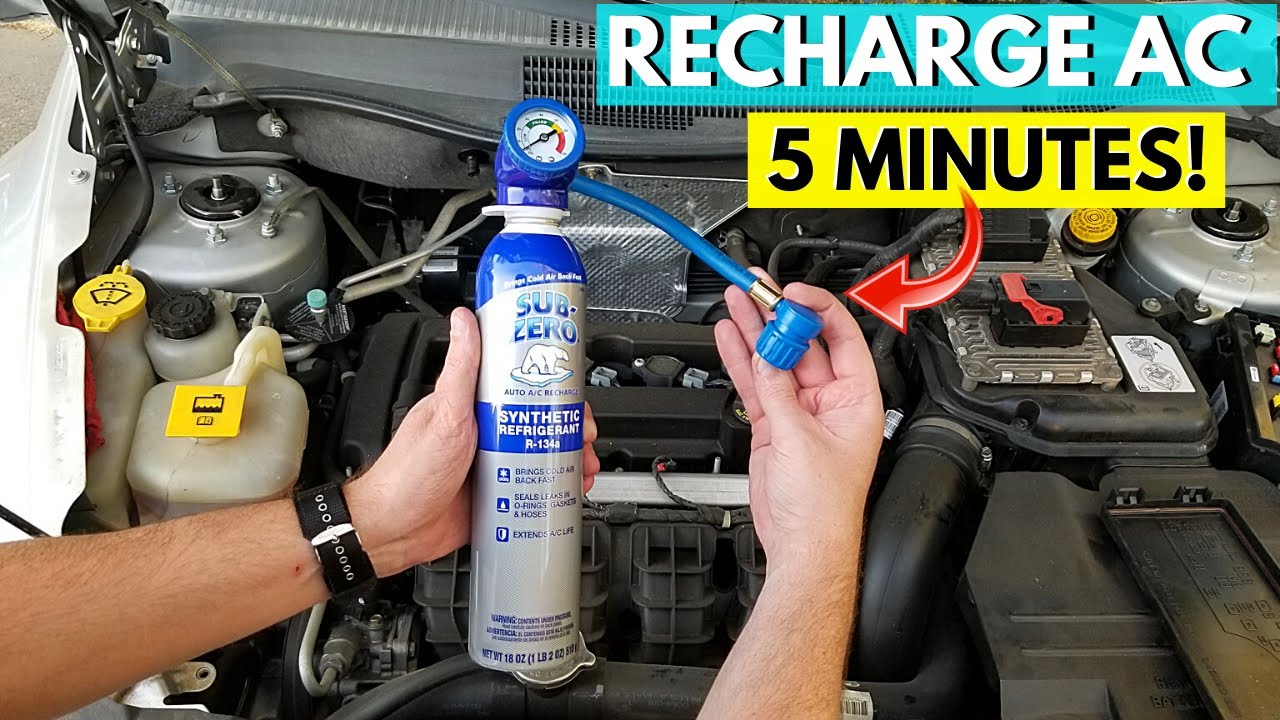
- Get the Right Stuff: You'll need an AC recharge kit. These usually come with a can of R-134a refrigerant and a hose with a pressure gauge. Some even include a leak sealant, which can be a double-edged sword (more on that later).
- Locate the Low-Pressure Port: This is crucial. Your AC system has a high-pressure and a low-pressure side. You only ever connect the recharge kit to the low-pressure port. It's usually on the passenger side of the engine bay, often with a blue or black cap marked "L". It's typically smaller than the high-pressure port. Never attach to the high-pressure port!
- Start 'er Up: Turn on your car, crank the AC to its coldest setting, and set the fan to high.
- Connect and Fill: Attach the recharge hose to the low-pressure port. Hold the can upright and gently squeeze the trigger (or turn the valve, depending on your kit). You'll typically add refrigerant in short bursts (5-10 seconds), checking the gauge in between.
- Mind the Gauge: This is your control panel. The gauge will tell you the current pressure. You want it to be in the "green" zone for optimal cooling. Do not overfill! Overfilling can cause more damage than underfilling, potentially stressing your compressor or causing other components to fail.
Fun Fact: The concept of cooling car cabins isn't new! Early attempts in the 1930s involved using ice and bulky systems. The first truly modern, factory-installed AC system appeared in the 1940 Packard, though it was an expensive add-on!
When to Call in the Pros
While a DIY recharge can bring temporary relief, it’s not always the permanent solution. Here's when you should probably wave the white flag and head to a trusted mechanic:
- Rapid Loss: If you recharge your AC and it's blowing warm again within a few days or weeks, you have a significant leak that needs professional attention.
- Strange Noises: Hear grinding, hissing, or clicking when your AC is on? That could indicate compressor issues or other serious mechanical problems.
- The Gauge Stays Low: If you're adding refrigerant and the gauge barely budges, or doesn't reach the "green" zone, there might be a blockage or a severely depleted system.
- Multiple Symptoms: If the air is warm AND smells musty, or if the fan isn't blowing strongly, you might have issues beyond just low refrigerant (e.g., a clogged cabin air filter or a failing blower motor).
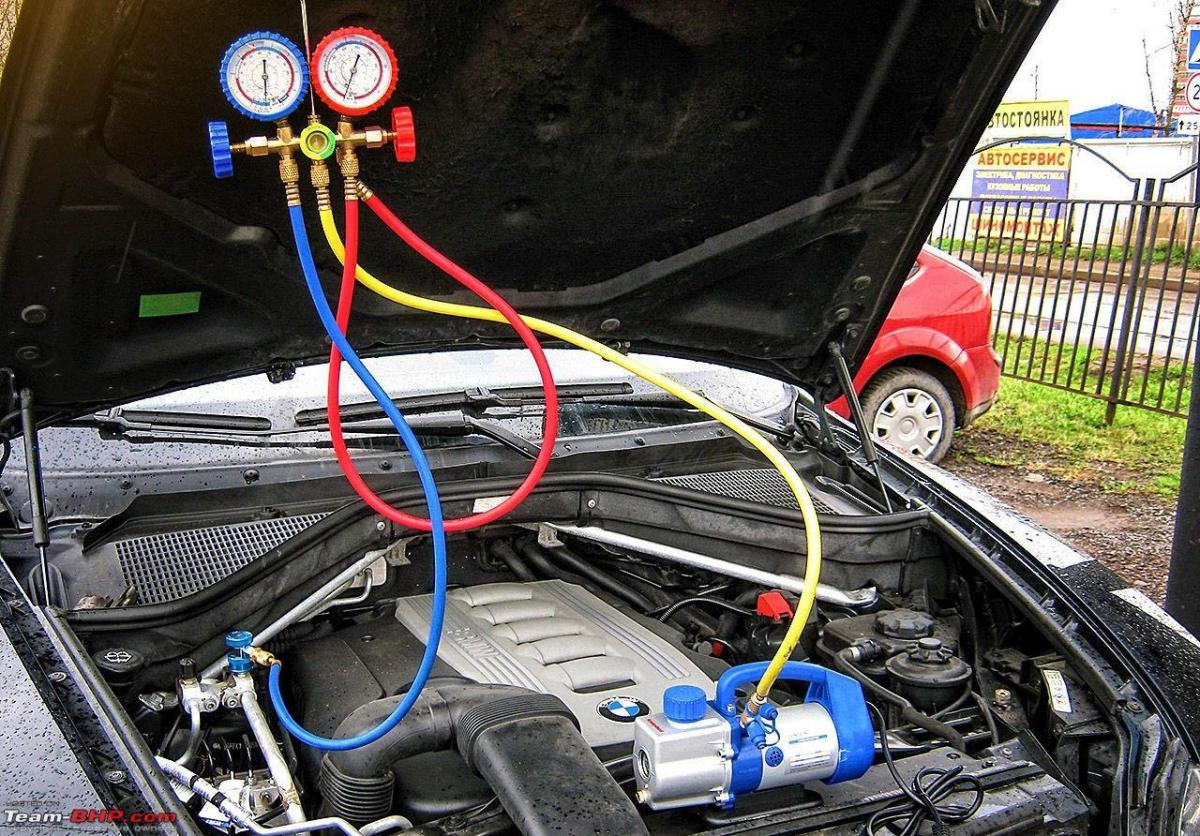
A professional can perform a proper leak detection test (often using UV dye) and accurately diagnose issues like a faulty compressor, a leaky O-ring, a punctured condenser, or a failing evaporator. These are the kinds of repairs that go far beyond a simple top-up.
Cultural Nod: Just like you wouldn't try to rewire your entire house after a single flickering light, some car issues are best left to the experts. Knowing when to DIY and when to call in specialized help is a skill in itself!

Beyond the Recharge: Maintaining Your Cool
Even if you don't have AC issues, there are simple habits to keep your system happy:
- Run it Regularly: Even in winter, run your AC for 10-15 minutes once a month. This keeps the seals lubricated and prevents refrigerant from settling.
- Check Your Cabin Filter: A clogged cabin air filter can reduce airflow and make your AC work harder. It’s an easy DIY replacement!
- Park Smart: On scorching days, aim for shady parking spots. Less heat buildup means less work for your AC.
The Takeaway
So, can you recharge your own car AC? Absolutely, in many cases! It's a practical skill that can save you money and keep you comfortable. Just remember it's often a temporary fix for an underlying leak. Approach it with curiosity, caution, and the knowledge that sometimes, the best DIY is knowing when to hand it over to someone who specializes in car comfort.
In life, much like with our cars, sometimes we need a quick fix to get by, and other times we need to address the root cause. Whether it's a car AC or a personal challenge, knowing when to apply a simple top-up and when to seek deeper repair is a valuable lesson in keeping things running smoothly.