
Butter Melting Is A Physical Change
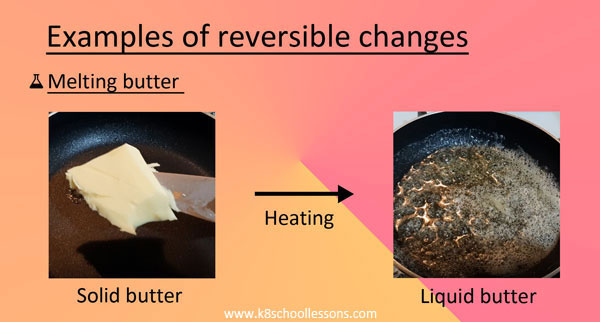
Hey there! Let's talk about something super important... well, maybe not super important, but definitely interesting. It's about butter. Yes, glorious, golden, buttery butter! Specifically, what happens when it melts.
So, you've probably seen it happen, right? You leave a stick of butter on the counter (because who wants rock-hard butter on their toast?), and suddenly... puddle. A delicious, slightly alarming, puddle. But is that puddle a totally different thing than the stick? Is it, like, magically transformed?
The answer, my friend, is a resounding NO. And that's where the magic of physical changes comes in.
Must Read
Melting: The Butter's Big Adventure
Think of physical changes like this: it's like your butter went on vacation. It's still butter, just... relaxed. It changed its form, but its essence remains. It's the same little fatty acids, just jiggling around more freely.
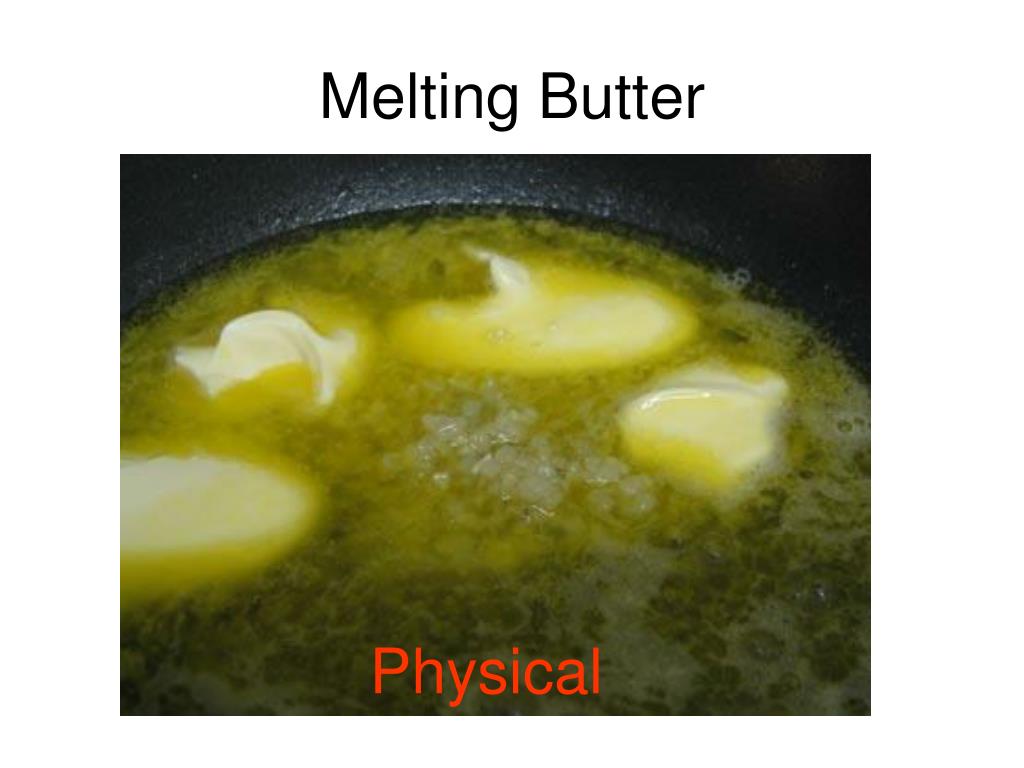
Melting is the perfect example of a physical change. Why? Because all you've done is add heat. You haven't added any new ingredients or chemicals. You haven't, like, turned it into a completely different substance. Imagine if melting butter turned into... I don't know... glitter? Now that would be a chemical change (and a cleaning nightmare).

Seriously, glitter butter? I'm getting distracted. Back to the science!
So, you heat the butter, the fat molecules get all energized (think of them doing a tiny little butter dance), and they start moving around faster and faster. Eventually, they overcome the forces holding them together in a solid, and bam! Liquid butter. But it's still butter! You could even cool it down again, and it would solidify back into its original form (maybe not quite as pretty as the original stick, but hey, we can't have everything). Isn't that neat?
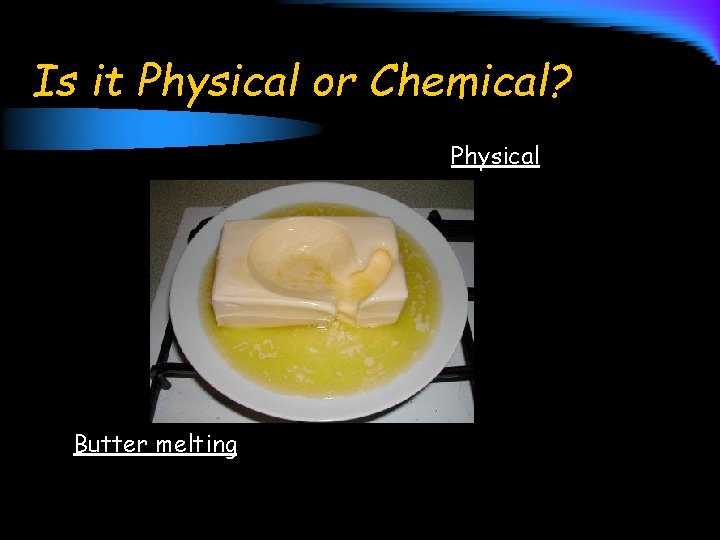
What does it NOT change? Think about the flavor of the butter. Does melted butter taste different than solid butter? Maybe a little bit because temperature affects how we perceive flavors, but fundamentally, it's the same buttery goodness. The chemical composition hasn’t changed. It's still the same blend of fats, water, and milk solids (the stuff that makes browned butter so amazing, by the way).
Physical vs. Chemical: Butter's Big Choice
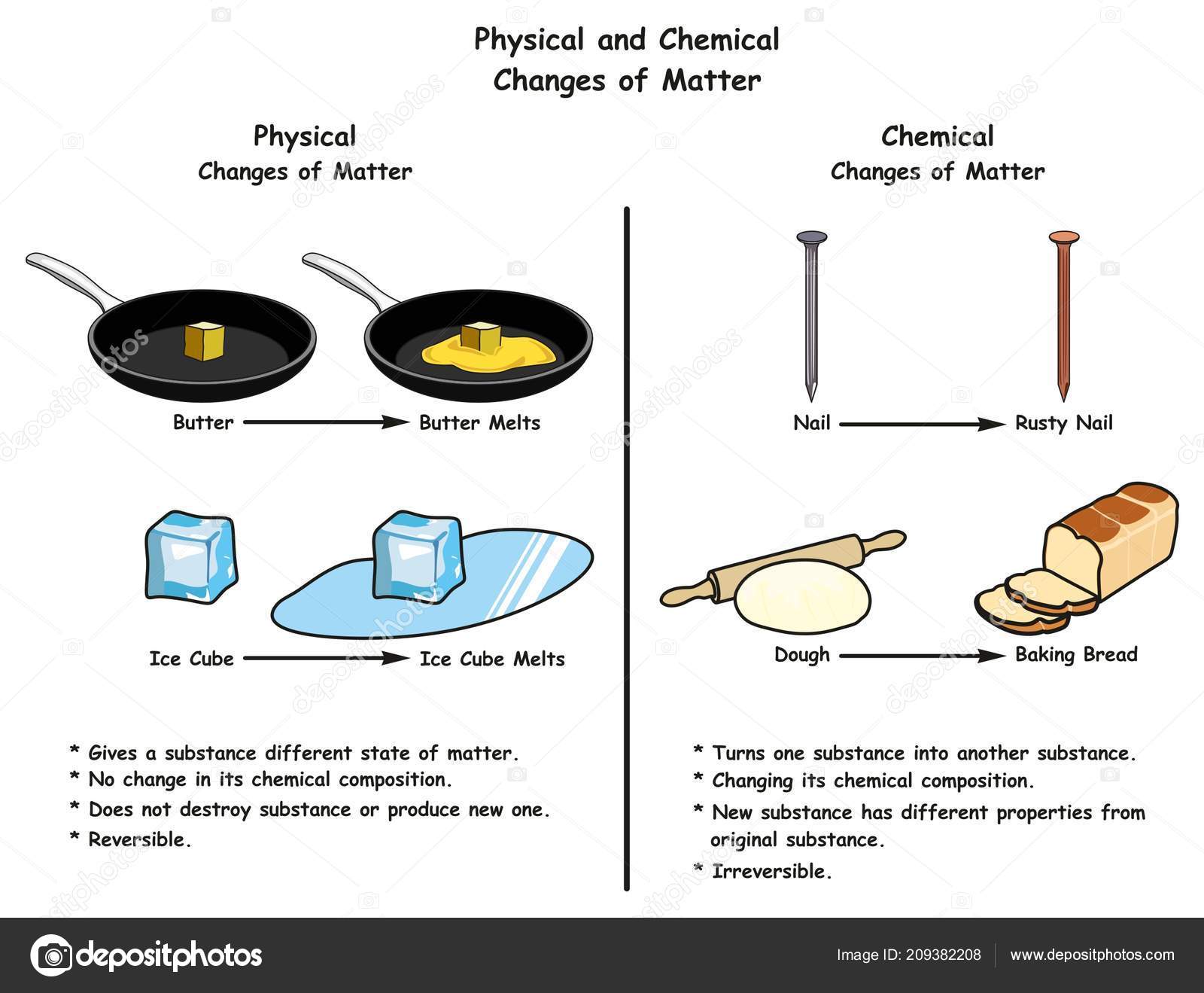
Now, let's compare that to a chemical change. Imagine you're baking a cake. You add butter (solid butter, hopefully not melted glitter-butter), along with flour, sugar, eggs, and all the other goodies. You bake it, and presto! Cake. Can you get those individual ingredients back easily? Nope! They've reacted together to form something new with properties radically different than the components it started with. This is very different than a physical change.
See the difference? The chemical change is a whole new ballgame. It involves breaking and forming chemical bonds, which creates entirely new substances. A cake is definitely not just a rearranged pile of butter, flour, and eggs. Okay, maybe sometimes it feels that way, but you get the idea!
So, melting butter is like changing your clothes. You're still you, just in a different outfit. A chemical change is like... transforming into a superhero! (Maybe that's a bit dramatic, but you get the point). So butter melting is more casual, more chill. No need to call the Avengers.
Why Should We Care?
Okay, so why does any of this matter? Well, understanding the difference between physical and chemical changes helps us understand the world around us! It helps us predict what will happen when we mix things together, heat them up, or cool them down. It's like having a little bit of science magic in your pocket!
Plus, next time you're making cookies and your butter is too hard, you can confidently melt it knowing that you're not ruining your recipe with a mad chemical reaction. You're just giving your butter a little spa day. And who doesn't want happy, relaxed butter in their cookies?
So, there you have it. Butter melting: a simple, everyday example of a physical change. Now, go forth and impress your friends with your newfound butter-melting knowledge. They'll be so impressed, they might even bake you a cake (made with melted, then re-solidified, butter, of course!).