
Brass And Stainless Steel Galvanic Corrosion

Ever wondered why your shiny metal stuff sometimes turns into a rusty, flaky mess? It might be more exciting than you think!
The Curious Case of Metal Mayhem
We're diving into a world where metals become frenemies. This is the tale of galvanic corrosion, starring brass and stainless steel!
Think of it as a tiny, metal soap opera, complete with drama and unexpected alliances. Who knew metal could be so theatrical?
Must Read
What’s the Buzz About Brass and Stainless Steel?
Brass and stainless steel are both pretty cool metals. Brass is known for its golden color. Stainless steel is famous for resisting rust.
But when these two are brought together under certain conditions, things can get a little… spicy. It's a metallic showdown of sorts.
Get ready for a corrosion combustion!
The Galvanic Tango: A Metal Romance Gone Wrong
Imagine a dance floor. Brass and stainless steel step onto it. But instead of a graceful waltz, they start a galvanic tango!
This "tango" happens when two different metals, like our brass and stainless steel, come into electrical contact in the presence of an electrolyte. Think water, especially salty water!
One metal becomes the "anode" and the other the "cathode." It's like a battery, but instead of powering your phone, it corrodes the metal.
Who’s the Villain? The Anode Takes the Fall!
The anode is the unlucky metal that gets eaten away. In the brass and stainless steel pairing, brass usually ends up in this unfortunate role.
It sacrifices itself to protect the stainless steel! Talk about a noble, if slightly rusty, act.
It all boils down to their position in the galvanic series. This series ranks metals by their electrical potential.

Why is This So Entertaining?
Okay, maybe "entertaining" is a stretch for some. But think about it: you're witnessing a tiny, almost invisible, metal war!
It's science in action. It demonstrates the fascinating (and sometimes frustrating) properties of materials.
Plus, understanding this can save you from some seriously costly mistakes. No more mysterious metal meltdowns!
Spotting the Signs of Metal Mishaps
Keep an eye out for telltale signs of corrosion. Look for rust, pitting, or discoloration around the contact points between the metals.
It's like being a metal detective, searching for clues of galvanic activity. Sherlock Holmes would be proud.
Sometimes the signs are subtle, other times, it’s like metal Armageddon.
The Electrolyte Effect: Water, Water Everywhere!
Remember that pesky electrolyte? It’s the conductor of this metallic orchestra of corrosion.
Water, especially if it contains salts or acids, creates the perfect environment for galvanic corrosion to occur. Think saltwater environments near the ocean.
The more conductive the electrolyte, the faster the corrosion process. It's like adding fuel to the fire, only the fire is… corrosion.
Saltwater: The Ultimate Corrosion Catalyst
Saltwater is particularly aggressive. The salt ions increase the water’s conductivity, speeding up the electron transfer.

That's why boats and marine structures are so vulnerable. They're constantly exposed to the salty sea!
So, next time you're at the beach, remember the hidden drama unfolding on a microscopic level.
How to Avert the Metal Apocalypse
Fear not! You can take steps to prevent galvanic corrosion. You don't have to let your metal creations crumble into oblivion.
Here are a few tricks up your sleeve to keep your metals playing nice.
Let's talk preventative measures, it's like metal peacekeeping.
Isolate, Isolate, Isolate!
One of the easiest ways to prevent galvanic corrosion is to physically separate the metals. Use non-conductive materials like plastic washers or insulators.
This breaks the electrical contact, preventing the electron flow. Think of it as building a wall between the warring factions.
No contact, no corrosion!
Sacrificial Anodes: Metal Bodyguards
Another clever trick is to use a sacrificial anode. This is a more reactive metal that corrodes in place of the brass.
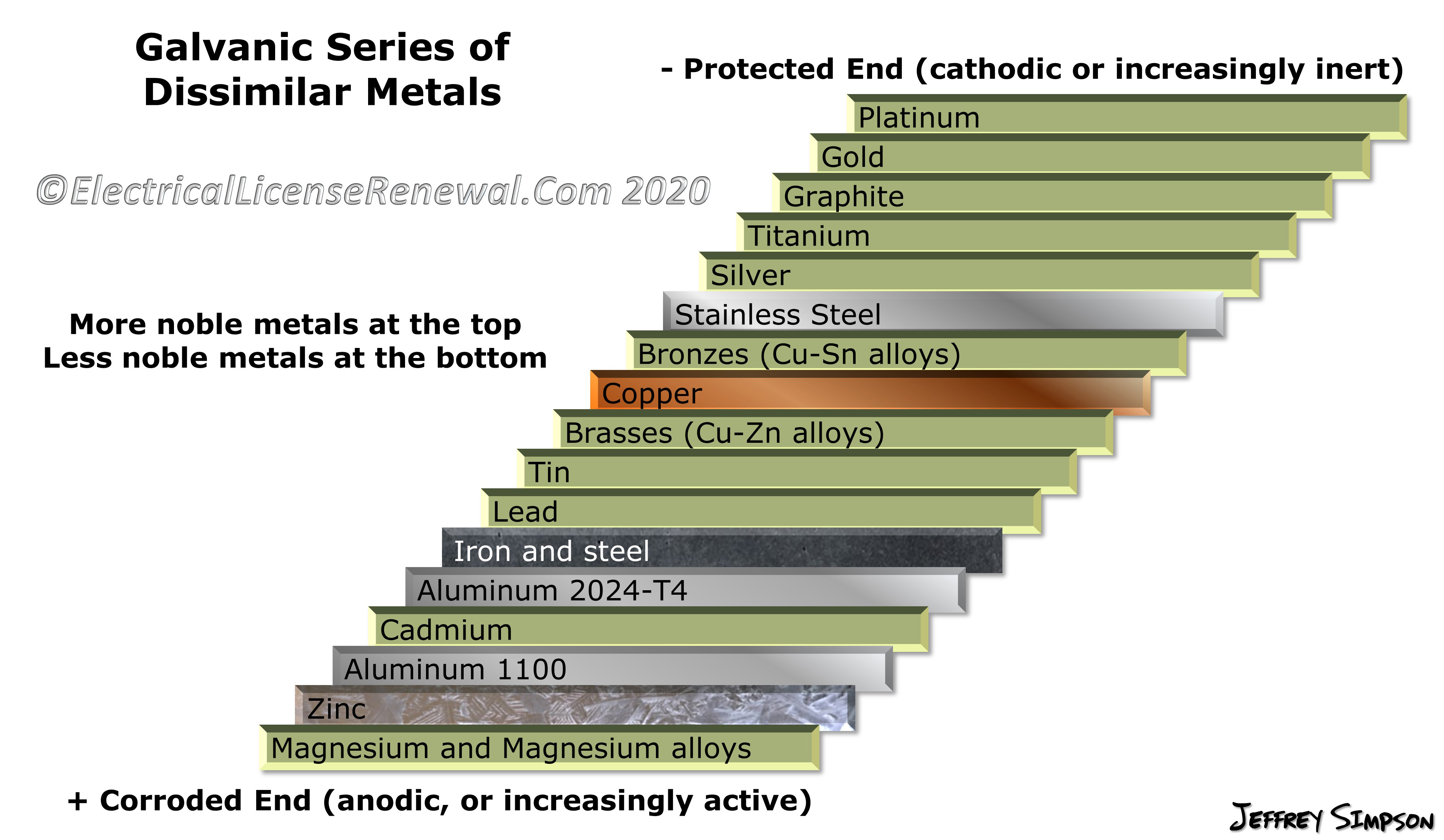
Zinc or magnesium are commonly used as sacrificial anodes. They're like metal bodyguards, taking the bullet for the brass.
They corrode first, protecting the more valuable metal. Metal heroism at its finest!
Coatings: A Protective Barrier
Applying protective coatings can also prevent galvanic corrosion. Paint, powder coating, or even special greases can create a barrier between the metals and the electrolyte.
It's like giving your metals a suit of armor. Corrosion simply bounces off!
Make sure the coating is continuous and free from defects.
Choosing the Right Metals
When designing something, consider the metals you're using. Try to use metals that are closer together in the galvanic series.
This minimizes the potential difference and reduces the driving force for corrosion. Compatibility is key!
Think of it as metal matchmaking, finding the perfect pairs.
Beyond the Basics: The Science Behind the Show
If you're feeling extra curious, you can delve deeper into the science. Electrochemistry is the study of chemical reactions that involve the transfer of electrons.
Understanding the electrochemical principles behind galvanic corrosion can give you a greater appreciation for this phenomenon. Nerd out!
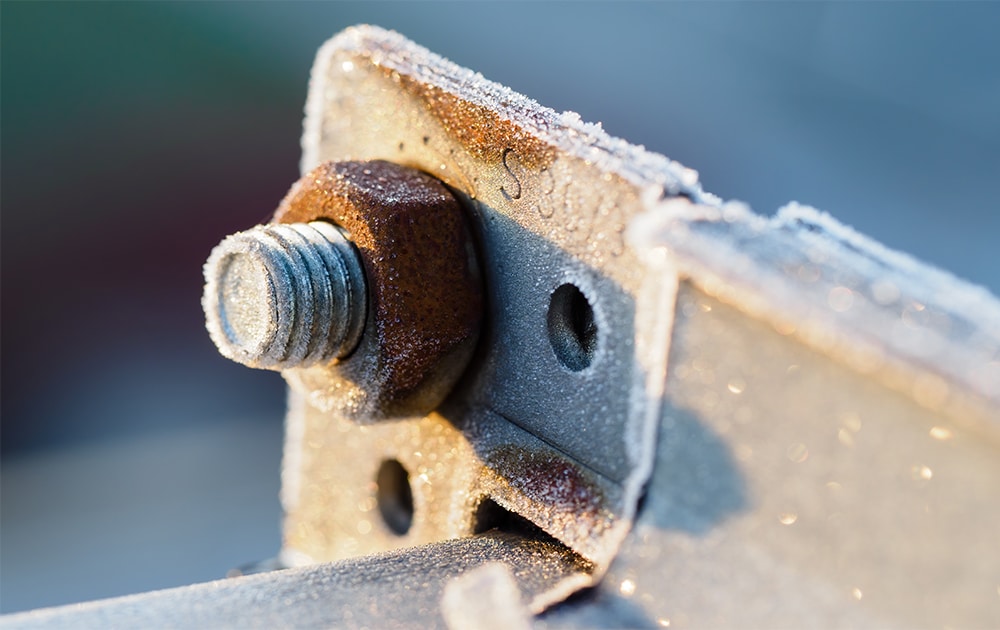
It’s more than just rust. It’s complex chemistry with a real-world impact.
The Galvanic Series: Your Metal Compatibility Guide
The galvanic series is your cheat sheet for metal compatibility. It lists metals in order of their electrical potential.
The further apart two metals are on the series, the greater the risk of galvanic corrosion. Consult the series before you connect!
It's the periodic table’s cool, older cousin.
So, What’s Next? Go Explore!
Now that you know about the exciting world of galvanic corrosion, go out and explore! Look around you. See if you can spot any examples of it in action.
Maybe you'll find a rusty old bolt or a corroded pipe. It's like a real-life treasure hunt, but instead of gold, you're finding science!
And who knows, maybe you'll even become a metal corrosion expert!
Be a Metal Detective!
Next time you're working with metal, remember the galvanic tango. Consider the materials, the environment, and the potential for corrosion.
A little bit of knowledge can go a long way in preventing metal mayhem. Be a responsible metal steward!
Happy metal detecting!