
Biggest Users Of Electricity In A Home
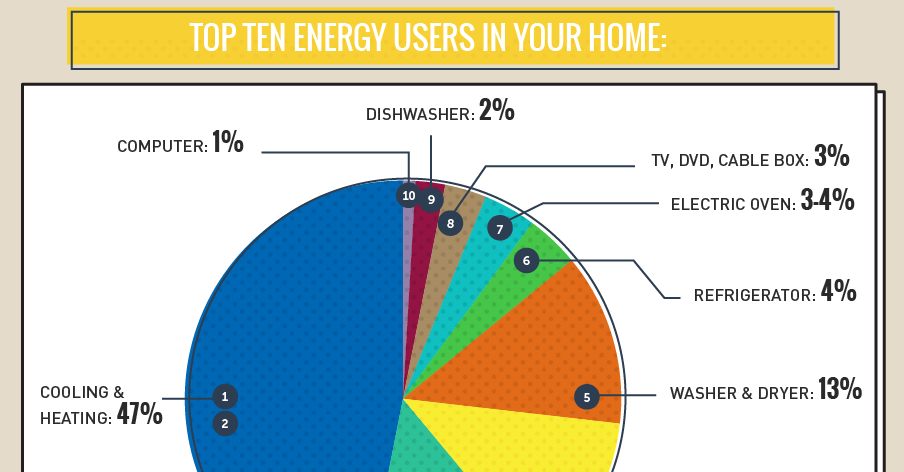
Ever ripped open your electricity bill and felt a sudden chill, despite the summer heat? You're not alone! It's a common mystery: where does all that power go? Understanding the biggest energy guzzlers in your home isn't just about saving a few bucks; it's about being smarter, more comfortable, and a little kinder to our planet. Let's pull back the curtain on your home's energy hogs, with some practical tips, fun facts, and zero judgment.
Think of your home as a bustling city, and electricity as its lifeblood. Some citizens are quiet, sipping power, while others are throwing massive parties every day. We're here to meet the party animals!
The Undisputed Heavyweight: Heating & Cooling (HVAC)
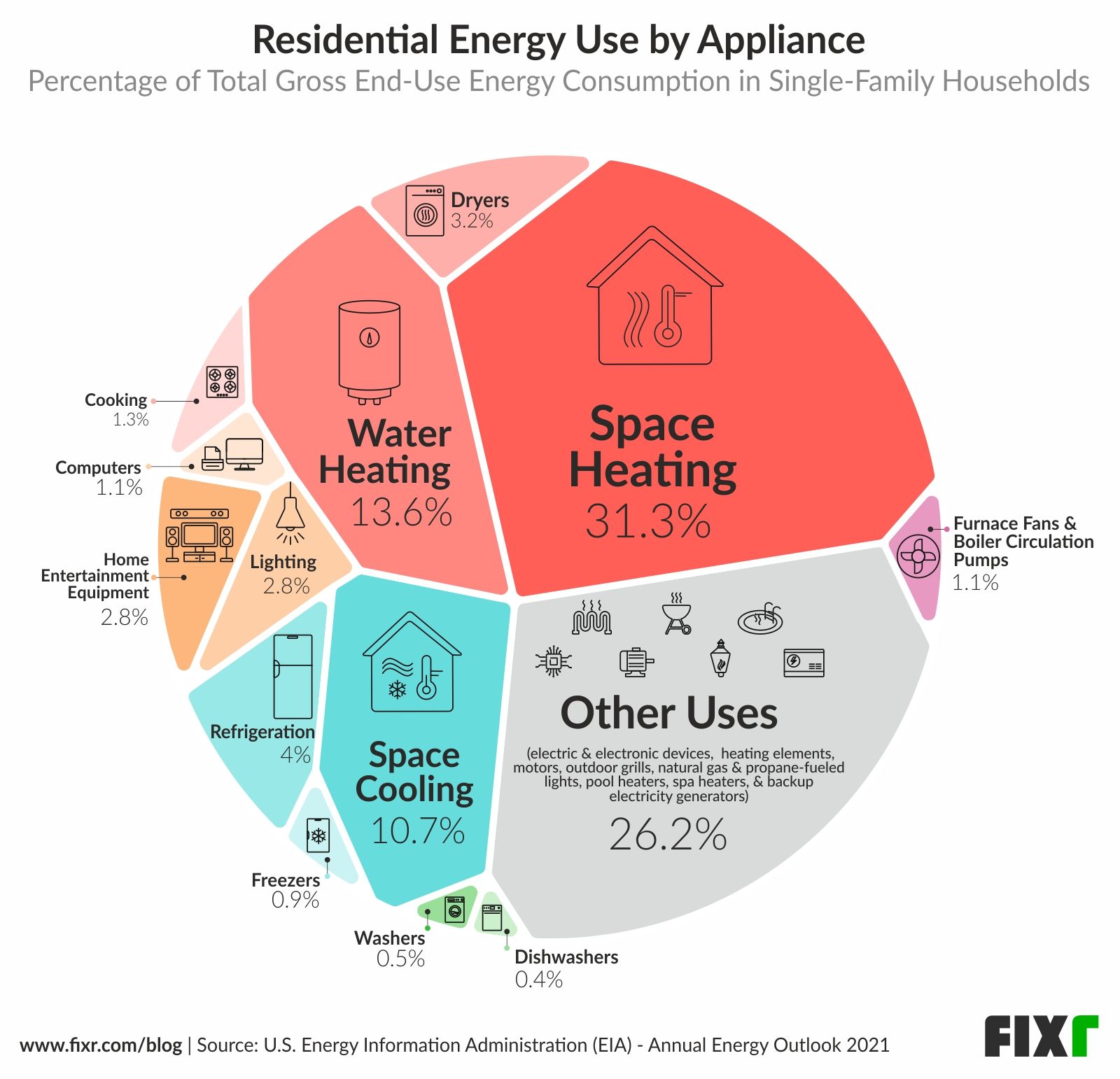
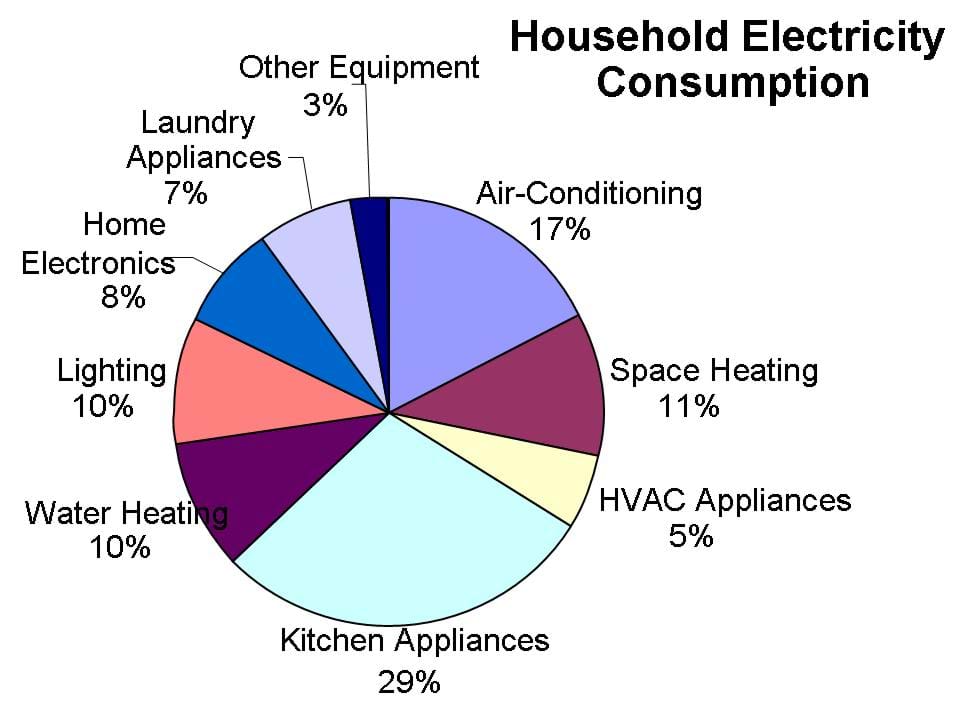
Ding, ding, ding! Your heating, ventilation, and air conditioning system (HVAC) is almost always the biggest user of electricity in your home. Whether it's battling a sweltering July or a frosty February, making your indoor environment just right takes a phenomenal amount of energy. Think about it: it's literally changing the temperature of an entire house!
Must Read
Quick Tip: A smart thermostat can be your best friend here. Set it to adjust when you're out of the house, and aim for a comfortable but not extreme temperature. A degree or two less in winter or more in summer can make a surprisingly big difference. Also, remember to change those air filters regularly – a clogged filter makes your system work much harder!
Fun Fact: The global demand for air conditioning is predicted to triple by 2050, putting it high on the list of technologies impacting climate change. So, let's get smart about how we use it!
The Warm-Up Act: Your Water Heater
Always ready for a hot shower? So is your water heater! It's usually the second biggest energy consumer, tirelessly heating and reheating water so it's always available on demand. This constant vigilance, especially in traditional tank models, requires a significant power draw.
Quick Tip: Lower your water heater's thermostat to 120°F (about 49°C). Most people won't notice the difference, and it can save you a bundle. Also, consider insulating your water heater tank and pipes, especially if they're in an unheated area. And, dare we say, slightly shorter showers?
Cultural Nugget: In some European countries, it's common to have an "on-demand" (tankless) water heater or even to only heat water when needed, a stark contrast to the always-hot tanks prevalent elsewhere.
The Always-On Sentinel: Refrigerator & Freezer
Your fridge and freezer are the unsung heroes, constantly working 24/7 to keep your food fresh and your ice cream frozen. Because they're always on, their cumulative energy use adds up, even if their individual power draw isn't as dramatic as an AC unit.
Quick Tip: Ensure your fridge seals are tight (test with a dollar bill – if it slips out easily, replace the seal!). Keep it full but not overstuffed, as full fridges retain cold better. And don't put hot food directly in; let it cool first.
Fun Fact: The first commercially successful domestic refrigerator was sold in 1916. Imagine life without one! We've come a long way from iceboxes, but the basic principle of constant cooling remains the same.
Laundry Day's Power Players: Washer & Dryer
Ah, laundry day – a household ritual. While your washing machine uses a fair bit of energy, especially if you're always using hot water cycles, it's the dryer that's the real energy hog. That powerful heating element needs a lot of juice to get your clothes fluffy and dry.
Quick Tip: Wash clothes in cold water whenever possible – most detergents are formulated to work just as effectively now. For drying, clean your lint trap every single time (it's a fire hazard and reduces efficiency!). And if you have the space and weather permits, consider using a clothesline. There's nothing quite like the smell of sun-dried laundry!
Environmental Note: Line-drying clothes not only saves energy but also extends the life of your garments by being gentler on fabrics.
The Illuminators: Lighting
While lighting used to be a major electricity drain, thanks to the widespread adoption of LED technology, it's now a much smaller slice of the pie. LEDs are incredibly efficient, using a fraction of the power of old incandescent bulbs and lasting for years.
Quick Tip: If you still have old incandescent bulbs, replace them with LEDs. Seriously, it's one of the easiest and most impactful changes you can make. Also, simply remembering to turn off lights when you leave a room – a classic piece of parental advice – still holds true!
Cultural Reference: The Danish concept of "Hygge" often involves warm, soft lighting to create a cozy atmosphere. While embracing Hygge, remember that smart lighting solutions can give you that ambiance without breaking the bank.
The Silent Sucker: Phantom Loads (Vampire Power)
This one is sneaky! Many devices, from your TV to your phone charger, draw a small amount of electricity even when they're turned off or in standby mode. We call this phantom load or vampire power, and collectively, it can account for 5-10% of your electricity bill.

Quick Tip: The easiest solution? Unplug devices you're not using, or plug them into power strips with on/off switches. That way, you can kill the power to several devices at once with a single click. Smart plugs can also automate this process.
Mind Blown: Did you know a phone charger left plugged into the wall, even without a phone attached, is still drawing a tiny bit of power?
Bringing It All Home
Understanding where your electricity goes isn't about guilt-tripping yourself every time you turn on a light. It's about empowerment. It's knowing that small, consistent changes in habits and smart upgrades can lead to real savings and a more efficient home. Every little bit adds up, creating a ripple effect that benefits both your wallet and the world around you.
So, next time that electricity bill lands, you'll be armed with knowledge, ready to make a few tweaks, and perhaps even feel a little proud of your energy-savvy ways. Go forth and conquer those kilowatts!