
Autism And Strong Sense Of Justice

Okay, let's talk about something near and dear to my heart – and probably to the hearts of many folks on the autism spectrum: a super-powered sense of justice. Think of it like this: you know how some people have a really sensitive nose and can smell a week-old bagel from across the room? That's kind of how it is with autistic individuals and injustice. We just... sense it.
And boy, do we react.
Have you ever been in a situation where someone cuts the line at the grocery store? Most people might just roll their eyes. But for some autistic people, that's like waving a red flag in front of a bull. Suddenly, it's not just about groceries; it's about the sacred social contract we all agreed to when we entered the queue! The urge to politely (or not-so-politely) point out the injustice can be overwhelming. It's not that we're control freaks; it's just that…well, rules matter!
Must Read
It's like our internal code is constantly running a debug program, and any deviation from what's perceived as fair throws up a giant error message: "INJUSTICE DETECTED! INITIATE CORRECTIVE ACTION!"
And this isn't just about line-cutting. It's about everything! Did someone get blamed for something they didn't do? Did a friend get unfairly treated at work? Did the cashier give you the wrong change (even if it's in your favor)? The injustice radar is always on.

Sometimes, this can be a real asset. Think about it: autistic individuals can be amazing advocates because of this unwavering commitment to fairness. We'll fight tooth and nail for what's right, even when it's unpopular or difficult. We're like the miniature superheroes of the everyday world, battling injustice one small victory at a time.
Other times... let's just say it can be a tad inconvenient. Like when you spend 20 minutes arguing with a parking meter that clearly doesn't understand the concept of "valid permit." Or when you write a strongly worded letter to the cereal company because the box promised 20% more marshmallows and you only counted 18%. (Okay, maybe that last one was me.)
But seriously, this strong sense of justice isn't just about being "difficult" or "rigid." It's often rooted in a deep sense of empathy. We can see when someone is being treated unfairly, and it hurts. It's like feeling their pain as our own, and that feeling compels us to act.

Now, it's important to remember that not everyone on the autism spectrum experiences this the same way. Some might be more vocal about injustice, while others might internalize it. But that underlying sense of fairness, that gut feeling that something is wrong, is often there.
It's also important to remember that this isn't some kind of "quirk" that needs to be "fixed." It's a part of who we are. It's what makes us passionate, driven, and capable of fighting for what we believe in.
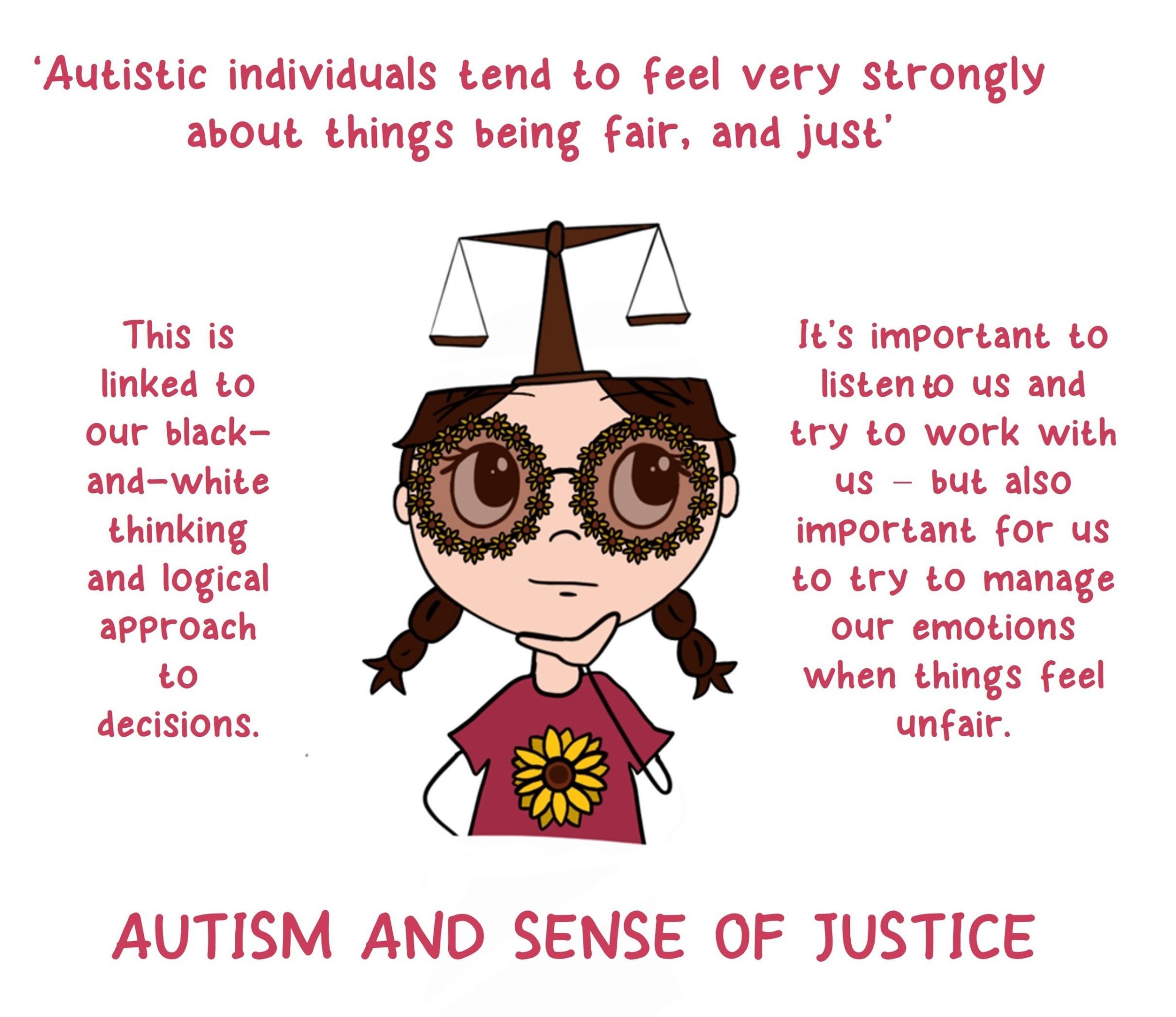
So, the next time you see someone on the autism spectrum standing up for what they believe is right, even if it seems a little… intense… remember that they're probably not just being difficult. They're tapping into a powerful sense of justice, a sense of fairness that deserves to be respected, even if it's a little extra sometimes.
And hey, maybe we could all use a little more of that in the world, right?
Maybe, just maybe, the world needs more people who are willing to stand up for what's right, even when it's not easy. Even when it means arguing with a parking meter.
