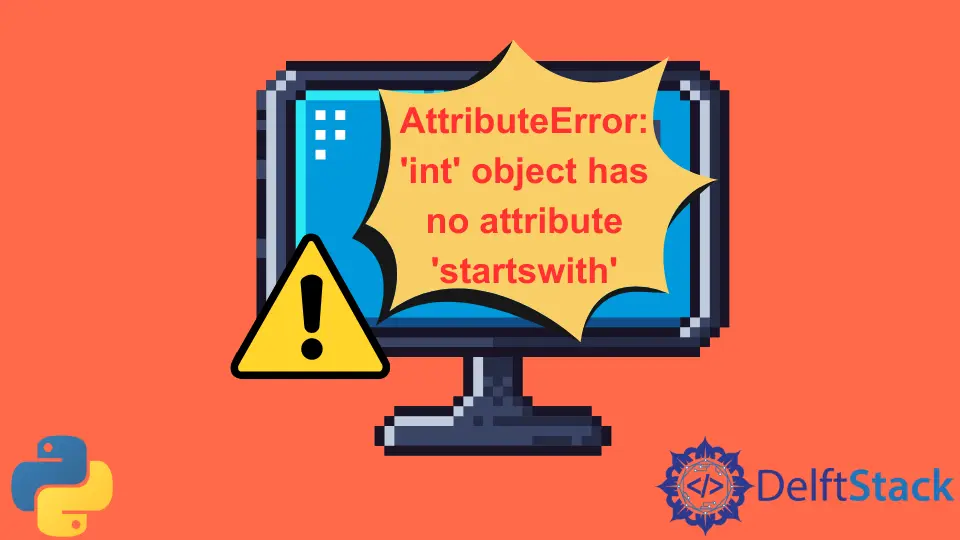
Attributeerror: Int Object Has No Attribute Append

Okay, so picture this: you're vibing to your favorite lo-fi beats, maybe sipping on an iced oat latte, and you're finally tackling that Python project you've been meaning to get to. You're feeling good, coding's flowing... then BAM! A wild error message appears: AttributeError: 'int' object has no attribute 'append'. Suddenly, your zen is shattered. Don't panic! We've all been there. It's basically a right of passage in the coding world, like spilling coffee on your keyboard. Let’s break it down, chill style.
What Exactly Is This Error, Though?
Simply put, this error pops up when you're trying to use the .append() method on an integer. Think of it like trying to put a square peg in a round hole. .append() is a method specifically designed for lists – those handy containers that hold multiple items. It's used to add a new item to the end of that list. Integers, on the other hand, are just single, whole numbers. They don't have an 'append' capability because they're not designed to hold multiple things.
Imagine trying to add a room to a single brick. Doesn't quite work, does it? An integer is like that single brick.
Must Read
Why Does It Happen? (The Usual Suspects)
So, why are you suddenly trying to append something to an integer? Here are a few common scenarios:
- Misunderstanding Variable Types: You might think a variable holds a list, but somewhere along the line, it's been reassigned to an integer. Think of it as a case of mistaken identity! Maybe you initialized
my_dataas a list, but then later didmy_data = 5. Now,my_datais an integer. - Function Return Value Issues: A function you're using might be returning an integer when you expect it to return a list. Double-check the function's documentation (or your own code if you wrote it!).
- Looping Logic Gone Wrong: In a loop, you might be accidentally overwriting a list with an integer value. These things happen! Debugging is part of the process.
How to Fix It: Your Debugging Toolkit
Okay, time to put on your detective hat and solve this mystery! Here’s your toolkit:
- The
type()Function is Your Friend: Useprint(type(your_variable))to confirm what type of data your variable actually holds. This is like checking someone's ID – are they really who they say they are? - Read the Traceback Carefully: The error message includes a "traceback," which shows the line of code where the error occurred. Pay attention to it! It's like following the breadcrumbs in a mystery novel.
- Use a Debugger: Step through your code line by line to see exactly what's happening. Many IDEs (Integrated Development Environments) have built-in debuggers that make this process easier. It's like using a magnifying glass to examine every detail.
- Double-Check Your Logic: Revisit the part of your code where you're trying to use
.append(). Are you sure the variable you're working with is actually a list? Sometimes, stepping away for a few minutes and then coming back with fresh eyes can help!
A Little Example to Make It Stick
Let's say you have this code:
numbers = 5
numbers.append(10) #This will cause an error
print(numbers)
This code will throw the dreaded AttributeError. The fix? Initialize `numbers` as a list:

numbers = [] # Initialize numbers as an empty list
numbers.append(10)
print(numbers)
Now, all is well. You've successfully appended 10 to the list.
Fun Fact: The History of Appending!
Did you know the term "append" comes from the Latin word "appendere," meaning "to hang on"? In the context of programming, it perfectly describes adding something to the end of a collection, like hanging a new ornament on a Christmas tree!
Thinking Bigger: Connecting to Everyday Life
This little coding hiccup, the AttributeError, is actually a great reminder about clarity and expectations in life. Just like you need to be clear about the data types you're working with in Python, you also need to be clear about your expectations in relationships, work, and even your own goals. When those expectations don't align with reality, things can get frustrating, just like encountering an unexpected error. So, take a moment to reflect: Where in your life might a little more clarity prevent some "AttributeError" moments?