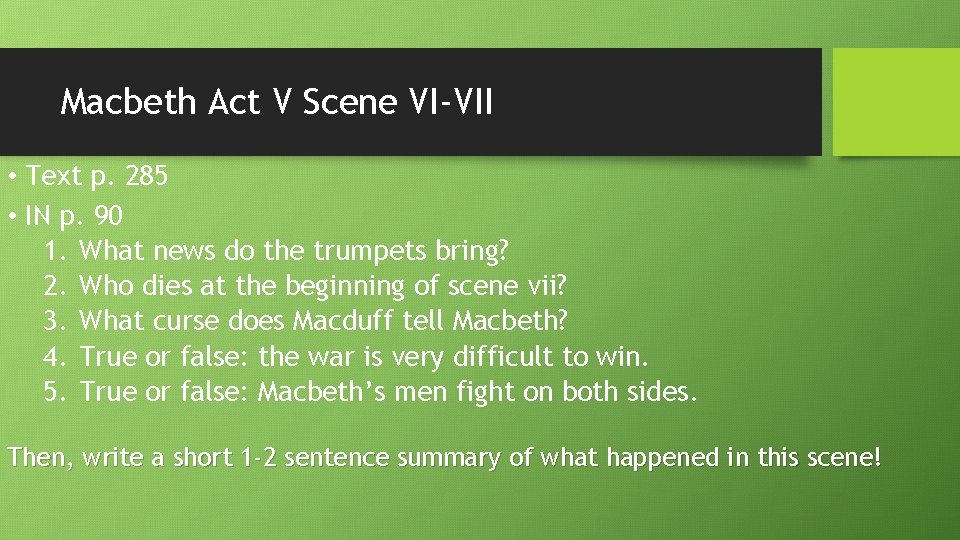
At The Beginning Of Scene Vii In Macbeth
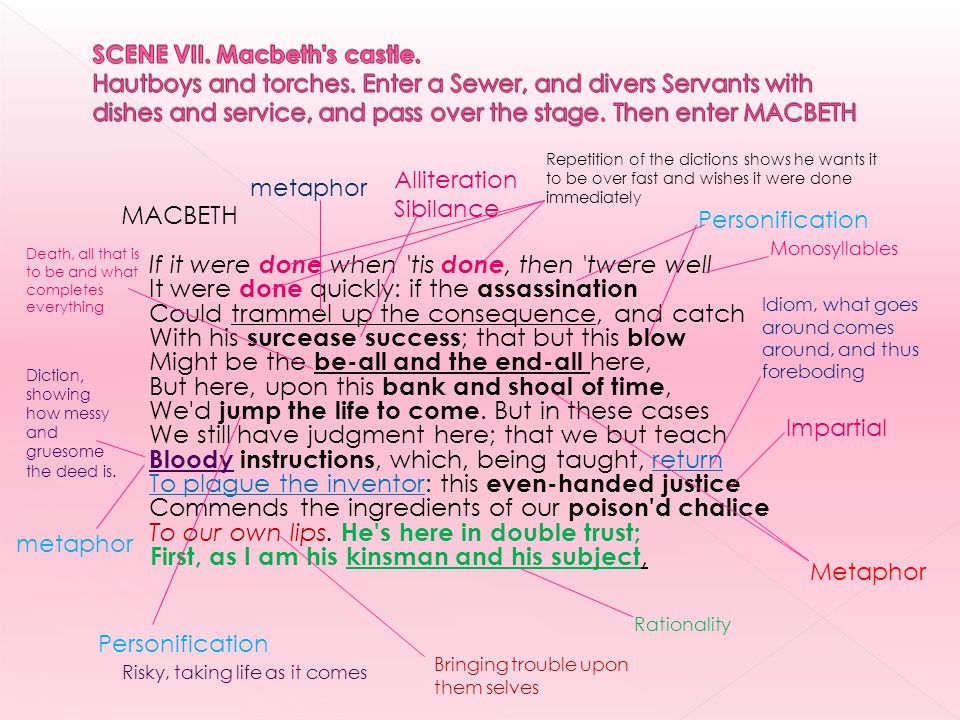
Ever feel like you're stepping into a play mid-scene, a little lost and trying to catch up? That's sometimes how reading Shakespeare can feel! But don't worry, we're here to break down a fascinating little moment in Macbeth: the very beginning of Scene VII. Now, you might be thinking, "Why bother focusing on just a tiny snippet?" Well, it's like looking closely at a brushstroke in a masterpiece – you start to appreciate the artist's intention and skill in a whole new way. Examining the opening of Scene VII gives us insight into character development, thematic build-up, and Shakespeare's masterful use of dramatic tension.
The purpose of zeroing in on this particular scene opening is multifold. First, it allows us to understand Macbeth's internal conflict more deeply. What's he thinking? How is he grappling with the consequences of his actions? Second, it highlights the play's central themes, such as ambition, guilt, and the corrupting influence of power. Shakespeare doesn’t just tell us about these themes; he shows them through carefully crafted scenes and dialogues. Finally, and perhaps most importantly, it demonstrates how Shakespeare uses language and structure to create a specific emotional impact on the audience. Understanding this can unlock a richer, more rewarding reading experience.
But how is this useful outside of academic study? Well, think about analyzing a scene in a movie or understanding the power dynamics in a workplace meeting. The skills you hone by dissecting Shakespeare – paying attention to language, understanding motivations, and recognizing underlying themes – are invaluable in navigating everyday life. In education, this type of close reading is crucial for developing critical thinking and analytical skills. Students learn to support their interpretations with textual evidence, fostering a deeper understanding of literature and language.
Must Read
So, how can you explore this for yourself? A great place to start is by simply reading the scene aloud. Pay attention to the rhythm and flow of the language. Notice any recurring images or motifs. What words stand out to you? Consider Macbeth's mindset at this point in the play. He's a king, but a king drenched in blood and paranoia. How does Shakespeare convey this feeling? Another practical tip is to compare this scene opening to others in the play. Does Shakespeare employ similar techniques elsewhere? How does the pacing differ? Exploring these questions can lead to some fascinating discoveries.
Don't be intimidated by Shakespeare! Think of it as a puzzle, and the beginning of Scene VII in Macbeth is just one intriguing piece. By focusing on these smaller moments, you'll gradually assemble a clearer and more profound understanding of the entire play – and develop skills that will benefit you far beyond the classroom. So, grab your copy of Macbeth, turn to Scene VII, and dive in! You might be surprised by what you find.