
Are There Different Types Or Uses Of Solar Energy
Okay, so picture this: I'm chilling in my garden, right? Sun's blazing, I’m sweating like a marathon runner in a sauna, and all I can think is, “Man, this sun is just wasting all this energy!” Which then got me thinking – is it really being wasted? Or are we actually putting that giant ball of fiery goodness to work in more ways than just giving me a sunburn?
Spoiler alert: we are! And that's what led me down the rabbit hole of solar energy types. Buckle up, because it's more diverse than you might think.
It's Not Just Rooftop Panels, Folks
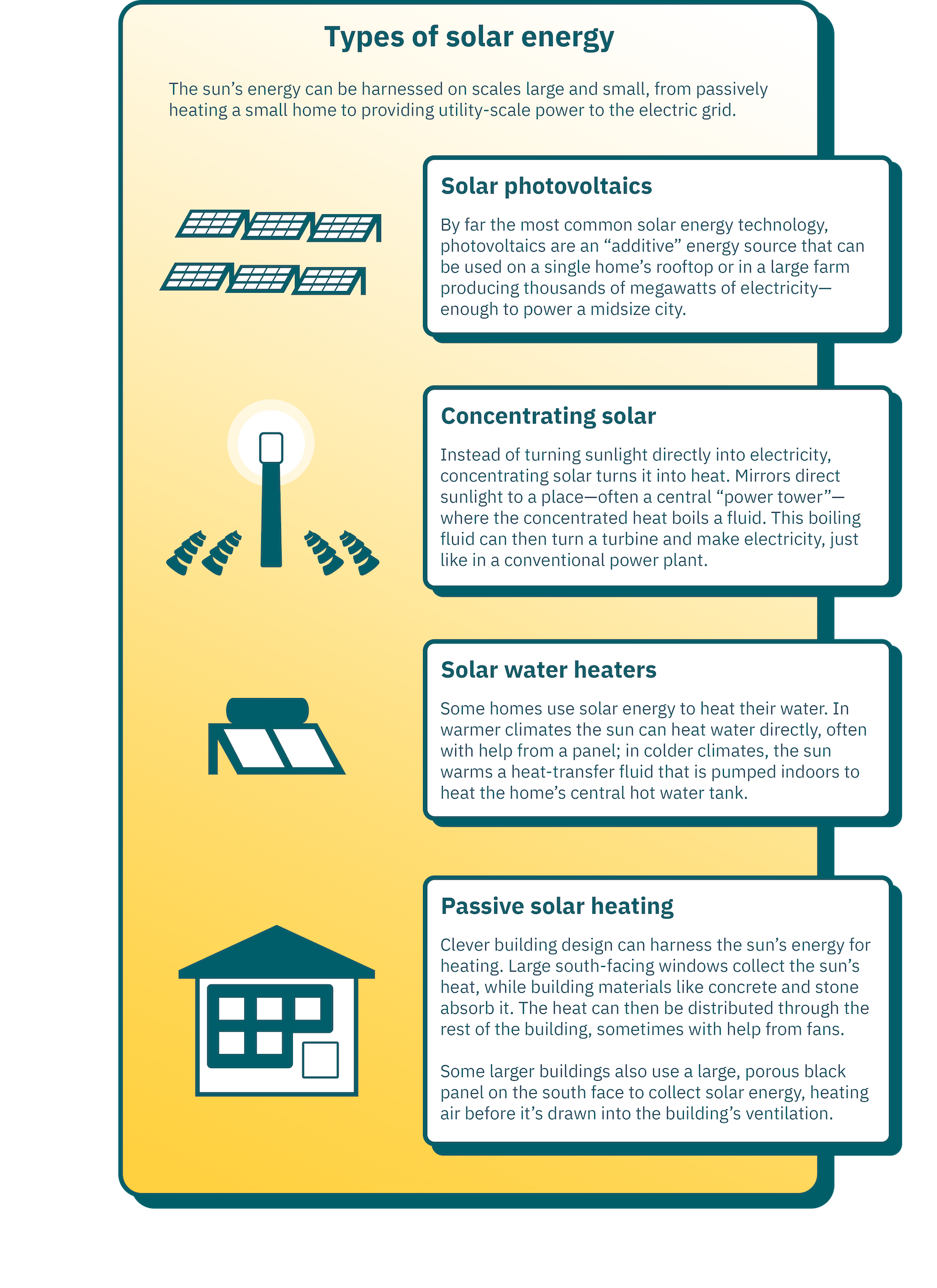
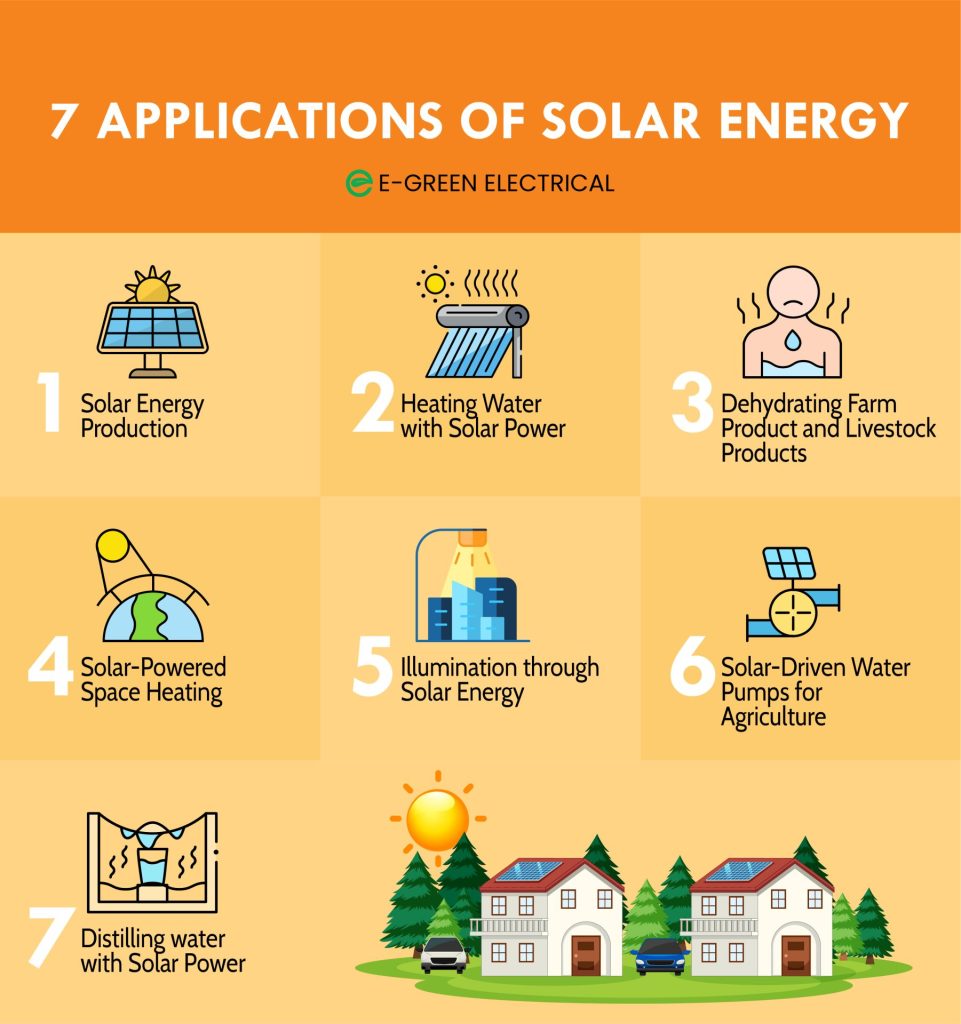
Most people, when they think of solar energy, probably picture those sleek, dark panels adorning rooftops. And yeah, that's a big one – it’s called photovoltaic (PV) solar energy. Basically, the panels use special materials (usually silicon) to convert sunlight directly into electricity. BOOM! Power for your house, less reliance on the grid, and a smaller carbon footprint. (Pretty awesome, right?)
Must Read
But that's not the only way we’re harnessing the sun's power. Think of it as the gateway drug to the world of solar.
Hello, Solar Thermal! (The Hot Stuff)
Ever use a magnifying glass to focus sunlight and, like, melt an ant or something? (Don't judge! We've all been there… okay, maybe not ALL of us.) Well, solar thermal technology is kind of like that, but on a much grander, less ant-focused scale. It uses mirrors or lenses to concentrate sunlight and heat a fluid – usually water or oil – to high temperatures.

Side note: I'm not advocating for ant-melting. Just using it as a relatable example. Please be nice to ants.
This heated fluid can then be used to generate steam, which spins a turbine, which, in turn, generates electricity. It’s a more roundabout way of getting electricity than PV, but it's super effective for large-scale power plants. Plus, some solar thermal systems can store the heat for later use, meaning you can still generate power even when the sun isn't shining. Pretty neat, huh?

Solar Heating: Keeping Things Cozy
Then there’s solar heating, which is exactly what it sounds like. Instead of generating electricity, these systems directly use solar energy to heat water or air for use in buildings. Imagine, showering with water heated directly by the sun. Talk about a guilt-free hot shower!
Solar water heaters are probably the most common application, but you can also find solar air heating systems that help warm your home in the winter. It's a simpler technology than PV or solar thermal, but it's a very efficient way to reduce your reliance on traditional heating sources (like fossil fuels).
Passive Solar: Free Heat (If You Plan Ahead)
Okay, this one is cool. Passive solar design is all about using the sun's energy to heat (or cool) your home without using any mechanical systems. It's all about smart architectural design. Think about orienting your house to maximize sunlight exposure in the winter and minimize it in the summer. (South-facing windows are your best friend in the Northern Hemisphere!). Overhangs, strategically placed trees, and thermal mass materials (like concrete or brick) can all help to regulate the temperature of your home naturally.
It’s like… free heating and cooling, just by thinking ahead! (Why didn’t I think of that when building my garden shed?) It requires some planning during the design phase, but it can significantly reduce your energy bills and make your home more comfortable year-round. Plus, it’s super eco-friendly!
Concentrated Solar Power (CSP): The Big Guns
Remember that magnifying glass analogy? Concentrated Solar Power (CSP) is basically that, but on a scale that could power a small town. CSP plants use massive arrays of mirrors (called heliostats) to focus sunlight onto a central receiver, which heats a fluid to extremely high temperatures. This fluid is then used to generate steam and drive a turbine, producing electricity.
CSP plants are usually located in sunny, desert regions, because they need a LOT of direct sunlight to operate efficiently. (Sorry, Seattle.) They're a big investment, but they can provide a significant amount of clean energy.
So, there you have it! Solar energy isn't just about rooftop panels. It's a diverse field with a range of technologies, each with its own strengths and applications. Whether it's powering your home, heating your water, or generating electricity for entire cities, the sun is shining bright on our energy future. (Pun intended, of course.)
And now, if you'll excuse me, I'm going to go find some shade before I turn into a human solar panel myself. And maybe, just maybe, look into getting some of those rooftop panels...