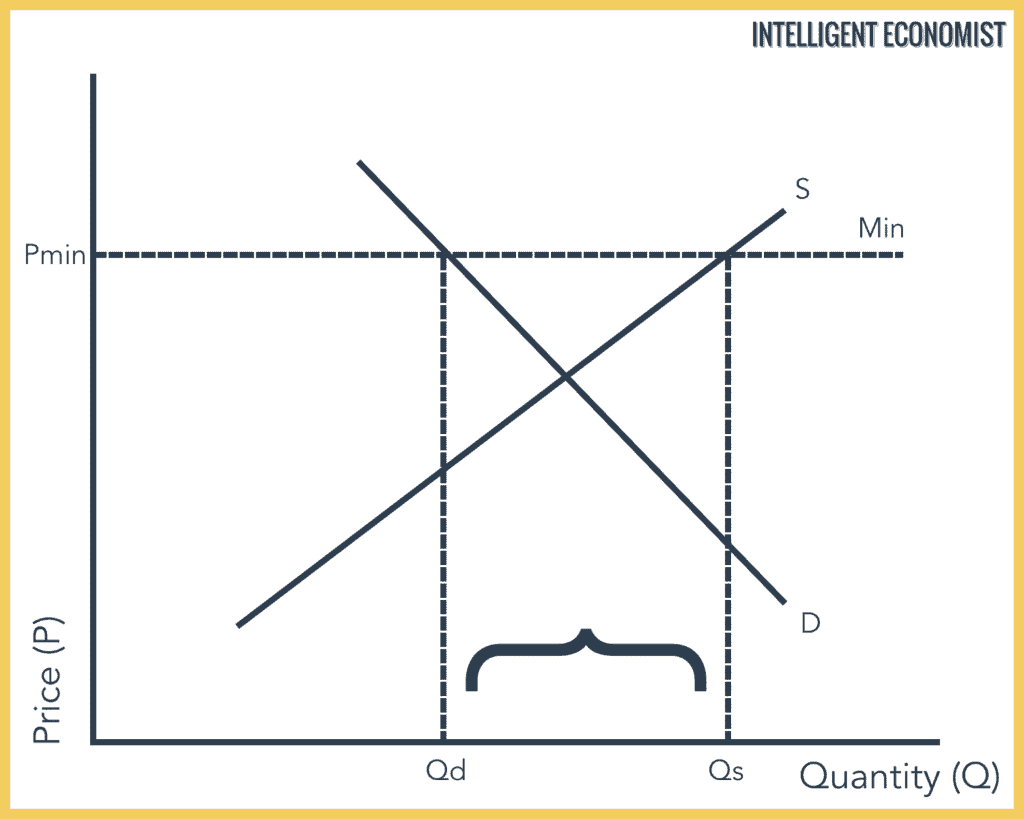
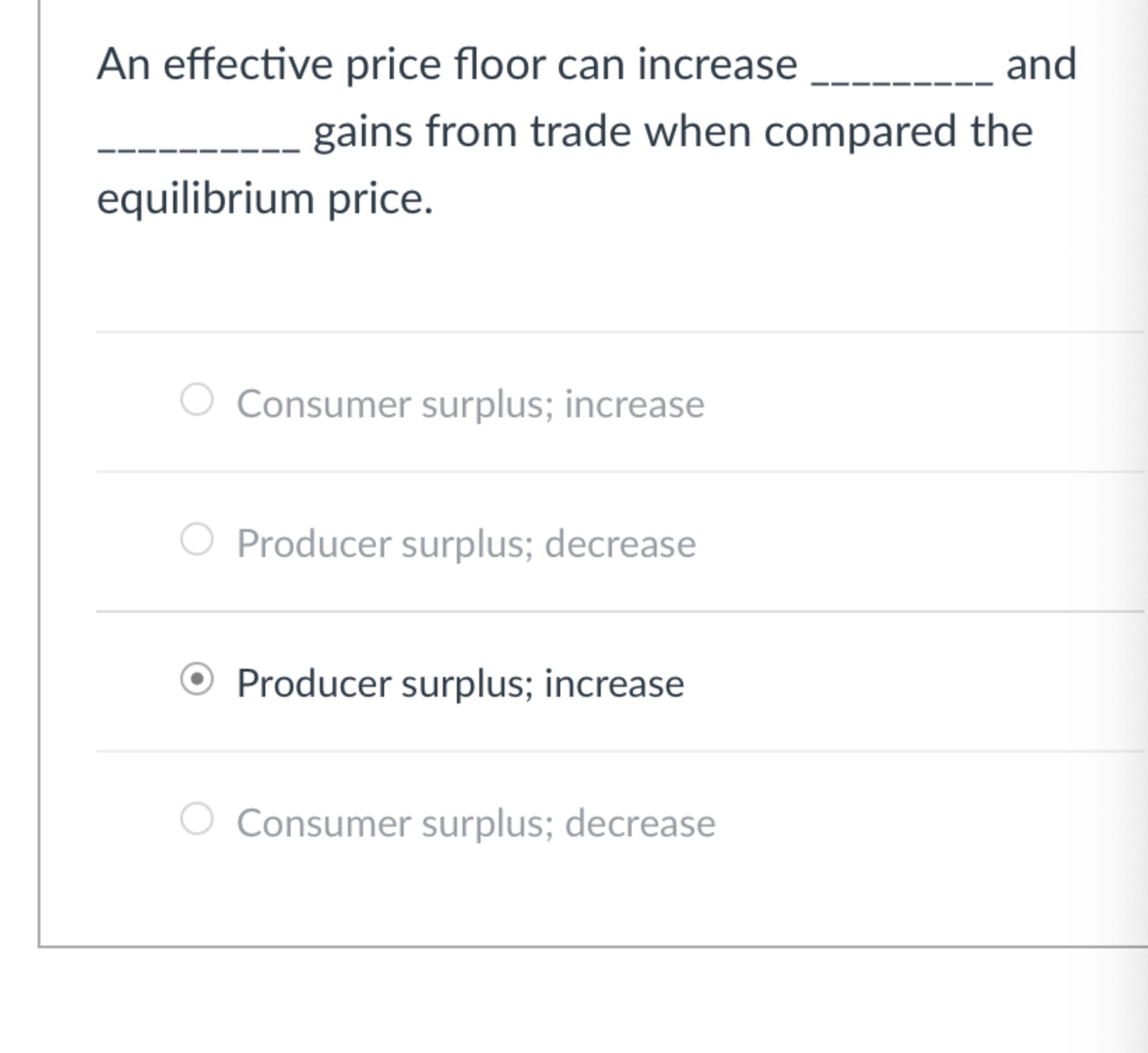
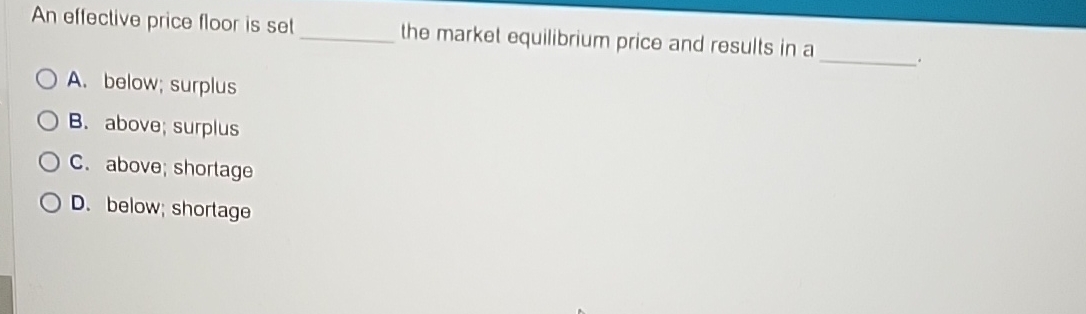
An Effective Price Floor Results In
Think about your favorite cup of coffee. That perfectly roasted bean, that satisfying aroma, that morning jolt that gets you going. Or maybe it's a locally grown tomato, bursting with flavor in your summer salad. We often take for granted the complex systems that bring these everyday delights to our tables, but sometimes, those systems need a little help to function properly. This is where the concept of a price floor comes in.
A price floor, at its simplest, is a minimum price set by a government or organization, below which a good or service cannot be sold. It's designed to protect producers, often farmers or other essential industries, from prices dropping so low that they can't even cover their costs. Imagine a world where coffee farmers are forced to sell their beans for less than it costs them to grow and harvest them. They'd go out of business, and eventually, your morning cup would become a lot more expensive (or disappear entirely!).
The primary benefit of an effective price floor is protecting producers' incomes. It ensures they receive a fair price for their goods, allowing them to stay in business and continue supplying the market. This has a ripple effect, maintaining a stable supply of essential goods and services, boosting local economies, and preserving rural communities. Think of dairy farmers, for example. Price floors in the dairy industry aim to ensure they receive a reasonable price for their milk, preventing mass farm closures and maintaining a consistent milk supply for consumers.
Must Read
You might encounter price floors in various ways, often without even realizing it. Minimum wage laws are a common example; they set a price floor for labor, ensuring workers receive a minimum hourly rate. Agricultural price supports, like those used for certain crops, are another. International trade agreements sometimes involve price floors to protect domestic industries from unfair competition. While the specifics vary depending on the context, the underlying goal remains the same: to prevent prices from falling too low and harming producers.

Now, how can we, as consumers, appreciate and potentially even enjoy the benefits of a well-implemented price floor more effectively? Firstly, be aware of the origins of your food and other products. Supporting local producers and understanding the challenges they face can lead to a greater appreciation for the value you're receiving. Secondly, consider the long-term benefits of stable industries. A slightly higher price today might mean a consistent and reliable supply of that good or service for years to come. Thirdly, when possible, choose products from companies or regions that prioritize fair prices for their producers. This could involve looking for fair trade certifications or supporting local farmers' markets. By being informed and conscious consumers, we can contribute to a system that benefits both producers and ourselves.
Ultimately, understanding the concept of a price floor helps us to appreciate the complexities of the markets around us. It's not just about the price tag; it's about the livelihoods of the people who produce the goods and services we rely on every day. By being more aware of these dynamics, we can make informed choices and support a more sustainable and equitable economic system for everyone.