Advantages And Disadvantages Of Nuclear Power Plant

Let's talk about nuclear power! It's one of those things that sounds super sci-fi, maybe even a little scary. We picture glowing green goo and scientists in hazmat suits, right? But behind the Hollywood image, there's a whole world of pros and cons to unpack, and honestly, some of it's even… kinda cool?
The "Yay, Power!" Side
First, the big advantage: massive amounts of energy. Imagine one of those teeny-tiny pellets, smaller than your pinky fingernail. That little guy packs the punch of, get this, almost a ton of coal! That's like your car chugging along for years on a single, itty-bitty "fuel-up." Now, that's efficiency!
And because it's so efficient, nuclear power plants also help us keep the air a bit cleaner. Unlike coal or gas plants, they don't pump out tons of carbon dioxide when they're making electricity. That means less contribution to climate change, which is a definite win for future generations who will thank us for leaving them a slightly less melty planet.
Must Read
Think of it like this: imagine you're throwing a pizza party. Coal and gas plants are like ordering tons of individual pizzas, creating piles of cardboard waste. Nuclear power? It's like having a magical pizza oven that makes a seemingly endless supply of pizza with almost no waste. (Okay, maybe not exactly like that, but you get the idea!)
Another fun fact: nuclear power plants are remarkably reliable. They can run almost non-stop, regardless of the weather. Solar power needs sunshine, wind power needs wind (duh!), but nuclear? It's a steady Eddie, churning out electricity day and night, rain or shine. This makes them a great "baseload" power source, always there to keep the lights on.

The "Hmm, Maybe Not" Side
Of course, it's not all sunshine and nuclear rainbows. The biggest concern? Radioactive waste. This is the stuff everyone worries about. When the nuclear fuel is "spent" (meaning it can't generate enough energy anymore), it’s still radioactive and needs to be stored very, very carefully for a very, very long time. Think thousands of years.
Finding places to safely store this waste is a major challenge. Imagine trying to find a permanent home for your grumpy, radioactive Great Aunt Mildred who needs constant attention and supervision. Not easy, right?
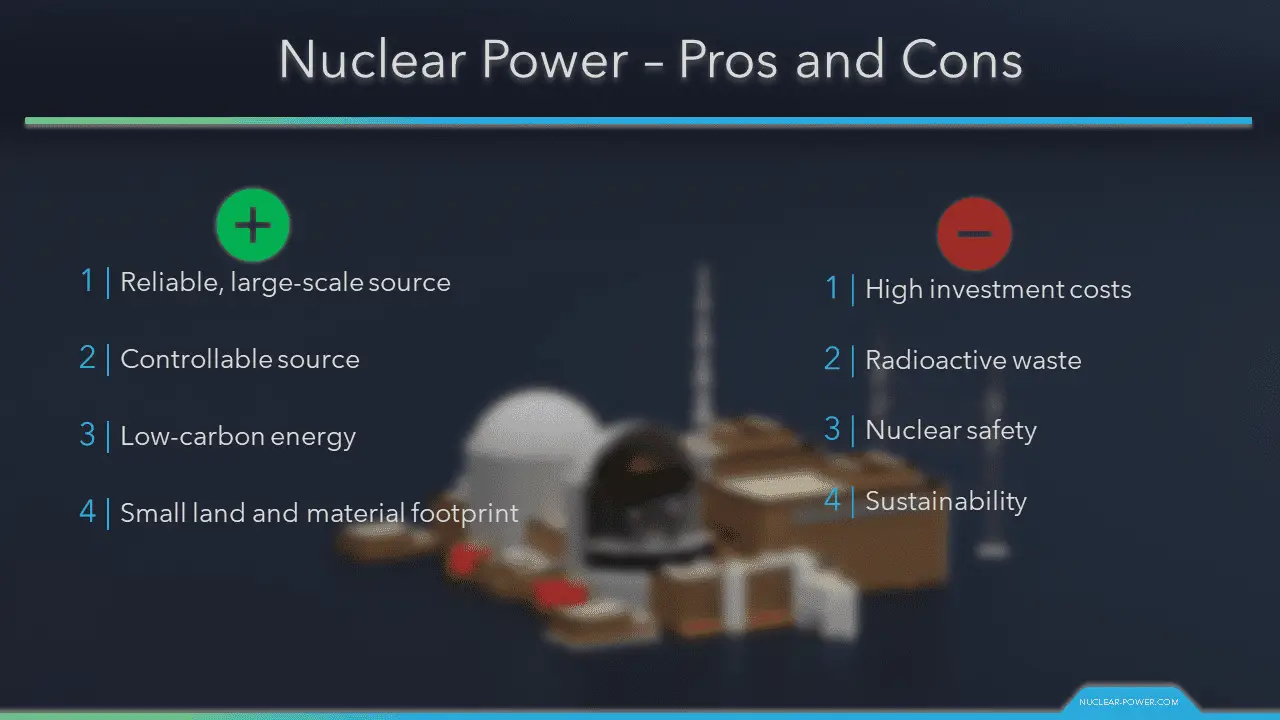
And then there's the possibility (however small) of accidents. We've all heard about Chernobyl and Fukushima. These were major disasters, and the thought of something similar happening again understandably makes people nervous. While nuclear power plants have incredibly strict safety regulations and multiple layers of protection, the consequences of a meltdown are devastating.
Building a nuclear power plant is also incredibly expensive. We're talking billions of dollars, which is way more than building a solar or wind farm. It's like comparing the price of a bicycle to a spaceship – both can get you from point A to point B, but one requires a much bigger investment.

Plus, there’s the issue of nuclear proliferation. The technology used to make nuclear power can also be used to make nuclear weapons. Ensuring this technology doesn't fall into the wrong hands is a constant, global concern. It's like having a powerful recipe that, if misused, could create something very dangerous.
The Bottom Line?
Nuclear power is a complex beast. It offers the promise of abundant, low-carbon energy, but comes with significant risks and challenges. There’s no easy answer to whether it’s "good" or "bad." It really boils down to weighing the pros and cons and considering the alternatives.
Maybe someday, we'll find a way to make nuclear power completely safe and sustainable. Until then, it remains one of the most debated and fascinating sources of energy on the planet. Just try to remember all the "cool" aspects next time you see a picture of a nuclear reactor!