Acidic Nature Of Acetylene

Ever heard of acetylene? Maybe you've seen welders using it with oxygen, producing that incredibly intense flame. But beyond its industrial applications, acetylene holds a surprising secret: it's acidic! Now, before you imagine squirting it on your fries, let's clarify. We're talking about acidity on a chemical level, not something you'd experience like lemon juice. But trust me, this seemingly small detail unlocks a world of fascinating chemistry and explains some of acetylene's unique properties. Why is this fun? Because understanding this seemingly simple concept allows us to predict and control how acetylene reacts with other chemicals, leading to the creation of new and useful compounds!
So, what does it mean for acetylene to be acidic? Remember from chemistry class that acids tend to donate protons (hydrogen ions, H+). While acetylene isn't going to burn your skin like a strong acid, it can release a proton under the right circumstances. This ability, however weak, makes it a Brønsted-Lowry acid. The key lies in its structure: a triple bond between two carbon atoms and a single bond between each carbon and a hydrogen atom (H-C≡C-H). Those hydrogen atoms are the key players here.
The real magic happens because the carbon atoms in acetylene are sp hybridized. This hybridization means that the electrons holding the hydrogen atoms are held relatively closer to the carbon nucleus compared to, say, the hydrogen atoms in methane (CH4). This increased proximity increases the positive charge on the hydrogen atom, making it easier to pull off as a proton. Think of it like a slightly loose thread – it's easier to tug on than a thread tightly woven into the fabric.
Must Read
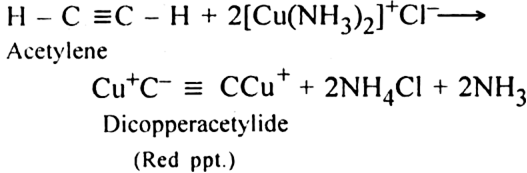
Now, why is this acidity useful? The most important benefit is that we can use strong bases – substances eager to grab protons – to remove those hydrogen atoms. When we do, we create acetylide ions. These acetylide ions are remarkably reactive and can be used as building blocks to create all sorts of larger, more complex organic molecules. Imagine them as Lego bricks, ready to snap onto other chemical components.

For instance, we can react an acetylide ion with an alkyl halide (a molecule containing a halogen atom like chlorine or bromine attached to a carbon chain). This reaction, known as an alkylation, adds the carbon chain from the alkyl halide to the acetylene fragment, creating a longer carbon chain with a triple bond in it. By repeating this process, chemists can build up complicated structures that would be difficult or impossible to synthesize using other methods. These complex structures are used in the creation of pharmaceuticals, polymers, and various other specialty chemicals.
In short, understanding the acidic nature of acetylene allows chemists to perform reactions that wouldn't otherwise be possible. It's not about using acetylene to pickle vegetables; it's about harnessing a subtle chemical property to construct the molecules that shape our world. So, the next time you see a welder, remember that acetylene is more than just a fuel – it's a versatile chemical building block thanks to its surprising, albeit mild, acidity!