
A Wave Is A Disturbance That Transfers
Okay, so picture this: you're at the beach. Gorgeous day, right? Sun's out, waves are crashing… and you're about to learn something about physics! Don’t worry, I promise it won't feel like school. Think of it more like a highly entertaining beach-side chat with your slightly eccentric, physics-obsessed friend (that's me!).
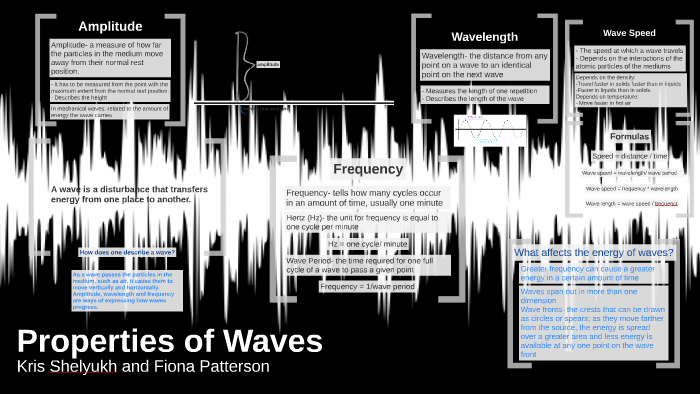
We're talking about waves. Now, before you start thinking about the kind that require a surfboard and some serious gnarly skills (which I definitely don’t possess), let's get something straight. A wave, at its core, is a disturbance. That's it! A wobble in something. A jiggle. A… well, you get the picture.
But here’s the kicker: this disturbance transfers energy. And that, my friends, is the whole point of the wave party.
Must Read
Think of the Crowd Doing "The Wave"
Imagine a baseball game. Everyone's bored (or, you know, pretending to be while secretly checking their phones). Then, someone starts "The Wave." One person stands up, throws their arms in the air, then sits down. The person next to them does the same. And so on, and so forth, around the stadium. Voila! A wave! Did anyone actually move around the stadium? No. They just stood up and sat down. The energy of the wave moved, not the people.
That's basically how all waves work. Something gets disturbed, and that disturbance passes from one thing to another, like a really enthusiastic (and slightly tipsy) rumour at a family gathering.

Important Note: The medium the wave travels through (like the baseball fans, or the water in the ocean) doesn't actually travel with the wave. It just wobbles!
Types of Waves: It's Not Just Water!
Now, there are all sorts of waves. It’s not just the ocean kind that threatens to steal your cooler full of lukewarm sandwiches. There are sound waves (that’s how you’re hearing my scintillating voice… or, well, reading my even more scintillating words), light waves (that’s how you’re seeing this, and also why sunglasses are a good idea), and even seismic waves (that’s what causes earthquakes – and I’m pretty sure nobody wants those at their picnic).
Sound waves are particularly interesting. They're basically tiny vibrations in the air. When I talk (or, more accurately, type furiously), my vocal cords vibrate, which makes the air around them vibrate. These vibrations travel through the air to your ears, which then vibrate your eardrums, which your brain interprets as… well, hopefully, something mildly coherent.
Ever wonder why you can hear someone yelling louder than someone whispering? That's because the loud yell creates a bigger disturbance in the air – a wave with more energy! It's like the difference between gently poking someone and giving them a full-on enthusiastic bear hug (please don't do that to strangers).
Electromagnetic Waves: The Unseen Superstars
Then there are electromagnetic waves. These are the really cool, slightly mysterious ones. They don't need a medium to travel through! That’s how sunlight gets to Earth from the sun, even though there's a whole lot of empty space in between. They are like tiny, self-sufficient travel agents that can travel through the vacuum of space without any wifi or snacks.

Light, radio waves, microwaves, X-rays… all electromagnetic waves! They're just different wavelengths and frequencies. Think of it like different flavors of the same ice cream (but instead of chocolate and vanilla, we're talking about gamma rays and infrared… still delicious in their own physics-y way).
Microwaves, for example, make water molecules vibrate REALLY fast. That's why your leftover pizza gets hot in the microwave. It's not magic (though it feels like it when you're starving). It’s just electromagnetic waves doing their thing and transferring energy directly into your questionable culinary choices.

So, What’s the Big Deal?
Why should you care about all this wave nonsense? Well, for starters, almost everything you experience in your daily life involves waves in some way. From listening to music to using your phone to seeing the world around you, waves are the unsung heroes of reality. And honestly, the more you understand how they work, the more amazing the world becomes!
Besides, now you can impress your friends at your next beach trip. Instead of just saying, "Wow, look at that wave!" you can dramatically declare, "Behold! A visual representation of a disturbance propagating energy through a medium! Marvel at its sinusoidal nature!" They’ll either be incredibly impressed or politely excuse themselves to go build a sandcastle far, far away from you. Either way, you win!
So there you have it. Waves: disturbances that transfer energy. It's not rocket science (though rocket science definitely uses waves!). Now go forth and appreciate the wave-y nature of the universe!