
A Kilowatt Hour Is A Unit Of
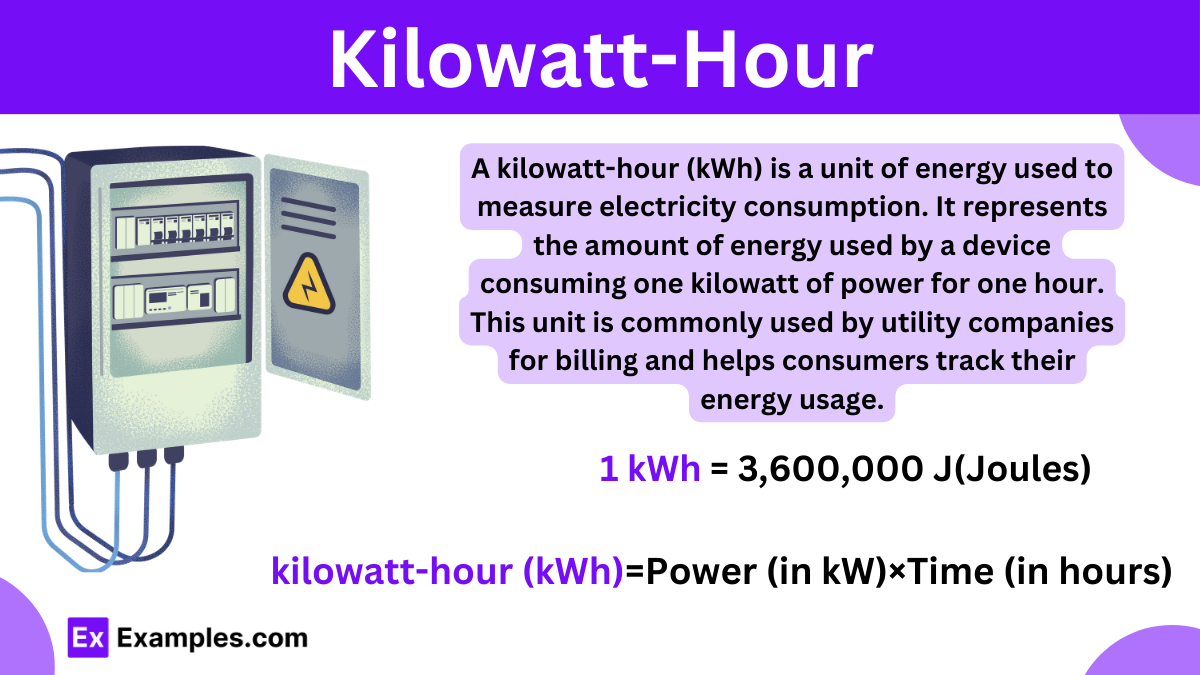
Hey there, friend! Ever stared at your electricity bill and seen "kWh" lurking there, wondering if it's some secret code or perhaps the name of a new exotic pet? Well, grab a cuppa, because we're about to demystify that little acronym. It's actually super simple, and understanding it will make you feel like an energy superhero (minus the cape, probably).
So, let's dive into the fascinating world of what a Kilowatt-Hour actually is a unit of. Spoiler alert: it's not a unit of time, nor is it a unit of how much caffeine your smart speaker consumed last night.
What's a Watt, Anyway?
Before we get to the big kahuna, let's talk about the humble Watt. Think of a Watt (W) as a measure of power. It's like how fast something is working, or how much "oomph" it needs at any given moment.
Must Read
Imagine a lightbulb. A 60-Watt bulb is using energy at a certain rate – its power. A giant hairdryer might be 1500 Watts because it needs a lot more oomph to blast your hair dry. It's the rate at which energy is used or produced. Like how fast you’re running!
And the "Kilo" Part?
This one's easy-peasy. "Kilo" simply means 1,000. So, a Kilowatt (kW) is just 1,000 Watts. Nothing too wild there. It's like saying a "kilometer" is 1,000 meters. We just use "kilo" to avoid writing out tons of zeros. So, your 1500-Watt hairdryer is actually a 1.5 Kilowatt hairdryer. Fancy, right?
Then There's the "Hour"...
Okay, this part is pretty self-explanatory. An Hour (h) is a unit of time. We all know hours. They're what we spend scrolling through cat videos and trying to figure out what to have for dinner.
The "hour" in "Kilowatt-hour" is super important because it tells us how long that power was doing its thing.

The Grand Reveal: Kilowatt-Hour!
Alright, drumroll please! When you smash "Kilowatt" and "Hour" together, you get Kilowatt-Hour (kWh). And what is a Kilowatt-Hour a unit of? It’s a unit of… wait for it… ENERGY! Ta-da!
Think of it this way:
- Kilowatt (kW) is like the speed you're running (how fast you're using energy).
- Hour (h) is the time you spent running.
- Kilowatt-hour (kWh) is the total distance you ran (the total amount of energy you used!).
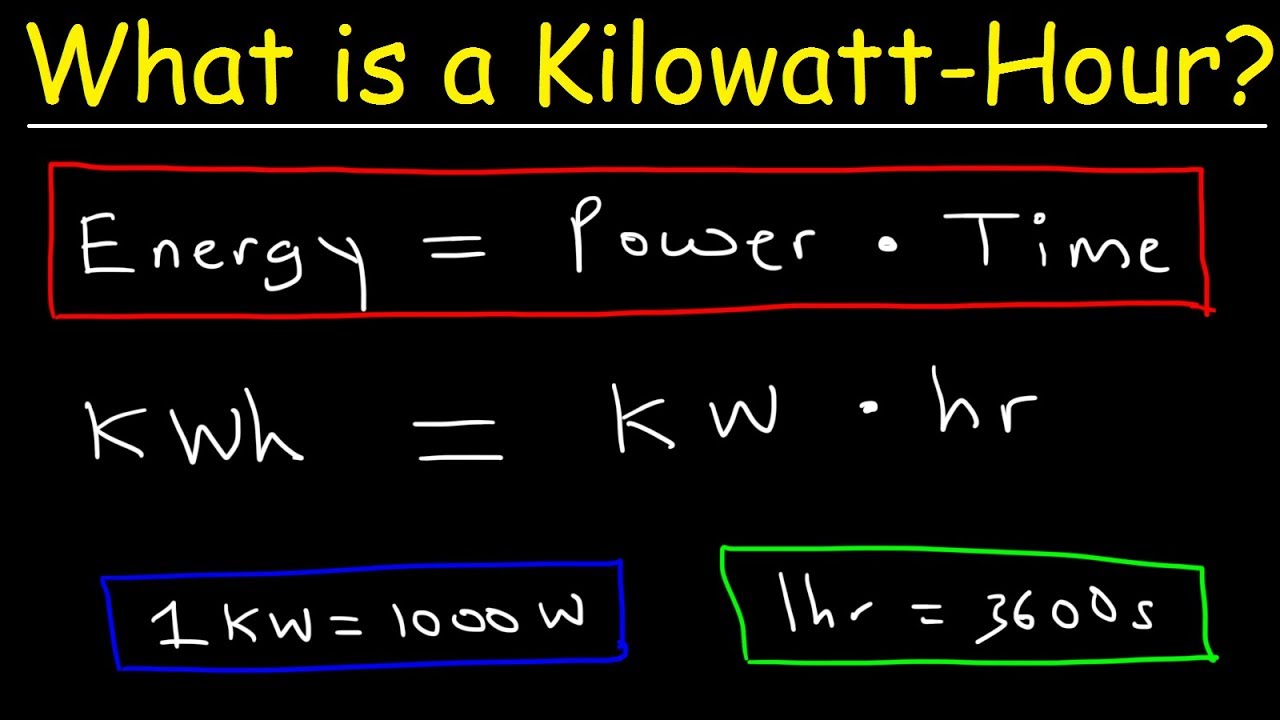
So, if you have a device that uses 1 kW of power, and you run it for 1 hour, you've used 1 kWh of energy. If you run that same 1 kW device for 2 hours, you've used 2 kWh of energy. See? It's not about how powerful it is at any single moment, but how much juice it sips over time.
It’s not measuring power, it's measuring accumulated consumption. Your electricity meter isn't measuring how fast electricity is flowing at any given second, but how much has flowed in total, like an odometer measures total miles, not your current speed.
Why Should I Care About This kWh Thingy?
Because your electricity company charges you for every single kWh of energy you consume! They don't charge you for the "power" your fridge uses at one instant; they charge you for the total energy it uses throughout the month. That's why understanding kWh can actually help you save some pennies!
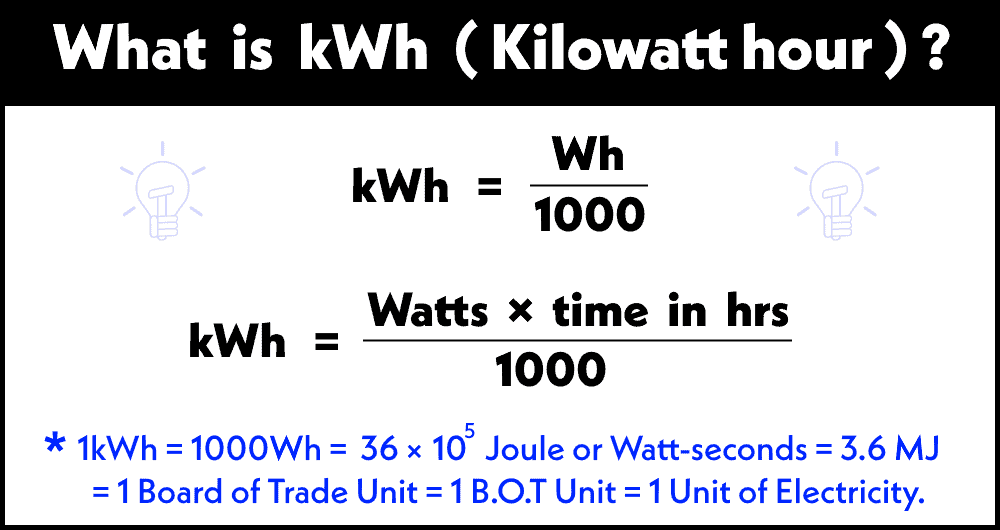
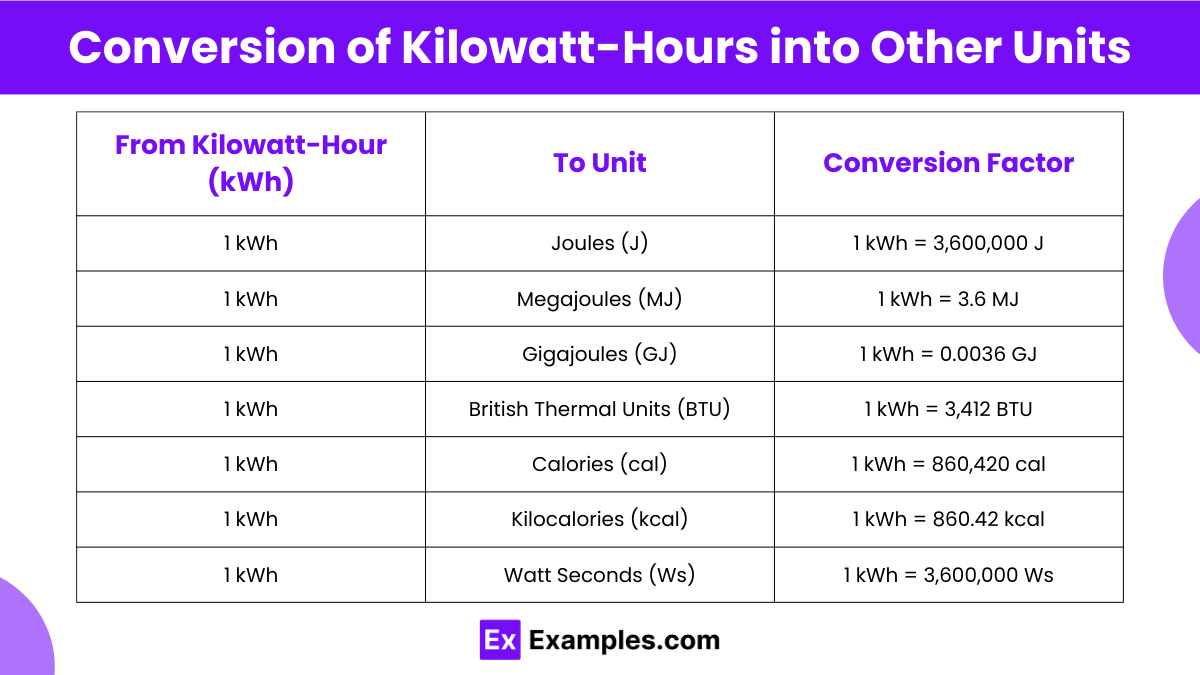
When you see an appliance rated at, say, 100 Watts (which is 0.1 kW), and you leave it on for 10 hours, you've used 1 kWh of energy (0.1 kW x 10 hours = 1 kWh). Multiply that by how much your utility charges per kWh, and suddenly you know exactly what that gadget is costing you!
So, a Kilowatt-Hour is a unit of total energy consumed over a period of time. It's the grand total, the accumulated effort, the sum of all the little electrons working hard to power your life.
And there you have it! The mystery is solved. You're now officially smarter about your electricity bill. Go forth and amaze your friends with your newfound knowledge, or just enjoy the quiet satisfaction of knowing what those pesky "kWh" numbers actually mean. Here's to understanding the world, one energy unit at a time! Keep shining bright, just like those energy-efficient bulbs you're now going to buy!