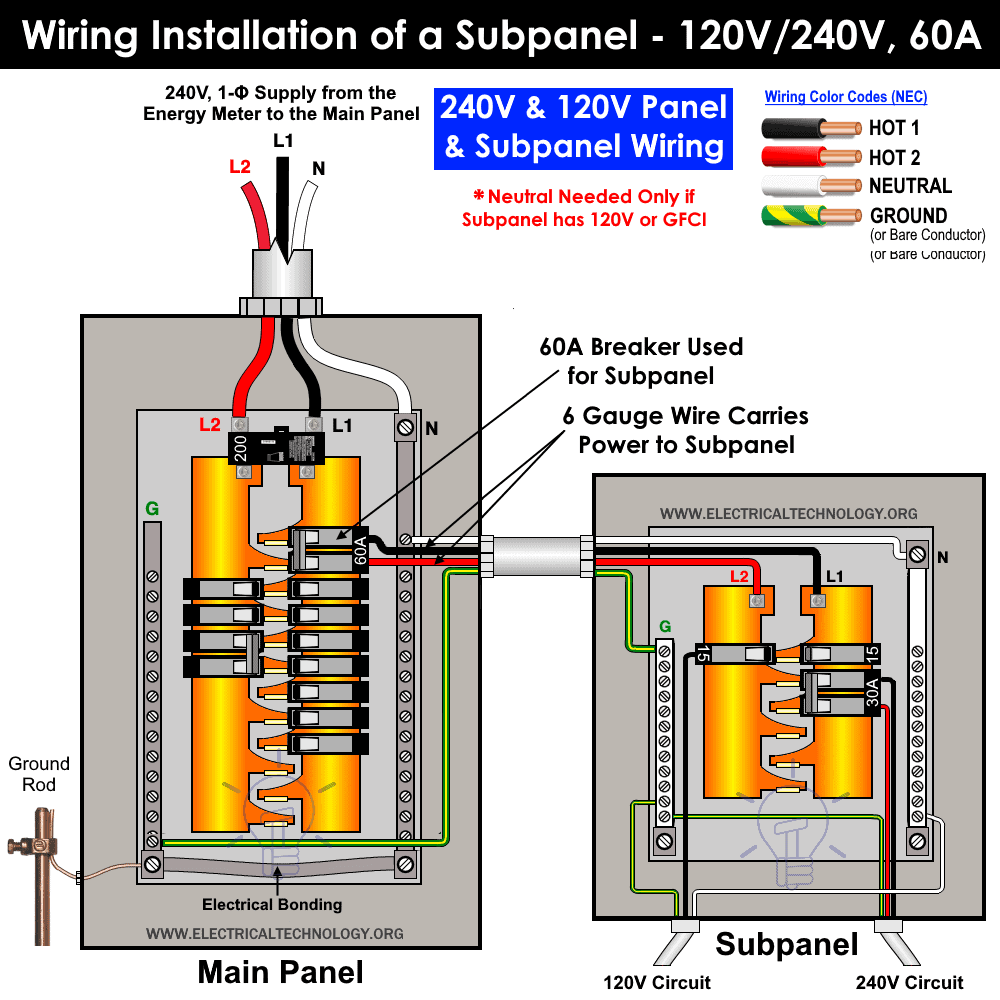
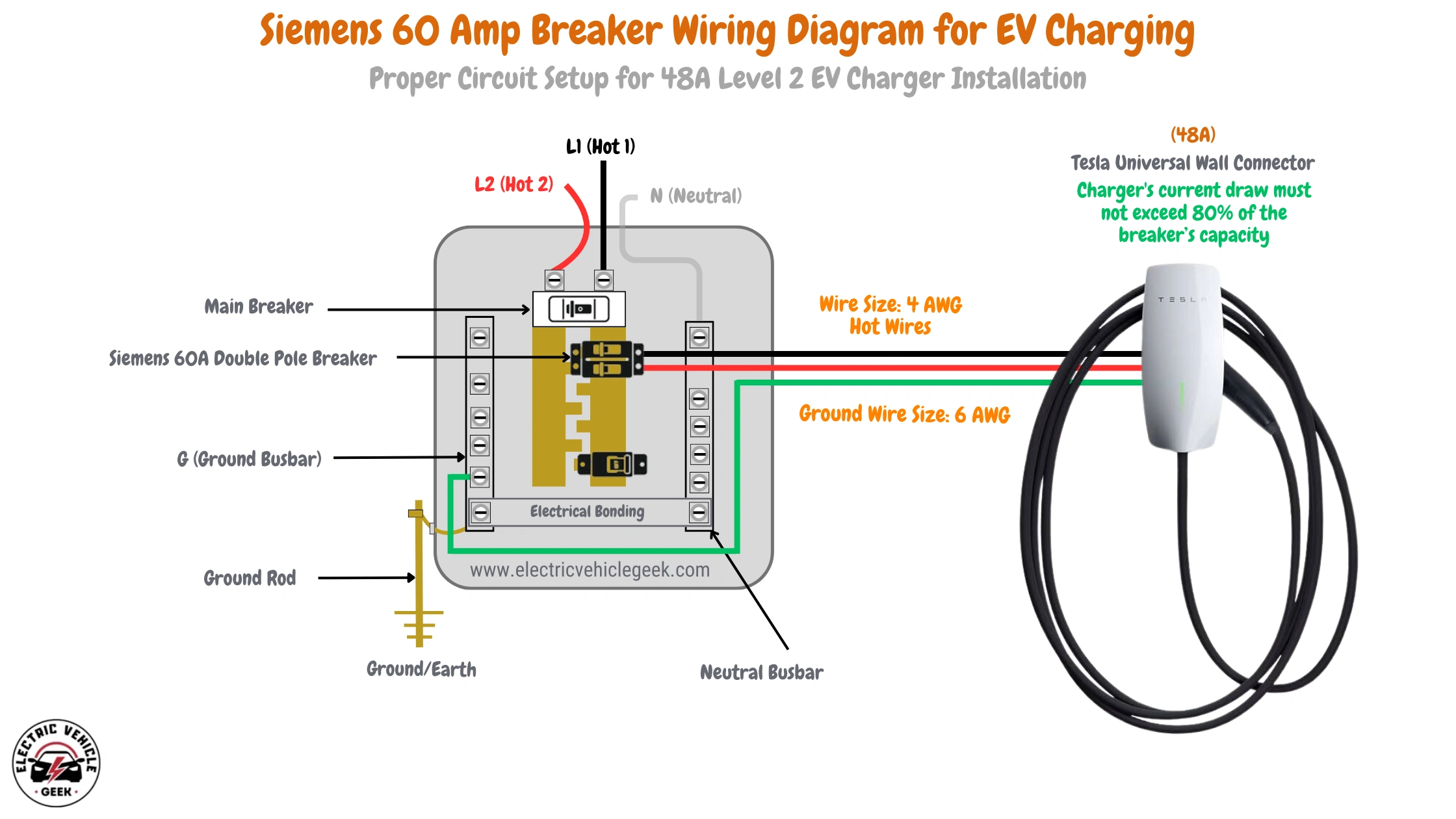
60 Amp Breaker Wiring Diagram

Ever feel a surge of satisfaction when you understand how something complex works? Or maybe you're gearing up for a fantastic home improvement project like installing an electric vehicle charger, a new subpanel for your workshop, or a powerful electric oven. Well, if electricity is involved, you're bound to cross paths with circuit breakers. Today, we're diving into the seemingly intricate, but incredibly useful, world of the 60 Amp Breaker Wiring Diagram. Don't worry, we're not asking you to become an electrician overnight, but understanding this diagram can be surprisingly empowering and even a little fun!
So, what exactly is a 60-amp breaker, and why would you need one? Think of your electrical system as a vast network of roads. A 60-amp breaker is like a specialized traffic controller for a heavy-duty highway lane. It's designed to protect circuits that handle a significant amount of electrical current – up to 60 amperes, to be exact. This is crucial for appliances and systems that demand more power than your standard outlets, such as those speedy EV chargers, dedicated circuits for large electric ranges, or even feeding a new subpanel to power an entire garage or basement workshop. The purpose is simple: to prevent dangerous overloads that can lead to overheating, equipment damage, or even fires. The benefit? Safety, efficiency, and the reliable operation of your power-hungry devices!
Now, let’s demystify the "wiring diagram" part. At its core, a wiring diagram is a map showing you where each wire goes. For a 60-amp breaker, especially one that powers a 240-volt load (which most high-demand appliances are), you're typically looking at four main connections within your electrical panel: two hot wires, one neutral wire, and one ground wire. The two hot wires (often black and and sometimes red in a 240V circuit) connect to the two terminals on the 60-amp double-pole breaker itself. This breaker then snaps into your service panel, drawing power from two phases. The neutral wire (usually white) connects to the neutral bus bar in your panel, and the ground wire (bare copper or green) goes to the ground bus bar. These connections are absolutely vital for creating a safe and complete circuit. Understanding this basic flow helps you grasp how electricity travels from your panel to your appliance and back safely.
Must Read
Why should a general audience care about this? Beyond the satisfaction of understanding, knowing the basics of a 60-amp breaker diagram empowers you. It allows you to have more informed conversations with electricians, understand project proposals better, and appreciate the safety measures built into your home. It’s about being a more knowledgeable homeowner, able to troubleshoot minor issues (always safely!) and plan for future upgrades with confidence. Plus, let's be honest, there's a certain cool factor in understanding the hidden power lines that run our modern lives!
While this article offers a peek behind the electrical curtain, it's paramount to remember that working with electricity, especially high-amperage circuits, carries inherent risks. A wiring diagram is a fantastic educational tool, but actual installation and modifications should always be performed by a qualified, licensed electrician. They possess the expertise, tools, and understanding of local codes to ensure everything is done safely and correctly. So, embrace your newfound understanding of the 60-amp breaker and its diagram, and let it inspire your next home project, but always prioritize safety and professional help!