
28+24 As A Product Of Two Factors

Hey there, math adventurers! Ever looked at a simple sum and thought, "Hmm, I bet I can turn you into something totally different?" Well, buckle up, because we're diving headfirst into the weirdly wonderful world of 28 + 24, and we’re going to transform it into a product!
The Sum: A Humble Beginning
So, 28 + 24. Seems innocent enough, right? Add 'em up, and you get a grand total of... 52! Ta-da! But hold on a second. 52 is where the real fun begins.
Think of 52 as a secret agent in disguise. Its true identity isn't just "the number after 51." Nope! It's a master of disguise, capable of being expressed in countless ways, including as a product of two factors.
Must Read
What's a Factor, Anyway?
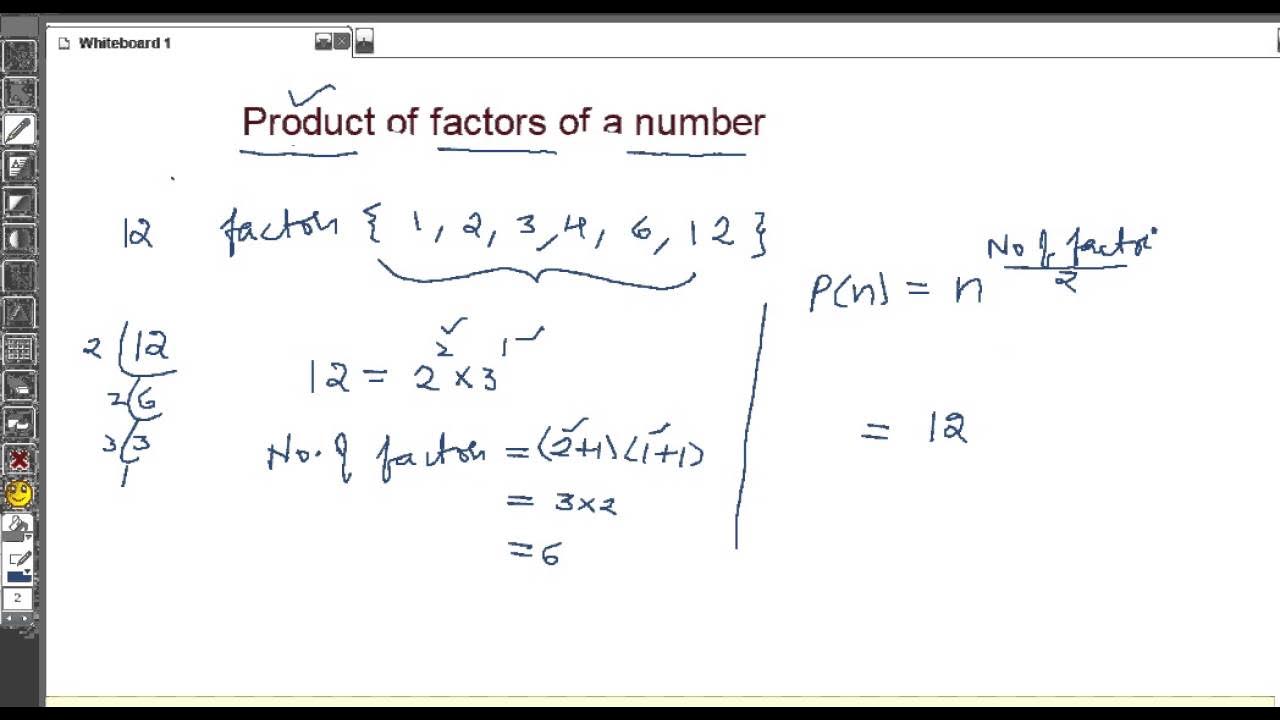
Okay, quick vocab lesson (but don't worry, it'll be painless!). A factor is simply a number that divides evenly into another number. For example, the factors of 12 are 1, 2, 3, 4, 6, and 12. Got it? Great!
Now, back to our friend, 52. Our mission, should we choose to accept it, is to find two numbers that, when multiplied together, give us 52. Think of it like finding the perfect dynamic duo. Batman and Robin, peanut butter and jelly... you get the idea.
The Factor Finding Frenzy!
Let's start with the obvious: 1. Every number is divisible by 1. So, one pair is 1 and 52 (1 x 52 = 52). Easy peasy!
But are there others? You betcha! Is 52 divisible by 2? Yep! 52 divided by 2 is 26. So, another dynamic duo emerges: 2 and 26 (2 x 26 = 52). We’re on a roll!
Let's keep digging. How about 3? Nope, 52 isn't divisible by 3 (sorry, 3!). What about 4? Bingo! 52 divided by 4 is 13. We’ve struck gold! 4 and 13 (4 x 13 = 52) join the party.
Any more? Let’s see… 5, 6, 7, 8, 9, 10, 11, 12... Nope! We’ve already found all the whole number pairs. Huzzah!

The Product Line-Up!
So, to recap, 28 + 24, which equals 52, can be expressed as a product of two factors in the following ways:
- 1 x 52 = 52
- 2 x 26 = 52
- 4 x 13 = 52
See? It’s not as scary as it sounds. We took a simple addition problem, turned it into a single number, and then deconstructed that number into its multiplicative building blocks!
Why Bother, Though?
Good question! Why do we even care about expressing numbers as products of factors? Well, for starters, it's a great brain workout! It strengthens your number sense and helps you see the relationships between numbers. It's like giving your brain a mini-gym session.

Plus, knowing factors is super useful in more advanced math stuff like simplifying fractions, solving equations, and even understanding cryptography (secret codes!). Who knew something so simple could be so powerful?
Think about it: when you're dividing something, you want to know if you have any remainders. Knowing the factors helps you figure this out very fast. No one likes a remainder in real life! (Except maybe in some niche cooking recipes…)
The Factorial Fun Never Ends!
The best part? You can do this with any number! Pick a number, any number! (Okay, maybe start with something smaller than, say, a million). Then, grab a piece of paper and start hunting for its factors. It's like a mathematical scavenger hunt!

You might even discover some quirky patterns along the way. Some numbers have only two factors (1 and themselves) – those are called prime numbers. They're like the lone wolves of the number world. Other numbers have tons of factors. They're the social butterflies, making connections with everyone!
So, the next time you're feeling bored, ditch the doomscrolling and try a little factor finding. You might just surprise yourself with how much fun it can be. And remember, 28 + 24 as a product of two factors is just the beginning of a mathematical adventure. Go forth and explore!
Now go forth and multiply (your knowledge!)