
2 Ton Ac Unit Is How Many Btu
Alright, pull up a chair, grab a metaphorical (or actual) iced coffee, because we're about to demystify one of the most delightfully baffling terms in home comfort: the AC ton. It’s August, the sun is trying to melt your brain, and you're thinking, "I need a new AC!" Then some helpful person asks, "How many tons?" And you’re thinking, "Is this a trick question? Am I supposed to weigh my air conditioner?"
Rest assured, you're not alone. It's like asking how many horsepower your blender has – vaguely useful, but utterly confusing if you don't speak the secret language of home appliances. So, let’s peel back the curtain on this chilly mystery.
What in the World is an AC "Ton"?
First off, let’s get this out of the way: an AC "ton" has absolutely nothing to do with the physical weight of the unit itself. Thank goodness, otherwise installing one would require a crane and a serious chiropractor!
Must Read
The term actually harks back to the good old days, specifically the 1800s, when people used ice to cool buildings. Yes, really. Imagine giant blocks of ice, painstakingly delivered, slowly melting in your parlor. Quaint, right?
So, one "ton" of cooling capacity was originally defined as the amount of heat absorbed by one ton of ice melting completely over a 24-hour period. Picture a massive block of ice, 2,000 pounds of it, slowly turning into water. That’s a serious amount of heat disappearing!
From Ice to BTU: The Big Conversion
Now, while your modern AC unit isn't full of melting ice blocks (thankfully, no soggy carpets!), that historical definition stuck. And because we love standardized measurements, we converted that "ton of melting ice" concept into something more universally understood in the HVAC world: BTUs per hour.
A BTU, by the way, stands for British Thermal Unit. It’s essentially the amount of energy needed to raise the temperature of one pound of water by one degree Fahrenheit. Think of it this way: the heat from a single wooden matchstick burning from start to finish is roughly one BTU. Not a lot on its own, but multiply that by thousands, and you've got some serious heat!
So, here’s the magic number, the one you came for, drumroll please:
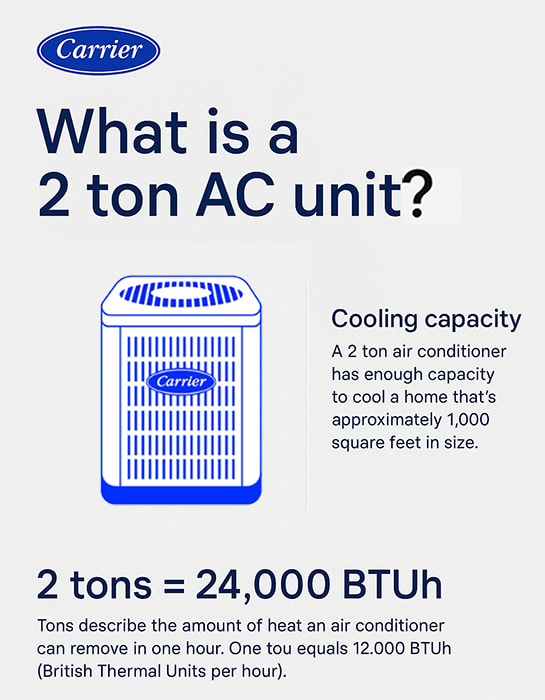
One ton of cooling capacity equals 12,000 BTUs per hour (BTU/h).
Let that sink in. One little "ton" is equivalent to 12,000 matchsticks worth of heat being removed from your home every single hour. Pretty cool, right?
So, How Many BTU Is a 2-Ton AC Unit?
Now that we have our golden conversion factor, figuring out a 2-ton unit is simple math, even for those of us who struggled with fractions in school. (No judgment, we’ve all been there!)
If 1 ton = 12,000 BTU/h, then:
2 tons = 2 x 12,000 BTU/h = 24,000 BTU/h!
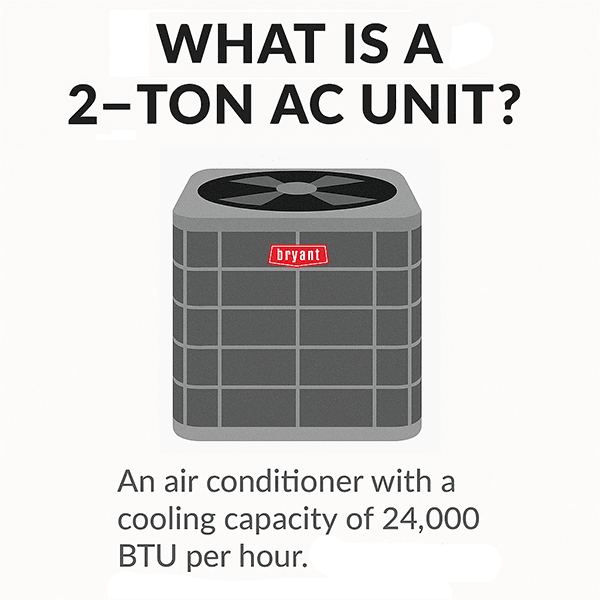
There you have it! A 2-ton AC unit has a cooling capacity of 24,000 BTUs per hour. You are now officially fluent in at least one key piece of AC jargon. Go forth and impress your friends at your next sweltering backyard BBQ!

Why Does Size (and BTU) Matter So Much?
This isn't just a fun fact to trot out at parties; understanding BTUs is crucial for your comfort and your wallet. Getting the right size AC unit is like Goldilocks finding the perfect bed – it needs to be just right.
Too Small?
If your AC unit is undersized for your space, it's like trying to cool a gymnasium with a tiny window unit. It will run constantly, struggling to reach your desired temperature, leaving you sweaty and frustrated. Plus, that constant running means higher energy bills and a shorter lifespan for your poor, overworked unit.
Too Big?
Surprisingly, an oversized unit is just as bad, if not worse! Imagine buying a commercial freezer to cool your broom closet. It'll blast cold air, hit the thermostat setting super fast, and then shut off. This is called "short cycling."
Why is short cycling bad? Because the AC's most important job (besides cooling) is dehumidification. It needs time to run to properly pull moisture out of the air. If it's short cycling, your home might be cool but still feel clammy and sticky. And that's just gross. Plus, all those start-ups and shut-downs are incredibly inefficient and put more wear and tear on the system.
It's Not Just About Square Footage
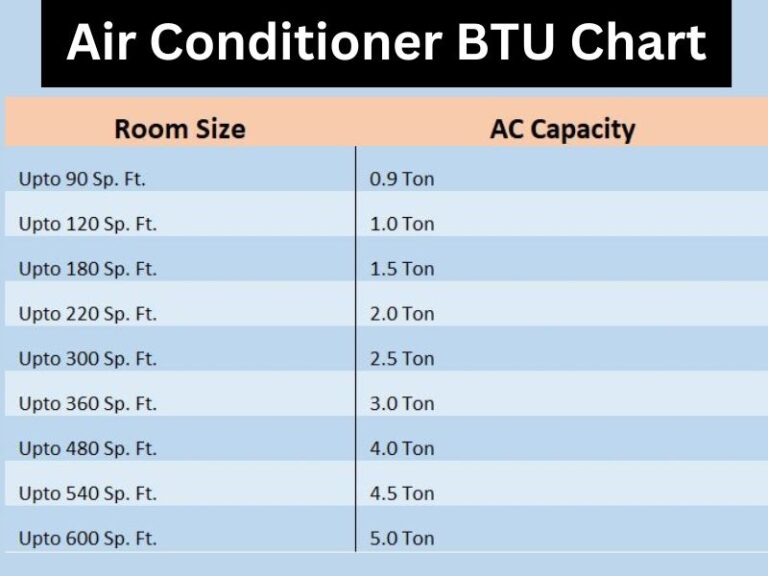
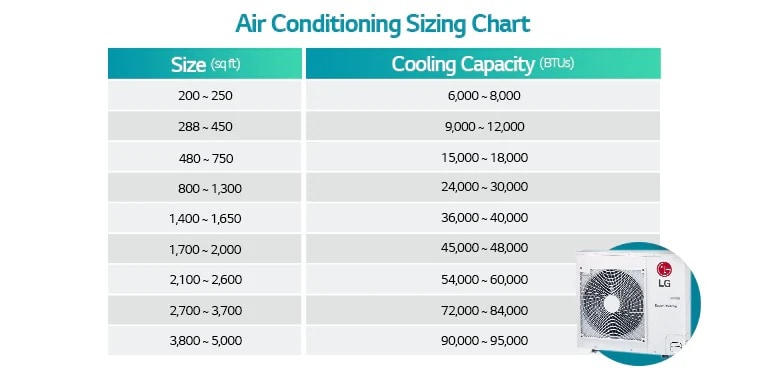
While square footage is a good starting point, many other factors influence the ideal BTU capacity for your home. It’s not a simple one-size-fits-all equation, unless you live in a perfectly insulated, windowless concrete box (which sounds… depressing).
- Insulation: How well is your house sealed?
- Windows: How many? Are they energy-efficient? Do they face the sun?
- Climate: Live in a desert or a misty forest?
- Sun Exposure: Does your house bake in the afternoon sun?
- Occupants: More people generate more body heat.
- Appliances: Stoves, computers, TVs – they all add heat.
This is why simply guessing can lead to regret. It’s always best to consult with a qualified HVAC professional. They’ll do a proper load calculation (a fancy way of saying they'll do all the math considering your specific home's characteristics) to ensure you get the perfect fit.
The Takeaway
So, the next time someone asks you about AC tons, you can confidently declare that a 2-ton AC unit delivers 24,000 BTUs per hour of cooling power. You can even casually drop the "melting ice" origin story for extra flair!
Understanding this basic conversion helps you ask better questions, understand recommendations, and ultimately, make a smarter decision for your home's comfort. Because nobody wants to spend another summer feeling like a popsicle that just won't freeze. Stay cool, my friends!