
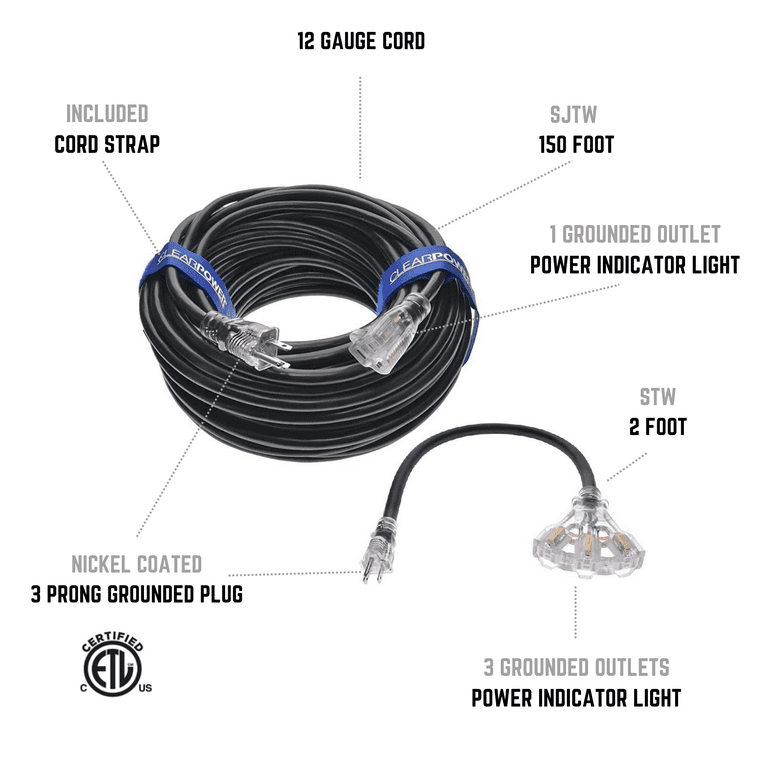
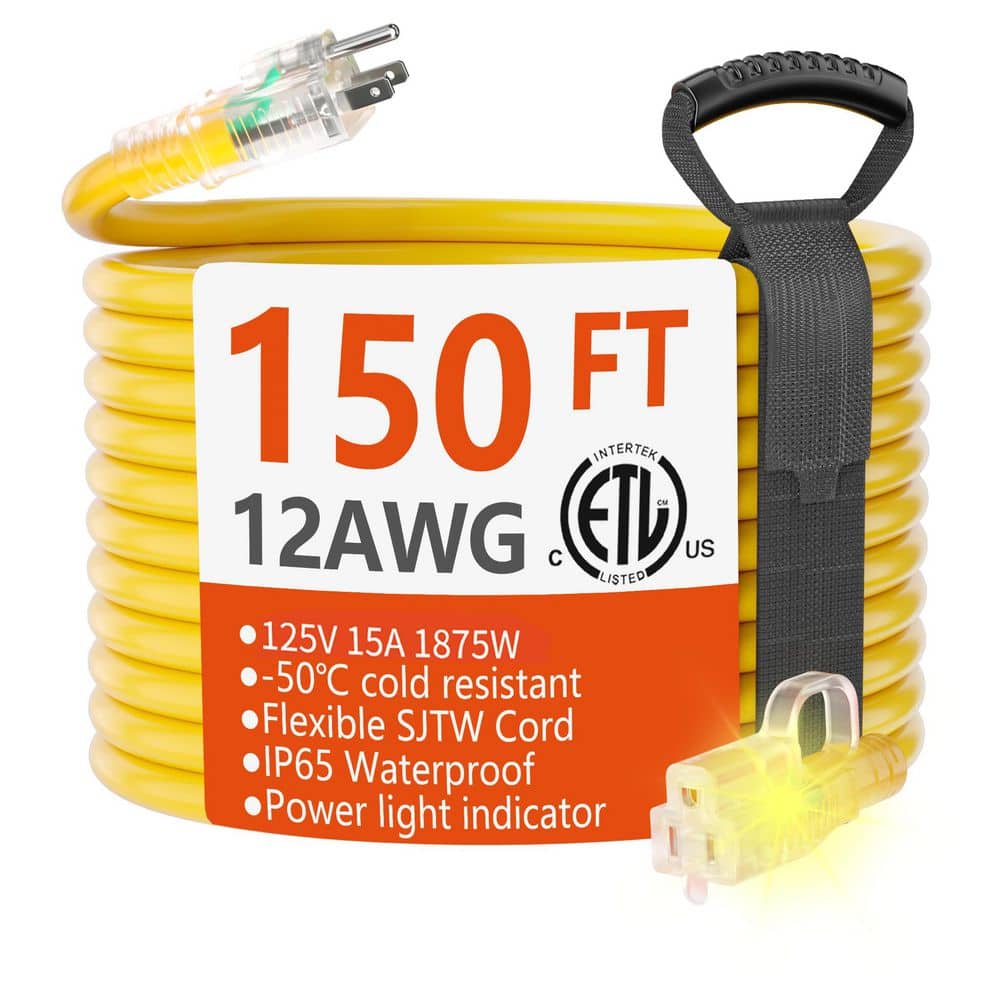
150 Ft Extension Cord 12 Gauge

Okay, let's talk extension cords. I know, I know, sounds thrilling, right? But trust me, understanding the difference between your run-of-the-mill thin cord and a 150-foot, 12-gauge beast can save you a serious headache, and maybe even a fire. Plus, you'll feel like a total pro when you confidently choose the right cord for the job.
Think of it this way: you're planning a backyard movie night. You've got the projector, the comfy blankets, the popcorn… perfect! Then you realize the closest outlet is about a mile away (slight exaggeration, but you get the idea). That's where our 150-foot friend comes in.
Why 150 Feet Matters
Let's be honest, nobody wants a patchwork of short cords daisy-chained together. That's a recipe for disaster (and probably a tripping hazard for your guests). A 150-foot cord gives you serious reach. It's like having a portable power source that follows you wherever you need it. No more rearranging furniture or awkwardly angling your setup to squeeze closer to an outlet. Freedom, baby! Pure freedom!
Must Read
Imagine stringing up those twinkly fairy lights across your entire patio for a party. Or maybe you need to power your leaf blower all the way to the far corner of your yard during that dreaded autumn cleanup. A long cord is the ultimate convenience.
12 Gauge: The Unsung Hero
Now, let's talk about the "12 gauge" part. This refers to the thickness of the wires inside the cord. Think of it like this: a skinny straw versus a thick milkshake straw. Which one lets you slurp down your deliciousness faster and easier? The thick one, right? Same principle applies here.

A 12-gauge cord is significantly thicker than your standard, flimsy extension cord. This means it can handle more electricity without overheating. Why is that important? Well, plugging a power-hungry tool like a circular saw or a space heater into a thin, weak cord is like asking for trouble. It can cause the cord to overheat, potentially damaging your equipment, or even worse, starting a fire.
Think of it this way: your tools are hungry little power-guzzling monsters. A 12-gauge cord is like giving them a giant, satisfying meal without starving the cord itself.
Real-Life Examples (and Minor Disasters Averted!)
Let me tell you a quick story. My neighbor tried using a super-thin extension cord to power his electric chainsaw while trimming a tree way out in his yard. The cord got so hot, it started melting! He thankfully caught it before anything serious happened, but it was a close call. He learned his lesson and invested in a heavy-duty 12-gauge cord after that. Crisis averted!
Another time, I was working on a DIY project in my garage. My old, cheap extension cord kept tripping the breaker whenever I used my power drill. So frustrating! I switched to a 12-gauge cord, and suddenly, no more problems! It was like magic. The power was back in my hands (literally!).
Here's another scenario: You're borrowing your neighbor's pressure washer to clean your deck. That thing needs some serious juice! Using a thin extension cord could seriously damage the pressure washer's motor. A 12-gauge cord is the safe and smart choice.
When Do You Really Need a 12-Gauge Cord?
Okay, so when is a 12-gauge, 150-foot cord a must-have? Here's a quick checklist:

- Powering heavy-duty tools: Saws, drills, sanders, pressure washers, etc. Anything that draws a lot of amps.
- Long distances: When the outlet is far away from where you need power.
- Outdoor use: Look for cords specifically designed for outdoor use with weatherproofing.
- Peace of mind: Seriously, knowing you're using the right cord for the job is worth its weight in gold.
Important Note: Always check the power requirements of your tools and appliances to ensure the extension cord you're using can handle the load. It's better to be safe than sorry!
In Conclusion: Be a Power Cord Pro!
So, there you have it. The lowdown on 150-foot, 12-gauge extension cords. They might not be the most glamorous item in your toolbox, but they are essential for safety and convenience. Invest in a good one, treat it well, and you'll be powering your projects and events with confidence for years to come.
Now go forth and conquer those electrical challenges! And remember, when in doubt, go with the thicker gauge. Your tools (and your peace of mind) will thank you.