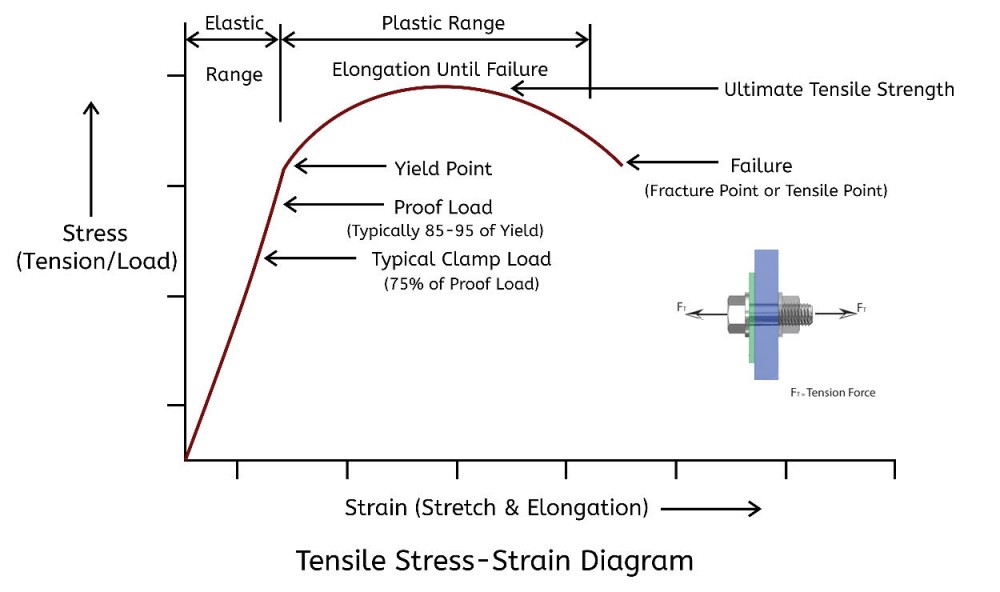
Yield Strength And Ultimate Tensile Strength
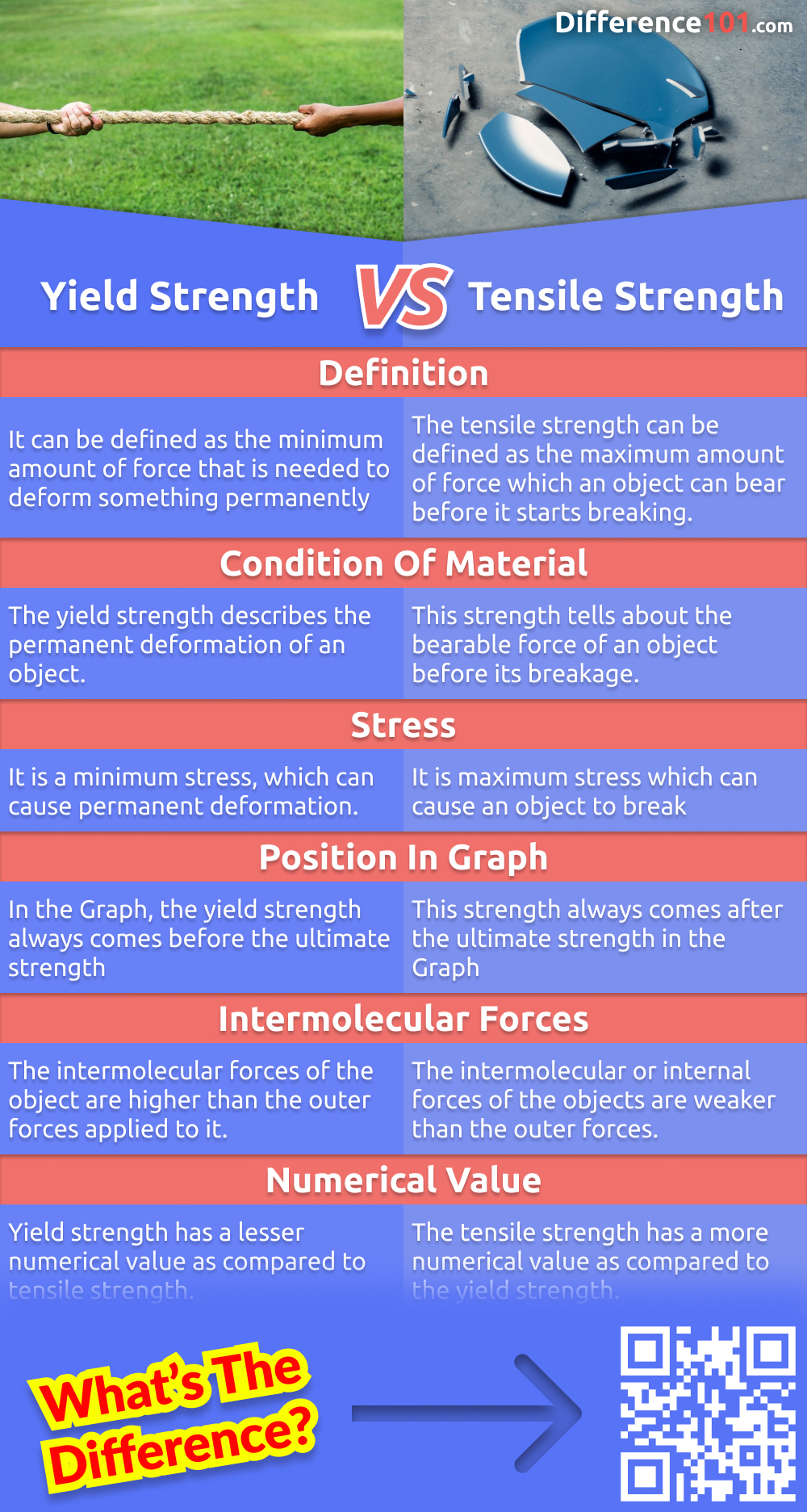
Ever wonder how things are built to last? Like, really last? It's not just about slapping stuff together and hoping for the best. Nope, there's some serious science involved, and two of the biggest rockstars in that science are Yield Strength and Ultimate Tensile Strength. These terms might sound like something out of a superhero comic, but trust me, they're way more relatable (and maybe even cooler) than you think!
Yield Strength: The "Oops, I bent it!" Point
Imagine you're trying to bend a paperclip. You start applying a little pressure, and it bends a tiny bit, but when you let go, it springs right back to its original shape. That's because you haven't reached its Yield Strength yet. Think of Yield Strength as the material's "Oops, I bent it!" point. It's the amount of stress a material can handle before it starts to permanently deform. It's the point of no return!
Let’s say you finally apply enough pressure, and the paperclip bends and stays bent. You’ve officially exceeded the Yield Strength. It’s like when you try to squeeze into your old jeans after a holiday feast. There's a point where the elastic gives way, and… well, let's just say things aren't springing back to their original shape anytime soon. That's permanent deformation, baby!
Must Read
So, why is Yield Strength important? Well, engineers use it to design structures that can withstand everyday stress without permanently changing shape. Think of bridges, buildings, even your trusty bicycle. They need to be able to handle a certain amount of weight and pressure without collapsing or bending out of shape. If they didn't consider Yield Strength, we'd be living in a world of wobbly buildings and collapsing roller coasters (and nobody wants that!).
Ultimate Tensile Strength: The "Snap!" Point
Okay, so you've bent that paperclip past its Yield Strength. Now you’re feeling a little destructive, so you keep bending it further and further. Eventually, SNAP! The paperclip breaks. That, my friends, is when you've reached its Ultimate Tensile Strength (UTS). UTS is the maximum stress a material can withstand before it starts to fracture or break completely. It's the material's absolute limit!

Think of it like this: imagine you’re pulling on a rubber band. You can stretch it pretty far, but eventually, it’s going to snap. The amount of force you applied right before it snapped is related to the rubber band's Ultimate Tensile Strength. It’s the material screaming, "I can't take it anymore!" before giving up the ghost.
UTS is crucial for designing things that need to withstand extreme forces. Think of the cables that hold up suspension bridges, the steel used in skyscrapers, or even the ropes that climbers use. These materials need to be incredibly strong and able to resist breaking under immense pressure. If engineers only focused on Yield Strength and ignored UTS, things might bend a lot but then suddenly, and catastrophically, fail. Imagine a bridge looking okay one minute and then… whoosh! Nobody wants that surprise!
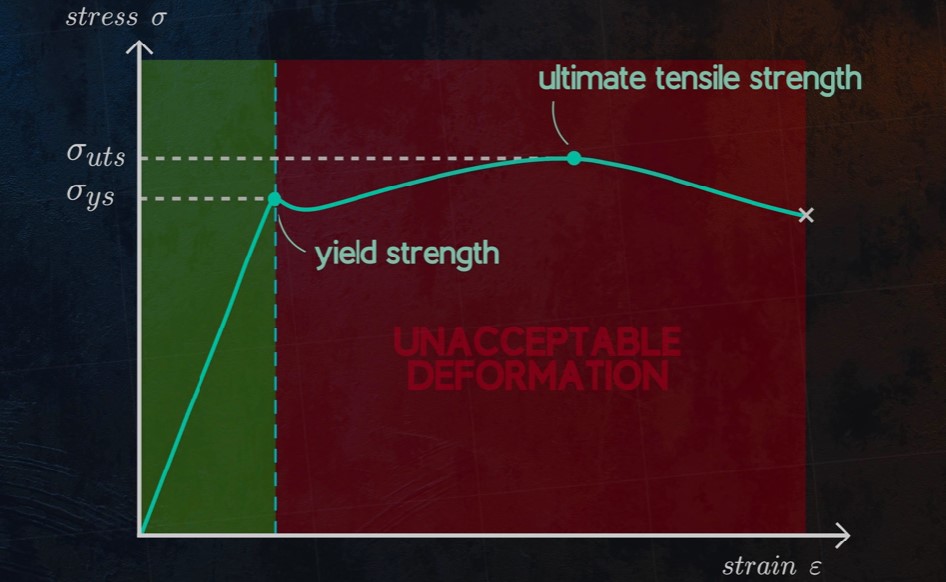
Yield Strength vs. Ultimate Tensile Strength: What's the Difference?
So, Yield Strength is about avoiding permanent deformation ("Oops, I bent it!"), while Ultimate Tensile Strength is about avoiding complete failure ("Snap!"). Yield Strength is usually lower than Ultimate Tensile Strength. A material will start to deform permanently before it actually breaks. Think of Yield Strength as a warning sign and Ultimate Tensile Strength as the final boss.
Imagine a weightlifter trying to lift a super heavy barbell. The Yield Strength is like the point where their muscles start to tremble. They're still holding it, but it's getting tough! The Ultimate Tensile Strength is like the point where their arms actually give out and the barbell comes crashing down. Ouch!
Ultimately, understanding Yield Strength and Ultimate Tensile Strength helps engineers and designers create safer, stronger, and more reliable structures and products. They allow us to build things that can withstand the stresses of everyday life and even the most extreme conditions. So, the next time you see a towering skyscraper or a soaring bridge, remember the unsung heroes: Yield Strength and Ultimate Tensile Strength, working hard behind the scenes to keep everything standing tall (and not snapping!).