
Write A Short Note On Travelling Salesman Problem
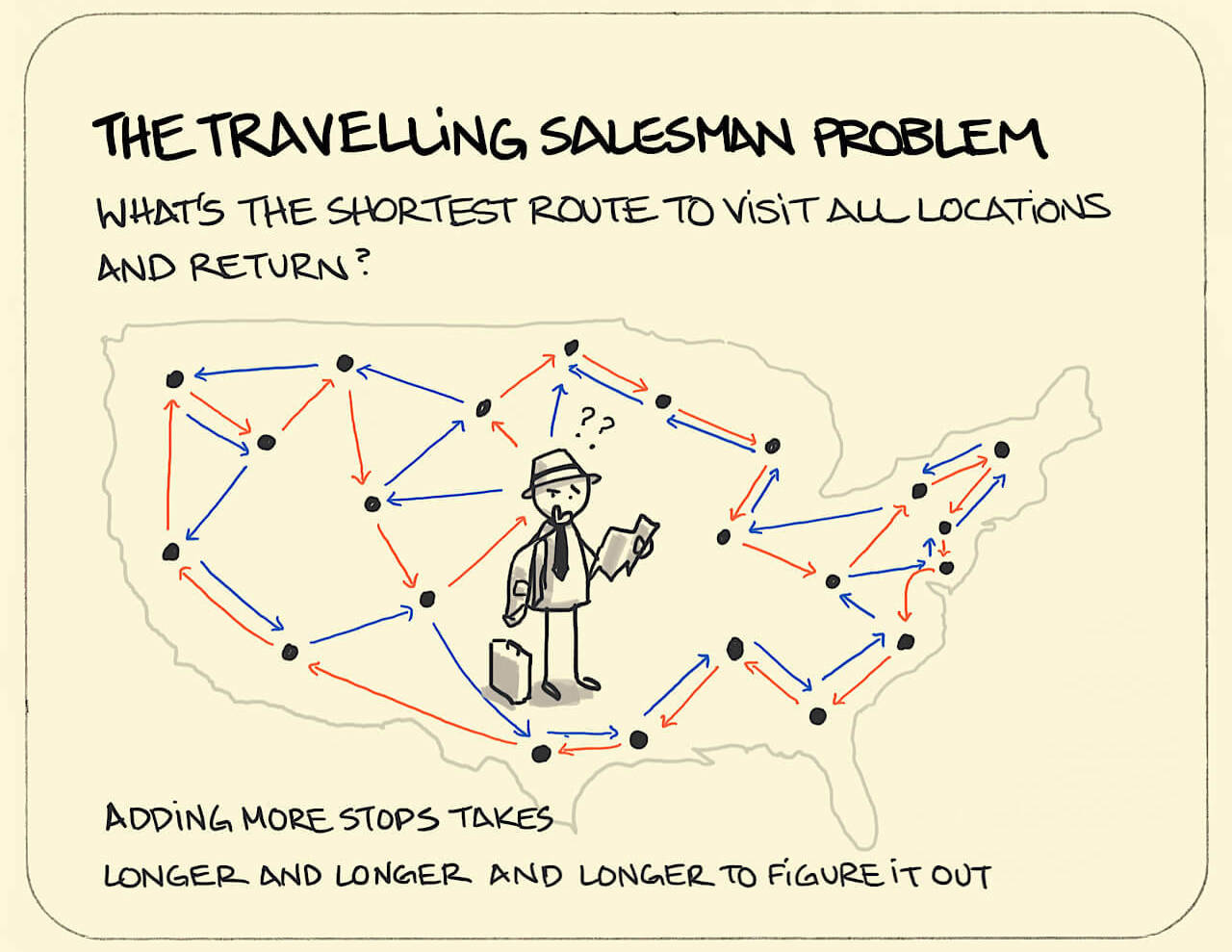
Hey, grab a coffee! Let's talk about something kinda nerdy but also surprisingly relevant to your life: the Travelling Salesman Problem. Yeah, I know, sounds intense, right?
Basically, imagine you're a travelling salesman (duh!). Your job? To visit a bunch of cities. The catch? You gotta hit all of them, and you want to do it in the shortest possible route. Makes sense, nobody wants to spend extra time on the road, right?
The Problem, Simplified
So, think of it like this: you have a list of cities, and for each pair of cities, you know the distance between them. What's the absolute best order to visit them in so you cover the least amount of ground? That's the core of the Travelling Salesman Problem, or TSP as the cool kids call it.
Must Read
Sounds easy enough, right? I mean, you could just try every single possible route and see which one's shortest. Simple! Except... not really. Here's where things get a little crazy. As you add more and more cities, the number of possible routes explodes. Like, bigger-than-the-universe kind of explodes. I'm not even kidding (well, maybe a little).
Think about it. For just, say, five cities, you already have a bunch of options. And the more destinations you want to hit, the more complicated it all becomes.
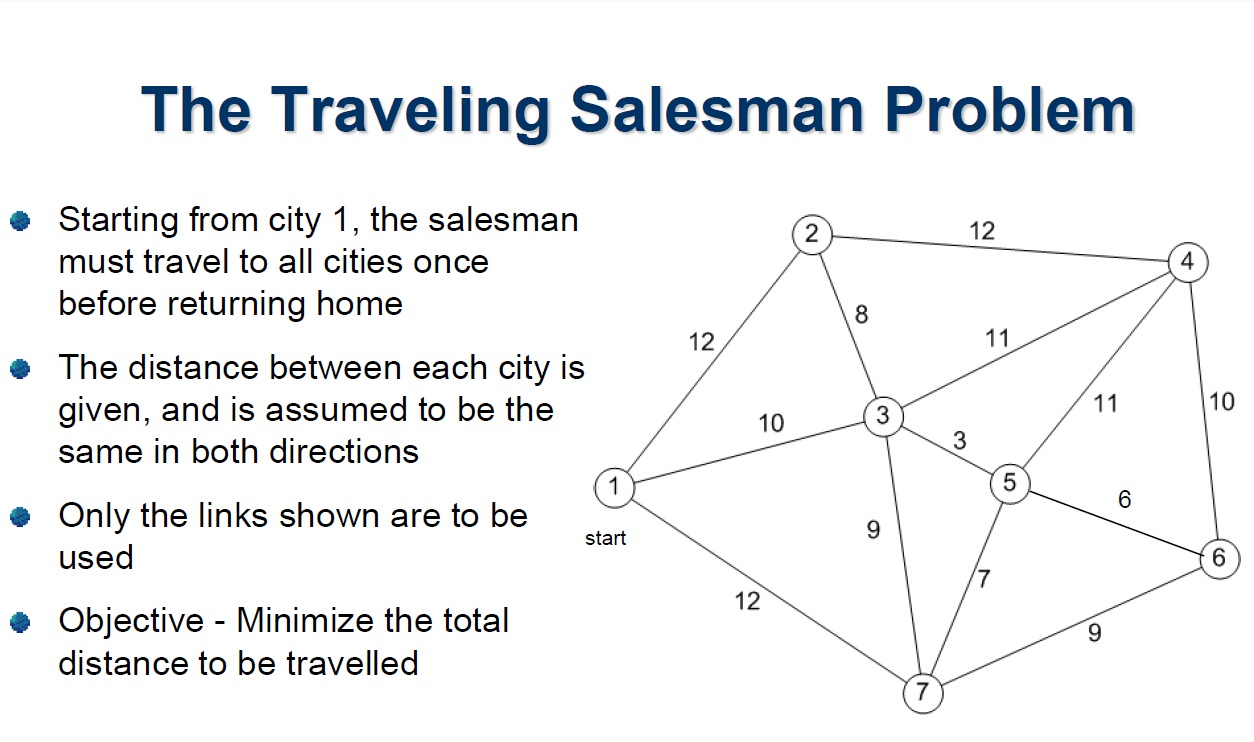
For example: you want to go from Los Angeles to New York, Miami, Seattle, and Chicago. With only those five cities, it could take an hour to think up the best routes. Now imagine the routes with 10, 50 or 100 destinations!
Why Is This So Hard?
This is where the term “NP-hard” comes into play. Don't freak out! It just means that there's no known super-efficient algorithm that can solve the TSP for every possible case, especially as the number of cities increases. We can find solutions, sure, but finding the absolute best solution gets astronomically difficult.
We could spend the rest of our lives just trying to solve one REALLY big TSP. And honestly, I have better things to do (like finishing this coffee!).

Real-World Applications (Beyond Salesmen!)
Okay, so you might be thinking, "Who cares about travelling salesmen in this day and age?" But here's the cool part: the TSP pops up in all sorts of unexpected places. Like… everything!
Think about:
- Package delivery: Companies like FedEx and UPS use algorithms based on TSP principles to optimize their delivery routes and save tons of fuel and time.
- Manufacturing: Imagine a robot arm drilling holes on a circuit board. It needs to drill each hole efficiently. Yup, TSP!
- DNA sequencing: Figuring out the order of DNA fragments can be modeled as a TSP. Seriously!
- Airline routing: Optimizing flight paths to minimize fuel consumption and travel time? You guessed it! TSP again.
Basically, any situation where you need to visit a bunch of points in the most efficient order, you're dealing with some form of the Travelling Salesman Problem. Kinda mind-blowing, huh?

Finding Solutions (Without Breaking the Bank)
So, if finding the absolute best solution is too hard for really big problems, what do we do? We use heuristics! Basically, we use clever tricks and shortcuts to find "good enough" solutions.
These algorithms might not give you the perfect route, but they'll get you pretty darn close in a reasonable amount of time. Think of it like finding a shortcut through a park – you might not save all the time, but it’s a decent compromise.
There are lots of different techniques, like genetic algorithms (which mimic evolution!), simulated annealing (which is kinda like cooling metal down slowly to find a good crystal structure), and nearest neighbor algorithms (which, predictably, just goes to the closest unvisited city next).
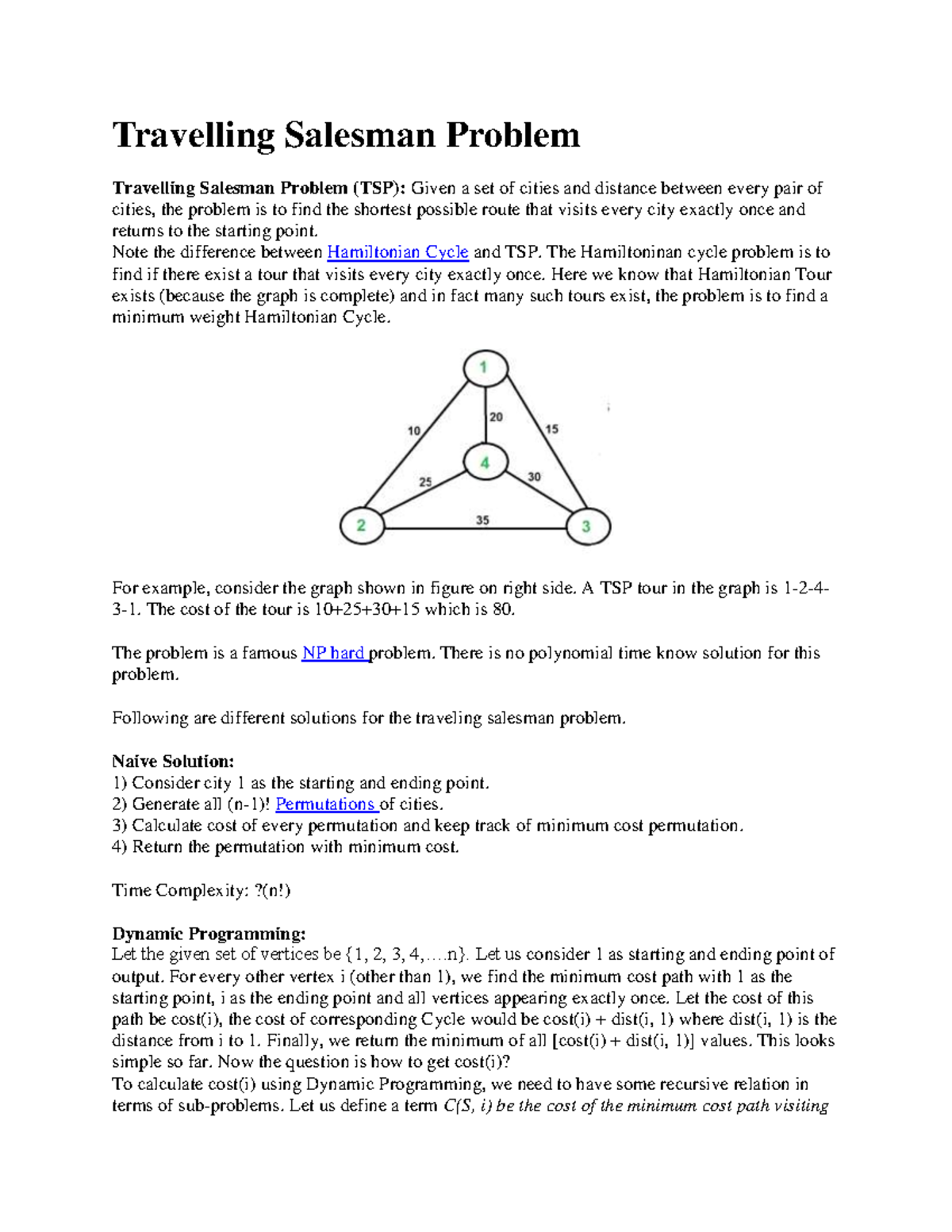
In simple terms, this means there are several ways to solve the problem without spending days on end computing the absolute best route. So, don't worry if it takes a bit to get there; as long as you're on the right track, you're all set!
The Takeaway
The Travelling Salesman Problem is a classic example of a problem that's easy to understand but surprisingly difficult to solve optimally. It's a reminder that sometimes, "good enough" is actually pretty great. And it shows up in way more places than you might think, shaping the world around us in subtle but important ways.
Plus, it's a great excuse to geek out over coffee. So, next time you're waiting for a package or booking a flight, remember the poor (hypothetical) travelling salesman and the crazy math that's helping to get things to you efficiently. Now, refill? My treat!