
Window Unit Air Conditioner Size Calculator

Okay, let’s talk window AC units. Specifically, that dreaded thing: the size calculator.
You know, the one that's supposed to magically tell you how much cooling power you need?
Here’s my unpopular opinion: they’re mostly… suggestions. And sometimes, terrible suggestions.
Must Read
The Algorithmic Illusion
These calculators ask all sorts of questions. Square footage, ceiling height, sunny side of the house. Even how many people usually hang out in the room.
They crunch the numbers and spit out a BTU recommendation. But does it really work?
I'm skeptical. Let’s dive a bit deeper.
The Sun's Vengeance
They always ask about sunlight, right? South-facing windows are apparently heat demons.
But what if you have ridiculously thick curtains? Or, hear me out, a giant oak tree providing shade?
Suddenly, that sunlight factor is… less of a factor. The calculator doesn't seem to account for this kind of real-world nuance.
The Occupancy Overestimation
And the "number of people" thing? Seriously?.
Are we talking a quiet evening with a book? Or a rave party with 20 sweaty dancers?
The calculator assumes everyone is radiating body heat like tiny furnaces. Most of the time, they aren't.
The "Kitchen Effect" Conspiracy
Oh, and kitchens are supposedly heat sinks. Makes sense, what with ovens and stoves.
But what if you only use your kitchen for making toast and microwaving leftovers?

Is it really generating enough heat to warrant a higher BTU? I doubt it.
The BTU Bias
BTUs, or British Thermal Units, are the measure of cooling power. More BTUs equals more cooling, in theory.
The calculators push for specific numbers. But what happens if you round up? Or, gasp, round down?
This is where things get interesting, and where my opinion gets even more unpopular.
Oversized is Overrated (and Expensive!)
Everyone always says "go bigger!" More BTUs can't hurt, right?
Wrong. An oversized AC unit cools the room too quickly. It'll short cycle and won't dehumidify properly.
You'll end up with a cold, clammy space. Plus, you'll be wasting energy and money. So much for saving the planet (and your wallet!).
Undersized is Underappreciated (but Risky)
Now, undersizing is definitely a risk. You'll end up with a room that never quite reaches the desired temperature.
Your AC will run constantly, straining itself to the max. This isn't good for longevity either.
But... I've also found that sometimes, a slightly undersized unit can be surprisingly effective.
My "Unpopular" Sizing Strategy
Here's my secret. Forget the calculator (mostly). Think about how you use the room.
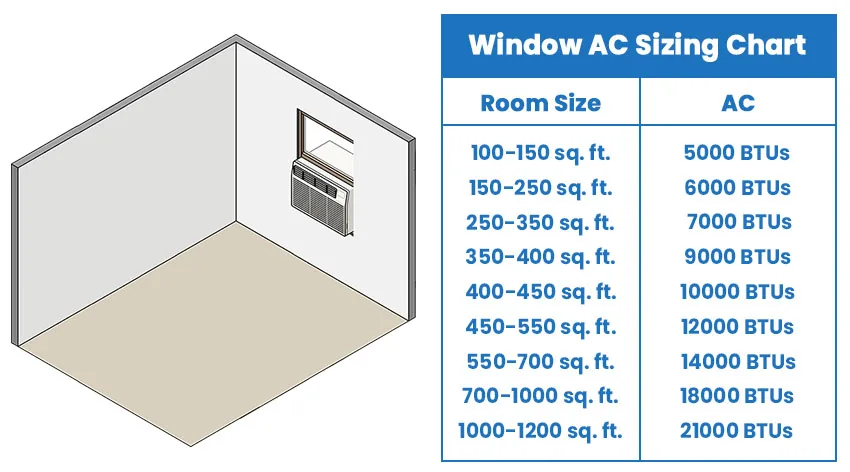
Consider these real-world factors that the calculator ignores.
For me, it comes down to a bit of experimentation and a healthy dose of common sense.
The "Comfort Zone" Factor
Are you someone who likes to be absolutely freezing? Or do you prefer a gentle coolness?
If you're a polar bear in human form, maybe lean towards slightly more BTUs than the calculator suggests. Emphasis on slightly.
If you're happy with "not sweltering," you might be able to get away with less.
The "Night Owl" Consideration
Do you primarily use the room during the day, when the sun is blasting?
Or are you a nocturnal creature, only needing AC in the evening?
If it’s the latter, the daytime sun factor is pretty much irrelevant. Save your money.
The "Trial and Error" Technique
This is the truly unpopular part: buy a unit, try it out. See how it goes.
If it's not quite enough, you can always supplement with a fan. Or, in a worst-case scenario, exchange it for a bigger one.
Don't be afraid to experiment! Your comfort is worth it, isn’t it?
The Real Secret: Common Sense
Ultimately, the window AC unit size calculator is just a tool. It's not the definitive answer.

Use it as a starting point. But don't blindly follow its recommendations.
Think about your specific circumstances, your personal preferences, and a bit of trial and error.
The Curtain Consideration, Revisited
Seriously, good curtains are a game-changer. Blackout curtains are like AC units themselves.
If you invest in decent window coverings, you can significantly reduce the amount of heat entering your room.
Suddenly, that BTU requirement looks a lot smaller, doesn't it?
The Fan Factor
Don't underestimate the power of a simple fan!.
A ceiling fan or a strategically placed box fan can circulate the air and make a room feel much cooler.
Sometimes, a fan is all you need to bridge the gap between "almost cool" and "perfectly comfortable."
The Insulation Investigation
How well-insulated is your room? This is a huge factor that calculators often gloss over.
If your walls and windows are drafty, you're losing cool air constantly.
No AC unit, no matter how powerful, will be able to keep up. Invest in better insulation!
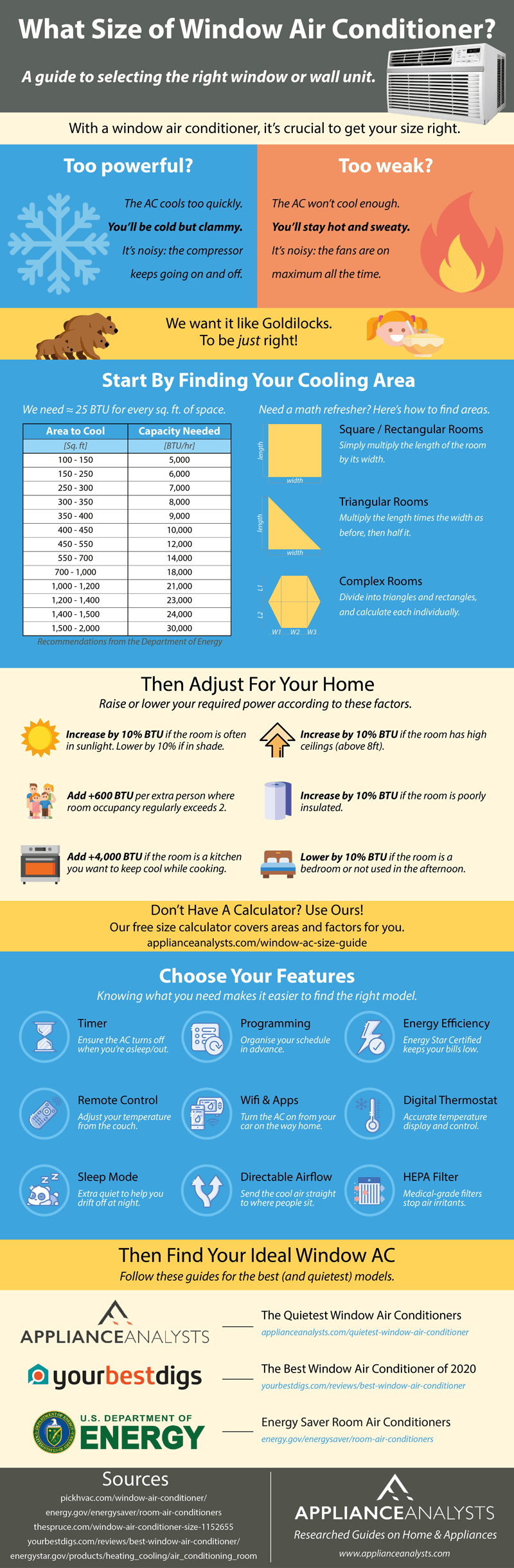
Embrace the Imperfection
Look, I'm not saying throw the calculator out the window (pun intended!).
It's a useful starting point. But treat it as a suggestion, not a commandment.
Your comfort is subjective. The perfect BTU for you might be different from what the algorithm dictates.
The "Good Enough" Philosophy
Sometimes, "good enough" is perfectly fine. You don't need to achieve sub-zero temperatures.
Just aim for a comfortable, livable space. Don't obsess over finding the absolute perfect BTU number.
Life's too short to stress about window AC unit sizing, isn't it?
The "Learning Experience" Loop
Each room is different. Each person is different. Each summer is different.
The important thing is to learn what works for you and your specific situation.
Next time, you'll be an AC-sizing pro! (Maybe. Probably not. But at least you’ll have a better idea.)
The Ultimately Unpopular Truth
The truth is, sometimes the best AC unit is the one you already own.
Maybe it's not perfectly sized, but it's paid for, and it mostly does the job.
And honestly, isn't that good enough? Sometimes, it has to be.