
Why Was The 3d Printer Invented

Imagine a world...
Imagine a time, not so long ago, when if you wanted to create a physical object, you needed an army of tools, a team of skilled hands, or a giant factory humming with machinery. Want a new toy? You waited. Need a replacement part for your toaster? Good luck! The journey from an idea in your head to a real-life thing was often long, expensive, and a bit of a headache.
Humans, by nature, are super creative creatures. We love to build, to tinker, and to bring our wildest imaginings to life. We constantly dream up new gadgets, artistic masterpieces, or simple solutions to everyday problems, but turning those dreams into tangible reality used to be a monumental task.
There was always this pesky gap between dreaming something up and actually holding it in your hands, especially if the object was unique, intricate, or needed to be made quickly. This is where the magnificent idea for the 3D printer started to bubble.
Must Read
It wasn't about making a slightly better hammer or a faster car; it was about totally transforming how we make things, making it as easy as hitting "print" on your computer! It promised a revolution in bringing digital designs to physical existence.
The Big "What If?" Moment
What if we could... instantly?
Think about it: you can write a document on your computer and print it out in seconds. You can design a graphic and print it on a regular paper printer. But what if you designed a solid object on your screen – a miniature house, a complex gear, or a funky piece of jewelry?
The early pioneers of 3D printing weren't just thinking outside the box; they were thinking about printing the box itself! They dreamt of a world where intricate designs could leap from the digital realm straight into the physical world, piece by painstaking piece, without needing molds or complex machinery.
It was all about answering a fundamental question: "Can we make a physical object as easily as we print a document or a photo?" The answer, thankfully, turned out to be a resounding yes! This quest for instant physical manifestation fueled the entire invention.
The sheer frustration of waiting weeks or months for a prototype, only to find a tiny flaw and have to start the agonizing process over, was a huge motivator. The desire for rapid iteration and instant gratification for physical objects was palpable.

From Sci-Fi Dreams to Workshop Reality
The initial spark for what we now call 3D printing, or additive manufacturing, goes way back to the early 1980s. People were getting serious about computers, and the idea of letting computers control machines to build things, layer by precise layer, was gaining traction. It was truly a revolutionary thought!
One of the true heroes of this story is a fellow named Chuck Hull. He wasn't trying to print action figures for kids (not yet, anyway!). His big idea in 1983 was to use UV light to harden layers of liquid plastic, building objects from the bottom up. He called his process stereolithography, and it was pure genius.
"Imagine being able to take a digital design and just... poof! Make it real." This was the core desire, a profound shift in manufacturing philosophy.
Hull wanted to make prototypes faster. Before his invention, if an engineer designed a new part for a car or a new medical device, they'd have to build a costly mold, cast the part, and then modify it countless times through a slow, expensive trial-and-error process. Hull thought, "There has to be a better way!"
He envisioned a machine that could build these prototypes directly from a digital blueprint, saving immense amounts of time, money, and materials. This vision was not just about convenience; it was about accelerating innovation at an unprecedented pace.
The Need for Speed (and Less Headaches!)
So, why was the 3D printer invented? Primarily, it was to tackle the enormous inefficiencies and costs of traditional manufacturing methods, especially for small batches, custom items, or single prototypes. Imagine you're an inventor with a brilliant idea for a new gadget, say, a new type of ergonomic computer mouse.
In the "old days," you'd sketch it out, maybe build a rough model by hand from clay or wood, and then send your detailed blueprints to a factory. That factory would need to create expensive molds and tools, which could take ages and cost an arm and a leg before you even had your first test product in hand.
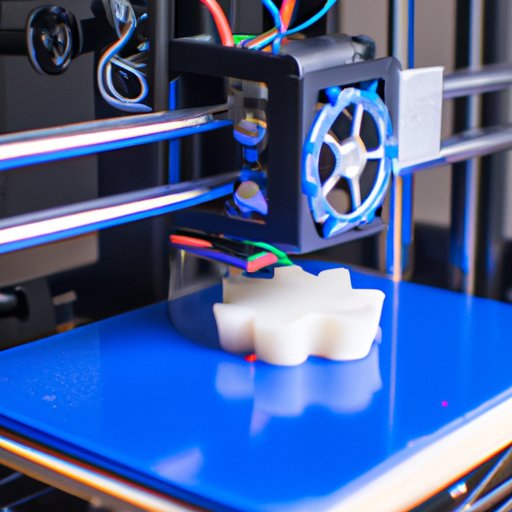
A 3D printer changes all that. It meant you could design your ergonomic mouse on a computer, hit print, and have a physical model in your hands hours later, ready for testing. "Oops, that thumb rest is too small!" No problem, tweak the digital file in minutes and print another, improved version by the afternoon.
This iterative design process, made possible by rapid prototyping, was a game-changer for engineers, designers, and innovators alike. It made product development faster, cheaper, and infinitely more flexible, dramatically reducing the risk associated with bringing new ideas to market.
Beyond Prototypes: A World of Possibilities Unlocked
More than just fixing industrial problems
While industry was the first to embrace 3D printing, using it for everything from aircraft parts to surgical guides, the technology quickly showed its wider potential. If you could make a prototype of a new car part, why couldn't you print a customized medical implant that perfectly fits a patient's anatomy? Or a unique piece of intricate jewelry? Or even parts for a rocket ship ready for space?
The beauty of 3D printing is its ability to create incredibly complex shapes that are impossible or too expensive to make with traditional methods. Think intricate internal structures for lightweight strength, delicate lattice designs, or parts that perfectly fit a unique individual's needs, whether it's a hearing aid or a custom shoe insert.
It opened the door for personalization on a massive scale, moving manufacturing away from mass production toward mass customization. Suddenly, an object didn't have to be "one size fits all." It could be "one size fits you perfectly," designed specifically for your needs, your body, your crazy idea, and printed just for you!
From custom fashion accessories to specialized scientific equipment, the power to create on-demand, without traditional tooling, meant a huge leap in design freedom and functional optimization. It allowed imagination to truly dictate form, rather than being limited by manufacturing constraints.

Bringing Magic Home: The Desktop Revolution
For a long time, 3D printers were big, expensive industrial machines, hidden away in factories and design labs, only accessible to big companies with deep pockets. But then came the incredible push to make them smaller, more affordable, and user-friendly, moving them from the industrial complex to the desktop.
This was when the real fun began for everyone else! Suddenly, the power of creation started to move from the factory floor to the kitchen table or home workshop. Hobbyists, small businesses, educators, and even families could get their hands on a machine that could turn digital dreams into physical reality.
This democratization of making was a game-changer. Imagine your kid's favorite toy breaks a tiny, irreplaceable piece – a sword for an action figure, or a wheel for a toy car. Instead of throwing the whole thing away in despair, you can download a design (or even create your own!) and print a new part. It's like having a magical repair shop right in your living room!
Think about customizing your own phone case with your name or a unique pattern, printing adorable figurines for your desk, or even creating clever organizational solutions for your drawers. The possibilities for personal projects and everyday problem-solving became endless and incredibly accessible.
The "Why" Keeps Growing: From Art to Zippers!
The reasons for inventing the 3D printer might have started with industrial efficiency, but the "why" has blossomed into a thousand beautiful and practical directions. It's about empowering people to become creators, problem-solvers, and innovators in their own right, without needing to be an engineering giant.
It's for the artist who wants to sculpt forms that defy gravity and traditional materials. It's for the student learning complex engineering concepts by building them piece by piece. It's for the doctor creating custom prosthetics that truly fit and improve lives. It's for the architect visualizing complex buildings in miniature, perfect scale models at their fingertips.

Even for mundane things, it's a lifesaver! Ever need a very specific hook for your kitchen utensils that fits that weird corner? Or a custom organizer for your desk drawers that perfectly holds all your unique pens and gadgets? The 3D printer says, "I got you!" No more endless searching, just quick, custom creation.
It's about making the impossible possible, the complex simple, and the customized affordable. It's about bringing the magic of creation to everyone.
The invention of the 3D printer was, at its heart, a massive leap forward in human ingenuity. It's about taking the frustration out of creation and putting the power of making directly into your hands, literally turning pixels into products.
So, the next time you see a cool 3D-printed gadget, remember it started with a simple, powerful desire: to bridge the gap between imagination and reality, and to make creating physical objects as easy and fun as possible! It's about giving everyone the power to build their dreams.
It's not just a tool; it's a gateway to endless possibilities, letting anyone, anywhere, turn their brilliant ideas into tangible objects. And that, dear reader, is why the 3D printer was invented – to let our creativity truly run wild and free!
It's about making things personal, making things local, and making things now. From fixing a broken tab on your remote control to building critical components for the International Space Station, the 3D printer helps us create a world that's more adaptable, more innovative, and frankly, a lot more fun, one layer at a time!
So next time you're dreaming up something amazing, whether it's a new invention, a unique gift, or just a clever little fix, remember: there's a magical machine out there ready to help you bring it to life, layer by glorious layer. Go forth and create, because the tools are now literally at your fingertips!