
Why Nuclear Power Is Good
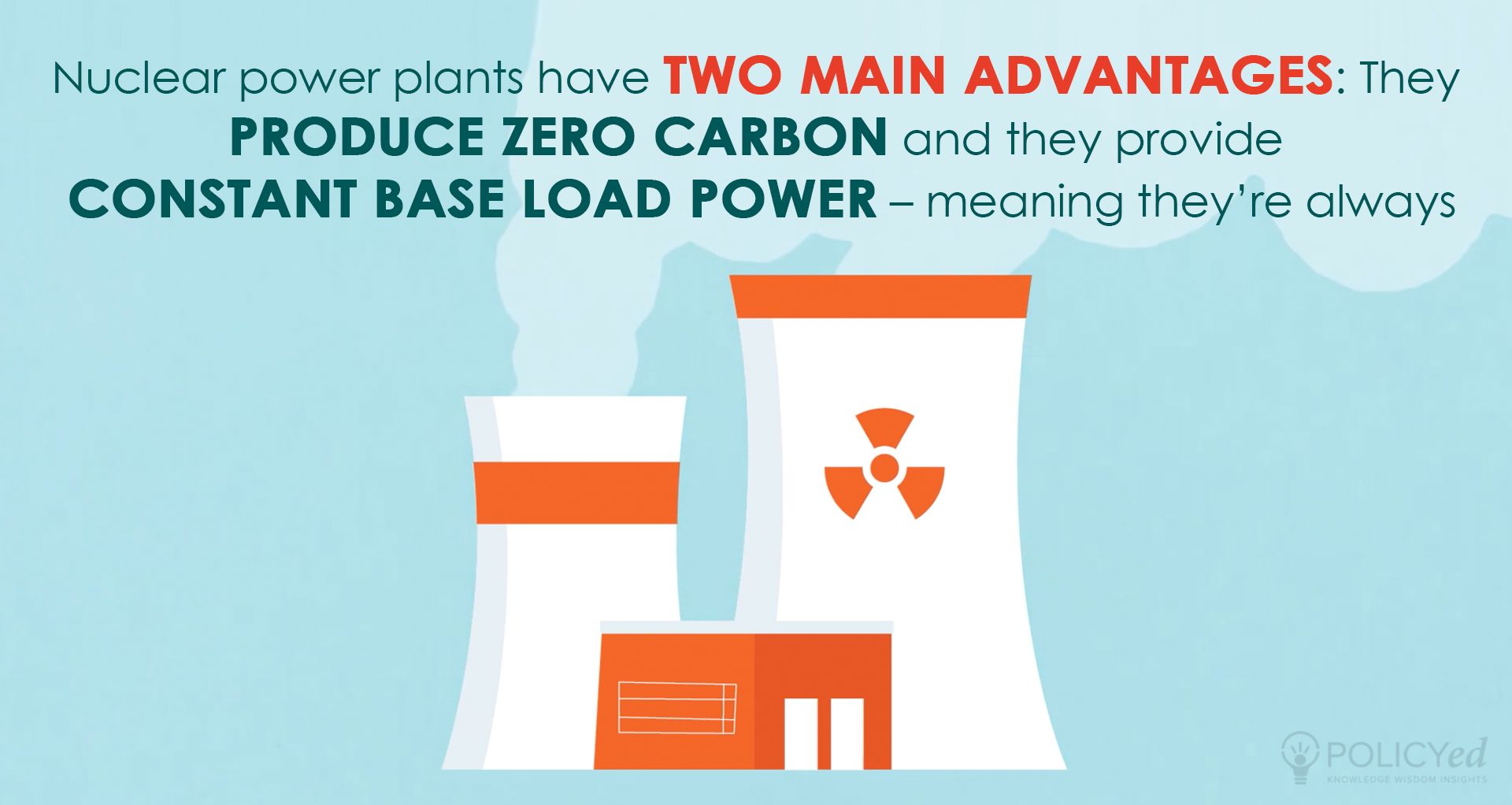
Alright, settle in, grab your metaphorical (or actual) coffee, because we need to chat. We need to talk about that one friend who always gets a bad rap, the one who’s actually super cool once you get to know them, but everyone just remembers that one awkward incident from decades ago. I’m talking about nuclear power. Yes, nuclear. Don’t panic, no glowing green slime or three-eyed fish involved – unless you’ve had a particularly adventurous sushi night.
Let's Talk About That Glowy Elephant in the Room
For decades, nuclear power has been stuck in the pop culture villain role. It’s the energy source that spawned mutant monsters in old B-movies and gave Homer Simpson a lifetime supply of work (and probably a few extra fingers). We hear "nuclear" and our brains immediately jump to mushroom clouds or exclusion zones. It’s got a publicist who clearly majored in "Dramatic Irony" and minored in "Existential Dread."
But what if I told you that beneath all that dramatic flair and movie-magic mayhem, nuclear power is actually a bit of a clean energy superhero? A misunderstood, slightly shy, but incredibly powerful champion? You’d probably say, "Go on, entertain me." And I shall!
Must Read
Seriously, It's Cleaner Than Your Laundry Habits
Here’s the first mic drop: nuclear power plants, during operation, produce zero greenhouse gases. Zip. Nada. Not a puff of CO2, no smoky chimneys belching out whatever industrial gunk you’re picturing. Think about it. We’re constantly told to reduce our carbon footprint, go green, save the planet from… well, us. And here’s nuclear, quietly humming along, splitting atoms like a tiny, invisible lumberjack, without emitting the stuff that’s turning our planet into a sauna.
It’s like that super tidy friend who always cleans up after themselves. Meanwhile, other power sources are still leaving their socks all over the floor, environmentally speaking. Nuclear power just shrugs, says "carbon-neutral, baby," and gets back to work.
The Unsung Hero of "Always On" Power
We love solar panels! We love wind turbines! They’re fantastic! When the sun is shining. And when the wind is blowing. Which, annoyingly, isn't always the case when you want to binge-watch your favorite show at 9 PM on a still, cloudy night.
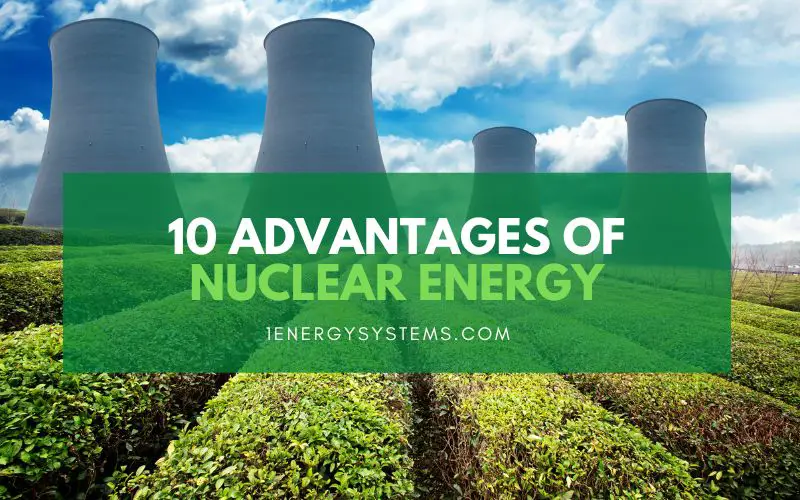
Nuclear power, however, is the ultimate reliable friend. It doesn’t care if it’s sunny, windy, rainy, or if a flock of particularly ambitious pigeons is trying to unionize on your roof. It provides a consistent, steady stream of power, 24/7, year-round. It’s what we call baseload power, the reliable backbone of our electricity grid. While other renewables are taking a well-deserved nap, nuclear is still pulling an all-nighter, making sure your fridge stays cold and your Wi-Fi never quits.
Power in a Pint-Sized Package (Sort Of)
Imagine this: a single uranium fuel pellet, roughly the size of your fingertip, contains as much energy as a ton of coal, or 17,000 cubic feet of natural gas, or 149 gallons of oil. Let that sink in. A little tiny ceramic pellet. It's like finding out your Chihuahua can out-lift a sumo wrestler. Talk about energy density!
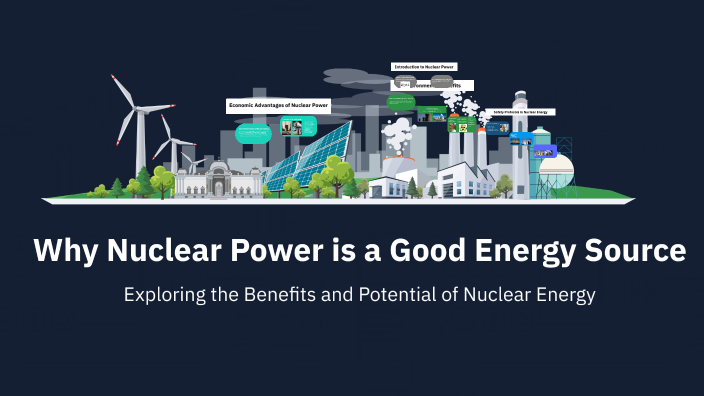
This means nuclear power plants require a remarkably small physical footprint to produce an enormous amount of electricity. Think about the vast acres needed for solar farms or the towering presence of wind turbines. Nuclear says, "Hold my beer," and just builds up, or rather, builds a compact powerhouse that delivers the juice without sprawling all over the landscape. More room for actual nature, less for energy infrastructure!
Safer Than Your Morning Commute (Probably)
Okay, let’s tackle the biggie: safety. Yes, Chernobyl and Fukushima were horrific tragedies. They were also key learning experiences that led to drastic improvements in safety regulations and reactor designs worldwide. Modern nuclear reactors are built with multiple layers of redundant safety systems, thicker containment structures, and passive safety features that don't even require human intervention to shut down in an emergency.
In fact, studies often show nuclear power as one of the safest forms of energy production when measured by deaths per terawatt-hour, far safer than coal, oil, or even rooftop solar. You’re statistically more likely to be injured by a rogue squirrel on your morning walk than by a modern nuclear power plant operating safely. It’s like comparing air travel today to early biplanes; we’ve learned a thing or two.
What About the Spicy Rocks? (A.K.A. Waste)
Ah, the "waste problem." It sounds scary, right? Glowing, radioactive goo. In reality, the amount of spent nuclear fuel produced is incredibly small. All the used fuel ever generated by U.S. commercial nuclear power plants in 60+ years could fit on a single football field, stacked about 24 feet high. That’s it. Compare that to the billions of tons of invisible, spread-out CO2 we pump into the atmosphere every year.
Nuclear waste is also solid and contained, stored securely in robust dry casks or underwater pools. We know where it is, and we have plans for long-term deep geological disposal. It’s a manageable problem, unlike atmospheric pollution which is, by its very nature, unmanageable once released. Think of it: we’d rather deal with a few very grumpy, glowing golf balls than an entire ocean of invisible carbon pollution.

The Future Is Small, Smart, and Still Nuclear
And then there’s the future! Enter Small Modular Reactors (SMRs). These are smaller, factory-built reactors that can be deployed faster, often cheaper, and are designed with even more advanced passive safety features. They’re like the sleek, minimalist version of the old behemoths, capable of powering towns, remote communities, or industrial complexes with clean, reliable energy.
They’re not just about making more power; they’re about making power smarter and more accessible. Imagine a future where clean nuclear energy is less of a distant giant and more of a nimble, dependable neighbor. That’s the promise of SMRs – a future that’s still very much nuclear.
So, the next time you hear "nuclear," don't picture Homer Simpson or a mutant fish. Picture a silent, powerful workhorse, quietly pumping out clean, reliable energy, asking for very little space, and generally being a pretty fantastic, if slightly misunderstood, friend to our planet. Maybe it's time we gave nuclear power the credit it deserves, don’t you think?