Why Is Upstairs So Much Hotter

Ever notice how your home seems to have its own internal thermostat, with a permanent setting of "Tropical Inferno" on the second floor, even when the downstairs feels perfectly breezy? You’re not alone. It’s a classic summer saga: the downstairs oasis versus the upstairs sweat lodge. But why does your second story always feel like it's auditioning for a spot on the sun?
The Undeniable Truth: Heat Rises (It's Not Just a Saying!)
Let's kick things off with a little scientific wisdom, without flashbacks to a stuffy classroom. The primary culprit is simply that heat rises. Think of a hot air balloon – same principle, just on a grander scale! Hot air is less dense than cool air, making it lighter and causing it to float upward. This phenomenon is called convection.
So, all that lovely cool air from your AC or open windows downstairs eventually warms up, and like a diligent little thermal soldier, it marches straight to the top floor. It gets trapped up there, creating a toasty haven you probably didn't sign up for.
Must Read
More Than Just Physics: Other Heat-Trapping Culprits
While convection is the headliner, several other factors love to join the "let's make upstairs uncomfortable" party:
The Sun's Direct Assault on Your Roof
Your roof takes a beating from the sun all day long. A dark-colored roof can absorb an incredible amount of solar radiation, sometimes reaching temperatures upwards of 150-180°F. All that heat radiates down into your attic and, subsequently, into your upstairs rooms. It’s like wearing a dark hat on a sunny day – effective, but not for keeping cool!

Your Attic's Insulation, or Lack Thereof
The attic is the buffer between your scorching roof and your living space. If your insulation is old, thin, or poorly installed, it's doing a poor job of blocking that radiant heat. Think of it as a flimsy shield against a dragon's fiery breath.
Leaky Ductwork and HVAC Woes
Your heating, ventilation, and air conditioning (HVAC) system works hard, but it's not always efficient. If your ducts run through a hot attic and have leaks, you're losing precious cool air before it even reaches your upstairs vents. It's like trying to fill a bucket with holes – inefficient and frustrating.

Windows: Unwanted Guests Bringing the Heat
Large, west-facing windows on your second floor can be glorious for sunsets but terrible for temperature control. They let in a significant amount of solar heat, turning your rooms into miniature greenhouses.
Beat the Heat: Practical Tips for a Cooler Upstairs
Don't despair! While you can't defy the laws of physics, you can certainly mitigate their effects. Here are some actionable tips:
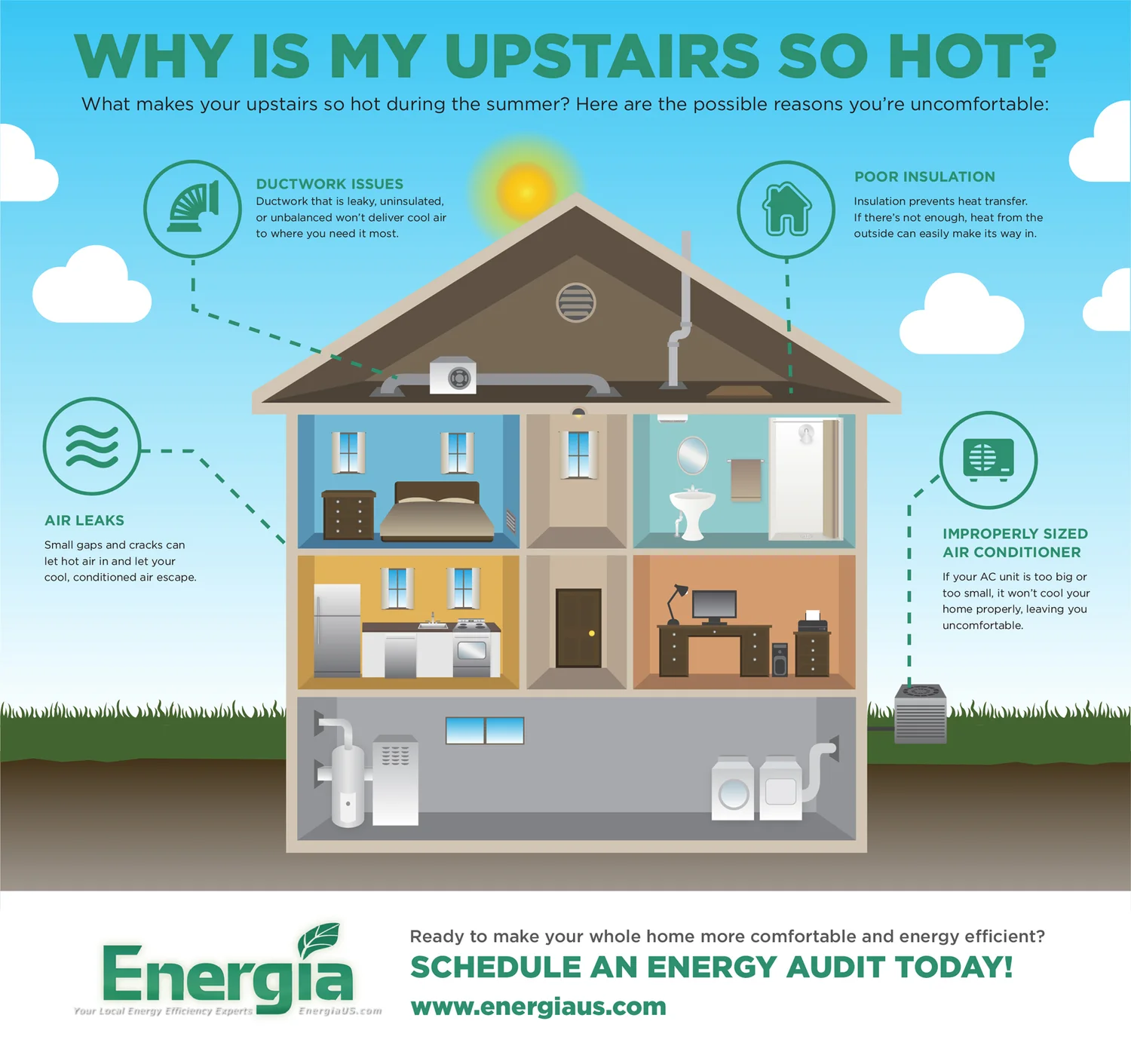
- Boost Your Attic Insulation: This is often the most impactful step. Adding more insulation (especially in older homes) creates a stronger barrier against roof heat. It's a worthy investment!
- Seal Those Ducts: Have an HVAC professional inspect and seal your ductwork. You'll be amazed how much more efficiently your system runs, delivering more cool air where it's needed.
- Smart Window Treatments: Invest in blackout curtains, blinds, or even reflective window film for sunny windows. Closing them during the hottest parts of the day can make a huge difference.
- Strategic Fan Use: Ceiling fans push hot air down, but they also create a wind chill effect, making you feel cooler. Use portable fans to direct air out of hot rooms or to create cross-ventilation at night.
- Consider a Whole-House Fan: If you live in a climate with cool evenings, a whole-house fan can pull cool air through your windows and exhaust hot air out of your attic, providing a fantastic "night purge."
- Maintain Your AC: Regular filter changes and professional servicing ensure your AC unit is running at peak performance. A well-maintained unit cools more effectively and uses less energy.
- Smart Thermostats and Zoning: A smart thermostat can learn your habits and optimize cooling. If you have a larger home, consider an HVAC system with zoning to independently control temperatures on different floors.
Fun Fact: In many hot climates around the world, traditional architecture often features thick walls, small windows, and even rooftop sleeping areas (like in parts of the Middle East) to escape the daytime heat and catch evening breezes.
Embrace Comfort, Conquer the Heat
Living with an oven-hot upstairs isn't just uncomfortable; it can disrupt sleep, impact productivity, and generally make your home feel less like a sanctuary. By understanding why your upstairs feels like a tropical getaway (in the worst way possible) and taking some proactive steps, you can significantly improve your home's comfort. It's about taking control of your environment, one cool breeze at a time, and making every corner of your home a pleasant place to be.