
Why Is Natural Gas Non Renewable

Alright, settle in, grab a virtual coffee – or maybe a scone, if you're feeling fancy. Today, we're diving into a topic that sounds a bit like a college lecture, but I promise we’ll make it as fun as a cat chasing a laser pointer: Why natural gas, despite its seemingly endless supply, is actually a one-and-done deal.
You know natural gas, right? It’s the stuff that makes your stove flame dance a lovely blue, heats your home, and powers entire cities. It feels so… clean. So abundant! You turn it on, and poof! There it is. It's not like chopping down a tree, where you can literally see the resource disappear. So, why isn't it renewable? Why can't we just, you know, make more?
The Great Ancestral Mishap: It All Starts with the Dead
Here’s the thing: natural gas isn't just floating around in magic pockets beneath the Earth. Oh no. It’s the ultimate zombie fuel. We're talking about the decomposed remains of billions of ancient organisms. And by ancient, I mean the kind of ancient that makes dinosaurs look like recent arrivals.
Must Read
Imagine, if you will, vast oceans teeming with tiny, microscopic marine life – phytoplankton, zooplankton, the whole gang. They’re living their best lives, floating around, doing plankton things. Then, disaster strikes! Or, more accurately, time strikes. They die. Happens to the best of us, even the plankton.
But instead of decomposing and returning their nutrients to the immediate ecosystem, these little guys, along with some terrestrial plants and animals, ended up in a rather unfortunate situation. They sank. To the bottom of ancient seas and lakes, or got buried in swamps. And this is where their journey to becoming your cozy winter heat begins. Dark, I know. But also kind of cool.
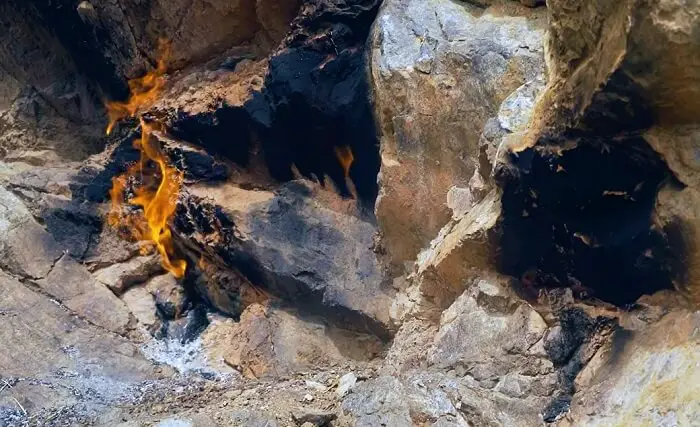
Earth's Slow Cooker: Millions of Years in the Making
So, our deceased organisms are now at the bottom of the pile. And over millions of years (and I mean MILLIONS, folks, not just "a couple of Tuesdays"), layers upon layers of sediment – mud, sand, silt, more dead stuff – piled on top of them. This is like the world's slowest, heaviest blanket party.
With each new layer, the pressure increased. We’re talking about pressure so immense it would turn you into a really thin, sad pancake. And then, there’s the heat. Deep within the Earth’s crust, temperatures rise. It’s like the planet has its own internal furnace, slowly warming everything up.
Under this incredible combination of immense pressure and high temperatures, over geological timescales that make human history seem like a blink, that organic matter started to change. It didn’t just rot; it transformed. It cooked. Slowly. Oh-so-slowly. First, it became a waxy substance called kerogen, then, with more heat and pressure, it broke down further into liquid crude oil and, eventually, natural gas.

Think of it as the most elaborate, slow-cooked meal in the history of the universe. And it's still cooking! Just... very slowly. In fact, most of the natural gas we use today started cooking somewhere between 50 to 350 million years ago. That’s before the dinosaurs even thought about going extinct, for crying out loud!
The Heart of the Matter: Why "Non-Renewable" Isn't Just a Fancy Word
So, why is this an issue? Because while nature is still making natural gas, it's doing it at a pace that is, frankly, glacial. We're talking about a process that takes literally hundreds of millions of years. When we extract and burn natural gas, we're consuming something that took an incomprehensible amount of time to form. It's like finding a treasure chest filled with gold coins that took a dragon 10,000 years to hoard, and then spending it all on a single weekend trip to Vegas. Fun, maybe, but utterly unsustainable.

The rate at which we're pulling this ancient, cooked-up energy out of the ground is simply astronomical compared to the rate at which it's being formed. We're draining millions of years of Earth's slow-cooked energy reserves in a matter of decades and centuries. If you waited for new natural gas to form to heat your home next winter, you’d be waiting for roughly the next Ice Age to thaw – and then some.
So, the next time you turn on your stove, give a little nod to the ancient plankton. They gave their lives, and then millions of years of their existence were spent under unimaginable pressure and heat, all so you could enjoy a perfectly seared steak. And remember, while natural gas feels clean and convenient, it's a finite resource. A precious, slow-cooked legacy from a time long, long before us, that once it’s gone, is gone for good (at least for any timeline that matters to humans).
That’s why natural gas is non-renewable. It’s not about whether it exists; it’s about the fact that its formation process operates on a geological clock, while our consumption operates on a human, instantaneous clock. And those two clocks are wildly, hilariously, and ultimately, problematically out of sync.
